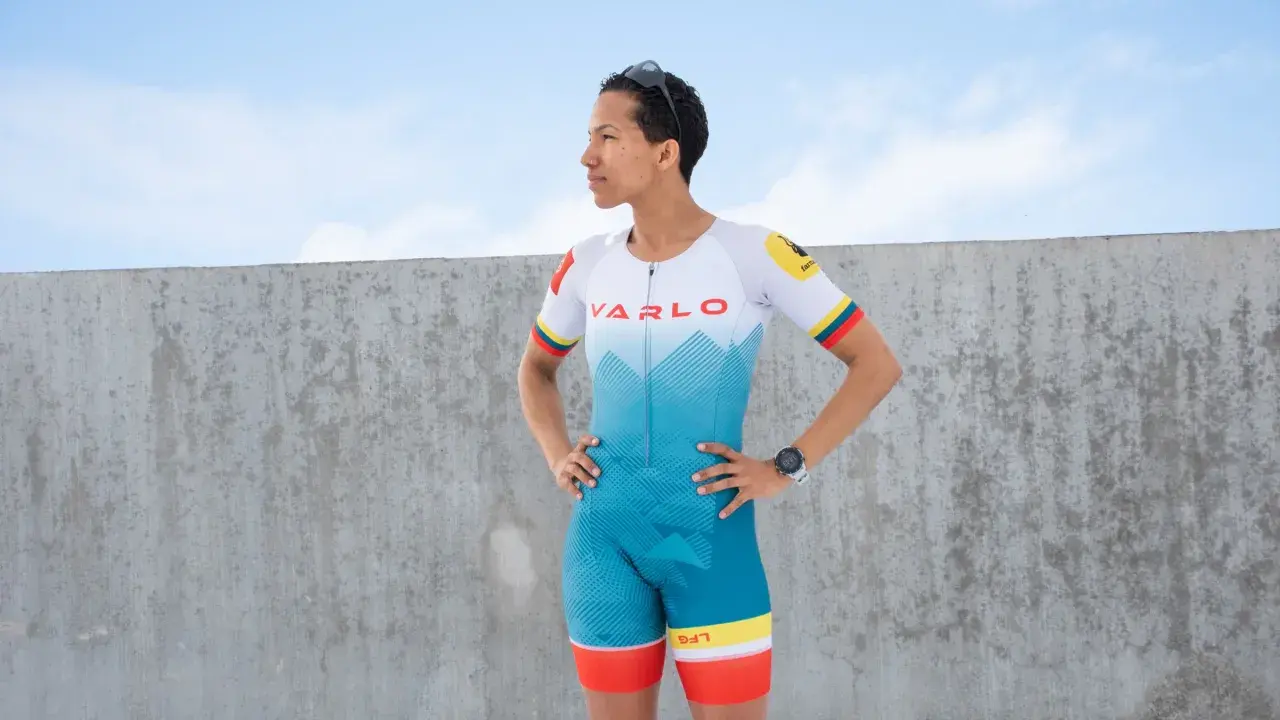
The essentials that matter most on race day
- Start with a tri suit that you can swim, bike, and run in without changing.
- Add a wetsuit when the water is cold enough and the race rules allow it.
- Keep the bike and run kit practical: helmet, shoes, sunglasses, race belt, cap, and socks if you need them.
- Choose quick-drying, anti-chafe fabrics over cotton or bulky cycling clothing.
- Test the full outfit in training, including any sports bra, socks, and race belt.
Start with a tri suit that fits the distance
I usually treat the tri suit as the anchor piece. It is the one item you wear across all three disciplines, so it needs to dry quickly, sit close to the body, and avoid seams that rub once you are sweaty and tired. A good suit feels almost boring on the start line, which is exactly what you want.
For sprint and Olympic-distance races, a one-piece suit is often the cleanest choice. It reduces fuss, stays stable in the swim, and keeps the transition simple. For longer races, a two-piece can be more comfortable because it makes bathroom breaks easier and gives you a little more flexibility in fit around the torso and hips. The trade-off is that a two-piece has one more place to ride up or shift if the sizing is off.
| Option | Best for | Why it works | What to watch |
|---|---|---|---|
| One-piece tri suit | Sprint and Olympic races | Sleek, stable, and usually the simplest race-day choice | Bathroom stops are less convenient |
| Two-piece tri suit | Long-course racing | Easier fit adjustments and more practical for long days | Needs good overlap so it does not shift |
| Swimwear plus separate bike/run kit | Very budget-conscious athletes | Can work if you have changing facilities | Slower transitions and more chance of chafing |
Look for a thin chamois, which is the small pad in the shorts. It should cushion the bike without feeling like a cycling bib short on the run. Flatlock seams, breathable panels, and quick-drying fabric matter more than flashy branding. I would also test the suit with the socks, bra, or base layer you plan to race in, because those tiny choices are where comfort is won or lost. That becomes even more important once you decide what to wear on the swim leg itself.

Choose the swim layer before anything else
The swim section decides a lot of the outfit. If the water is cold enough, a wetsuit is usually the smartest and fastest layer because it adds warmth and buoyancy. If the race is non-wetsuit, keep the swim setup minimal and legal rather than trying to solve every problem with extra clothing.
For British Triathlon events, the current rules make the temperature question very clear: wetsuits are mandatory below 15.9°C, and they are forbidden above 22°C for races up to 1500m for athletes up to age 59, or above 24.6°C for athletes aged 60+ and for races of 1501m and longer. British Triathlon also notes that wetsuits cannot exceed 5 mm thickness. That is the kind of detail I would check before I buy anything, because it affects both comfort and legality.
- Wetsuit for cool UK open-water races, especially if the water feels sharp on the face and shoulders.
- Swimskin for non-wetsuit races if you want a close-fitting, textile layer that stays legal in all water temperatures.
- Tri suit alone when the race is warm and the organiser has ruled out wetsuits.
On a non-wetsuit swim, I would avoid overthinking the layer underneath. Race rules in Britain are strict about what you can wear in the water, and extra arm or leg coverage may be illegal when wetsuits are forbidden. If you want more warmth in a cool wetsuit swim, a second cap can help, but the event cap must sit on the outside. That sounds minor, but those small rule details are where beginners often get caught out, so it is worth checking the athlete guide before race morning. Once the swim is sorted, the bike and run pieces become much easier to choose.
Let the UK race rules shape your kit
This is the part that saves people from avoidable penalties. In British Triathlon events, the uniform must cover the front of the torso, and you cannot cycle or run with a bare torso. If you are using a two-piece suit, both parts must overlap properly, and the torso must not be visible during the race except in the swim section where the rules allow it. In practice, I read that as: do not choose something that looks great in the mirror but leaves you improvising on the start line.
There are also very practical clothing limits in the swim. When wetsuits are forbidden, clothing covering the arms below the elbows or legs below the knees is not allowed in the water. That means calf sleeves, arm warmers, or random extra layers are not a clever workaround. If a wetsuit is mandatory, the wetsuit has to cover at least the torso, and if you wear socks, the suit has to cover the top of the socks. These rules are not there to be annoying; they are there to keep the field fair and safe.
| Race situation | What I would wear | Why |
|---|---|---|
| Cool-water UK race | Tri suit under a wetsuit | Fast transitions, warmth, and legal race kit |
| Warm-water non-wetsuit race | Tri suit or swimskin only | Minimal drag and fewer rule issues |
| Long-course event | More comfortable tri suit with storage and support | You will spend longer in the kit, so comfort matters more |
British Triathlon’s race-day checklist is also refreshingly practical: tri-suit, goggles, swim cap, helmet, bike shoes, running shoes, and a number belt if you use one. That list is a good reality check. If something does not help you move faster, stay legal, or stay comfortable, it probably does not deserve space in your transition bag. From there, the bike and run layers are just about fine-tuning.
Build the bike and run outfit around comfort, not habit
The bike and run legs are where a lot of beginners overpack or underthink. On the bike, I would start with a helmet that fits correctly, shoes that clip in cleanly, and sunglasses that stay put when you look down and up repeatedly. If the weather is chilly, thin gloves can be worth it, especially on a wet British morning when your hands go numb faster than you expect.
On the run, the essentials are simple: running shoes, a race belt, and socks if you normally wear them. A cap or visor can be useful if the sun comes out, and I would treat a lightweight pair of socks as a blisters-prevention tool, not an afterthought. If you know you blister easily, a few seconds saved by going sockless can be a false economy.
- Helmet for the bike, adjusted before you leave transition.
- Bike shoes if you ride clipped in, or a setup you can mount quickly.
- Running shoes that you have already tested off the bike.
- Race belt so you are not pinning a number to a suit with shaking hands.
- Sunglasses for glare, wind, and debris on the bike.
- Cap or visor for sun or light rain on the run.
If you are choosing between a little extra bike comfort and a smoother run, I would lean toward the run. The bike pad should never feel like a full cycling bib short, because that usually means too much bulk. The best tri kit disappears once you are moving, and that is the standard I would use when checking your own setup. The next decision is less about discipline and more about the weather you are likely to face in the UK.
Dress for British weather, not the forecast you hope for
UK triathlons are rarely won by pretending it is a warm, dry day in July. A chilly start, wind on the bike, and damp roads can turn the wrong outfit into a distraction very quickly. I prefer layers that solve one problem each and do not create new ones. The goal is warmth without bulk, because every unnecessary gram is something you carry for the rest of the race.
| Condition | Useful addition | What I would avoid |
|---|---|---|
| Cold morning | Thin arm warmers, gloves for the bike, and a light gilet if the race allows it | Heavy jackets that trap sweat and slow you down |
| Rain | Close-fitting, water-resistant outer layer for the bike if required | Loose fabric that flaps and soaks up water |
| Bright sun | Sunglasses, visor, sunscreen, and a suit with some UV protection | Dark, heat-trapping layers with no ventilation |
I would be careful with anything you plan to wear over the suit. It still has to leave your race number visible, and it still has to be quick to remove if conditions change. The best race-day layers are the ones you forget about after the first kilometre. When that is not happening, the problem is usually not fitness. It is the kit. That leads straight into the mistakes I see most often.
Avoid the kit mistakes that cost time and skin
The most expensive wardrobe mistake in triathlon is not buying the wrong brand. It is wearing something untested. New shoes, brand-new compression gear, or a suit that looks fast but rubs after five minutes in the water can ruin a race more effectively than poor pacing. I would never trust race day to a first outing, even if the gear feels fine in the living room.
- Do not race in cotton. It holds water, gets heavy, and turns into chafing fuel.
- Do not use thick cycling shorts unless the race is unusual and you have no better option.
- Do not pick a suit that is too loose just because it feels comfortable standing still.
- Do not skip anti-chafe balm around the neck, underarms, and any seam that has rubbed in training.
- Do not debut a new sports bra, because support that feels fine on land can behave differently in the water.
- Do not overload pockets with anything you will not actually need on the bike or run.
I also see beginners underestimate transition. If you have to think about where your number belt is, whether your shoes are already open, or whether your socks are buried in a bag, you have already spent energy you should be saving for the course. The cleanest kit is the kit that makes every move obvious. That is the final standard I would use when building a race-day wardrobe.
The race-day setup I would use if I wanted one clean decision
If I had to keep it brutally simple, I would choose a tri suit that fits well, a wetsuit if the water temperature and race rules make it the right call, and then only the bike and run pieces that genuinely help me move faster or stay comfortable. That means goggles, swim cap, helmet, bike shoes, running shoes, sunglasses, and a race belt. If the morning is cold, I would add thin layers that are easy to remove and do not fight the rules.
The whole point is to stop your clothing from becoming another event on race day. The best outfit for a triathlon is not the fanciest one, and it is not the one with the most pockets or the thickest pad. It is the one that disappears once the gun goes off. If you build around that idea, you will usually end up with the right answer for distance, weather, and pace without overcomplicating anything. For most athletes, that is the fastest route to a calmer start line and a cleaner race.Before race morning, lay everything out once, race it through your head, and check the athlete guide one more time. That one habit prevents most clothing mistakes before they happen.