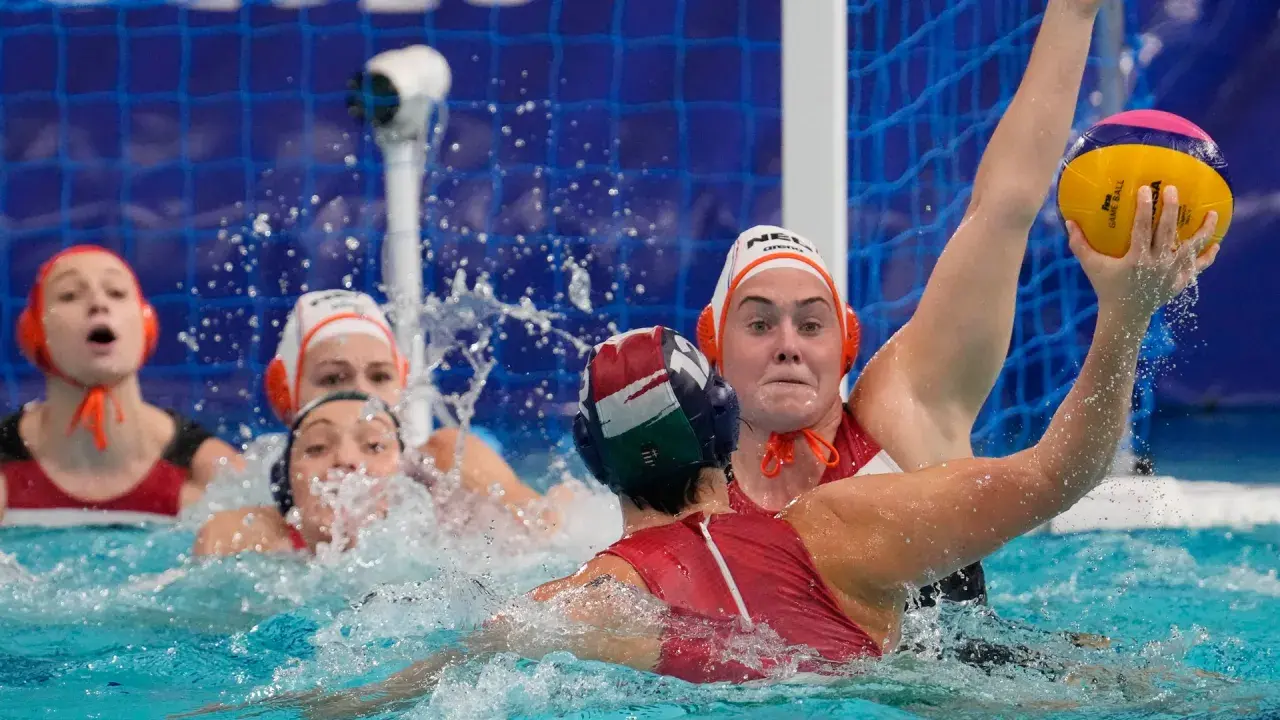
I like to start with the whistle, because water polo is really a game of contact, space, and timing. Once you understand what counts as a routine stoppage, what becomes an exclusion, and what turns into a penalty shot, the sport stops looking chaotic and starts looking tactical. This guide breaks down the fouls you will see most often, how referees handle them, and why going underwater or “taking a dive” can change the call in an instant.
The calls that shape a water polo game
- Ordinary fouls usually end with a free throw and keep the ball with the attacking team.
- Exclusion fouls send a defender out for 20 seconds and create a man-advantage chance.
- Penalty fouls are the big ones: a foul in the 6-meter area that stops a probable goal can become a penalty shot from the 5-meter line.
- Underwater movement matters; going under to gain position can itself be a foul.
- Simulation is risky; trying to fake contact can bring a sanction instead of a whistle.
- Local rule sets vary slightly, but the core logic is the same in U.S. and international play.
The three foul categories that matter most
When I break the game down for players or parents, I separate the action into three buckets: ordinary fouls, exclusion fouls, and penalty fouls. That simple structure explains most of what happens in the pool, including why one whistle just restarts play while another leaves a team short-handed or gives up a penalty shot.
| Foul type | Typical trigger | Immediate result | Why it matters |
|---|---|---|---|
| Ordinary foul | Impeding, holding the ball underwater, two hands on the ball, standing on the bottom, delaying a throw | Free throw to the other team | Possession changes, but the player usually stays in the game |
| Exclusion foul | Holding, sinking, pulling back, tactical fouls, interference with a free throw, some kicks or strikes | Player leaves for 20 seconds | Creates a 6-on-5 situation and opens the cage |
| Penalty foul | A serious foul in the 6-meter area that prevents a probable goal | Penalty shot from the 5-meter line | High-percentage scoring chance |
| Misconduct or brutality | Persistent foul play, disrespect, violent action, intent to injure | Red card and removal | Can swing the whole match, not just one possession |
The important detail is that referees are not just punishing contact. They are trying to preserve an attacking advantage. If the offense still has a realistic chance to continue, the referee often lets the action breathe before stopping it. That advantage principle is the thread that connects the whole foul system, and it leads straight into the everyday whistles you hear most often.
The minor fouls you will hear all game
Most whistles in a match are ordinary fouls, not dramatic punishments. These are the calls that keep the game moving and stop defenders from turning every possession into a wrestling match.
- Impeding a player who is not holding the ball. This is the classic one. A defender blocks or slows movement without enough legitimate contact on the ball, and play restarts with a free throw.
- Holding the ball underwater. If a player pins the ball under the surface to keep an opponent from playing it, that is a foul.
- Using two hands on the ball. Field players do not get to cradle the ball like a basketball.
- Standing or pushing off the bottom. That is an easy mistake for athletes who come from swimming and underestimate how much vertical support the legs are giving them.
- Delaying the restart. A player cannot waste time after a free throw, goal throw, or corner throw.
- Being inside the 2-meter area without possession. Offensive players have to respect the lane into goal unless they have the ball.
- Time-wasting and shot-clock violations. If a team stalls too long, the referee and shot clock will eventually force the issue.
These calls are not about “clean versus dirty” in the abstract. They are about whether a player is trying to create space legally or simply stopping movement. I think that distinction matters because many beginners assume water polo is supposed to be rough; in reality, the sport rewards controlled contact, not constant grabbing. Once that line gets crossed, the whistle gets heavier.
When contact becomes an exclusion or a penalty
The jump from an ordinary foul to a major one usually happens when the defender goes beyond simple obstruction and starts holding, sinking, or pulling back an opponent. That is the foul that most often creates a man advantage, and it is the one attackers are trained to draw when they are pinned at center or driving toward the cage.
- Holding or pulling back a player who is not holding the ball is the most common exclusion foul.
- Two-handed blocking on the field can also escalate, especially if it prevents a clear scoring chance.
- Splashing the face, kicking, or striking an opponent can move a play into exclusion territory fast.
- Tactical fouls designed to stop a fast attack are often punished more severely than a routine impeding call.
- Inside the 6-meter area, any foul that prevents a probable goal can become a penalty foul.
That 6-meter/5-meter language confuses a lot of people, so I keep it simple: the current rule language defines a 6-meter area, while the penalty shot itself is taken from the 5-meter line. For a spectator, the practical takeaway is this: if a defender stops a clear scoring chance close to goal, the punishment can jump from “reset the ball” to “take a penalty shot now.”
An exclusion foul usually means 20 seconds out, unless the attack ends sooner because of a goal or a change of possession. A penalty foul is even more expensive because it hands the offense a direct scoring chance with only the goalkeeper involved. That is why smart teams do everything they can to avoid lazy contact near the crease. From here, the next step is knowing what those calls look and sound like in real time.
How to read the whistle and reset the possession
Referee signals matter because they tell players what kind of response is expected. A single whistle usually means an ordinary foul and a free throw. A major foul brings a stronger signal, the excluded player heads to the re-entry area, and the offense gets space to work with an extra player. A penalty foul is the most direct signal of all: the foul happened in scoring territory, and the referee is sending the shooter to the mark.
What I tell younger players is to react before they complain. On an ordinary foul, move the ball quickly and make the defense pay before it can reset. On an exclusion, the first few seconds are often the best few seconds, because the 6-on-5 is most vulnerable before the defense organizes its shape. On a penalty, the only job is to stay composed and finish the shot.
There is one more practical point that gets overlooked: after a free throw outside the 6-meter area, the offense may be able to turn that whistle into an immediate shot. That is why defenders are coached to back off cleanly and attackers are coached to think fast. If the ball is dead too long, the advantage disappears. If it moves immediately, the defense is suddenly on the back foot.
Once players learn to read the signal, they start to see why underwater movement and fake contact are such a big deal. That is where the conversation turns to diving.Why diving underwater causes trouble
In water polo, “diving” does not mean springboard diving. It usually means a player goes under the surface to gain position, hide contact, or manufacture an advantage. That is exactly where trouble starts. The current rules treat going under the water to gain positional advantage as an ordinary foul, and repeated attempts to sell contact can be treated as simulation, which can bring a yellow card to the team.
This is one of the biggest habits swimmers have to unlearn when they move into water polo. In lane swimming, submerging a little deeper can help streamline and speed. In water polo, doing that at the wrong moment can ruin your body line, kill your passing angle, and give the referee a reason to stop you. I have seen athletes lose clean opportunities because they tried to disappear under contact instead of staying visible and balanced on the surface.
There is a difference between getting low for leverage and going under to cheat the position. Good players stay high enough to pass, shoot, and draw contact clearly. Weak players sink, twist, and hope the referee guesses in their favor. That usually backfires. If you want a useful rule of thumb, it is this: win the space with body position, not with disappearing acts under the surface.
That also applies to the other side of the play. A defender who submarines, wraps, or pulls down an opponent is inviting an exclusion or even a penalty if the foul happens close enough to goal. The cleanest players are not passive; they are just disciplined about keeping pressure on the ball without creating the kind of underwater mess that referees have to sort out.
How to stay aggressive without collecting whistles
The best water polo defenders are physical without being sloppy. That is harder than it sounds, especially late in a match when legs are burning and every possession feels like a sprint. I usually coach players to think in terms of legal pressure, not legal violence.
- Keep your hands on the ball side. If you reach through the body or grab from behind, you are volunteering for an exclusion.
- Use your hips and eggbeater instead of sinking to gain leverage. Vertical control is cleaner than underwater wrestling.
- Front the attacker early. If you let a center player settle, you will end up fouling from behind.
- Move your feet before you reach with your arms. Late hands create most of the ugly contact.
- Release the ball fast after the whistle. Delay fouls are easy to avoid and frustrating to give away.
- Do not try to “sell” every touch. If you fake a foul too often, the referee stops believing you.
On offense, the same principle applies in reverse. Drive with your head up, keep the ball visible, and let the defender make the mistake. A good attacker draws ordinary fouls in sequence and forces the defense into tired decisions. A reckless attacker sinks, flails, or pushes off and turns a scoring chance into a turnover. That is the difference between mature play and noisy play.
For U.S. high school and college players, I also recommend checking the specific rule set for your league. The structure is consistent, but the wording, timing, and local enforcement can vary a little. The habit that travels best across every level is simple: stay upright, stay visible, and stay in control when contact starts.
What I would remember before the next match
If you only keep four ideas from this article, make them these: ordinary fouls reset possession, exclusion fouls create a man advantage, penalty fouls punish stopped scoring chances, and underwater “diving” is not a clever shortcut. That is the core logic behind the game.
What separates experienced players from frustrated ones is not the absence of whistles. It is knowing which whistles are acceptable, which ones are expensive, and which ones you can force by staying patient under pressure. Once that clicks, the sport becomes much easier to read, and a lot more fun to watch.
The next time a defender sinks on contact or an attacker tries to disappear under the surface, you will know exactly why the referee reached for the whistle.