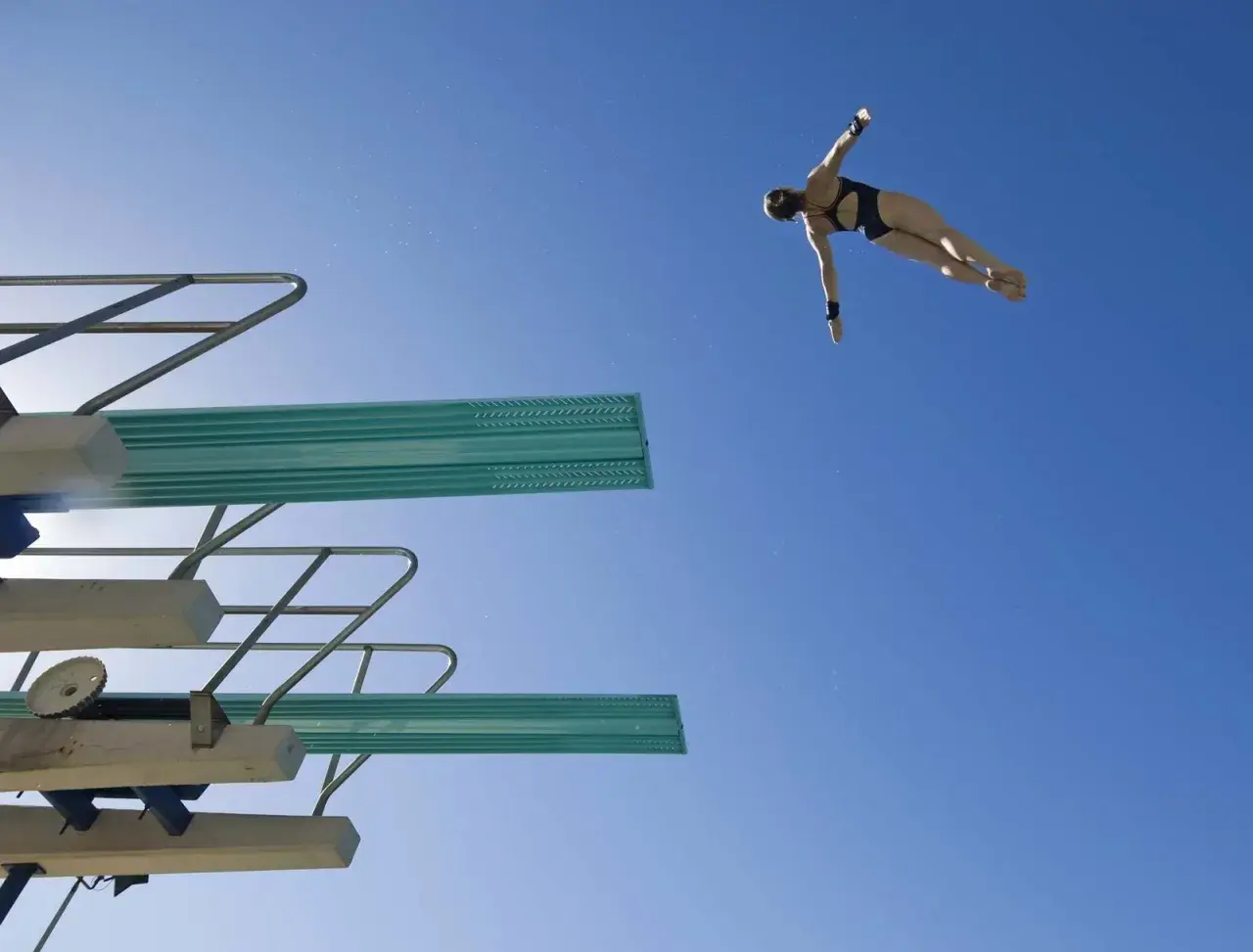
The essentials that separate a good dive from a scored dive
- Execution matters more than drama. Judges look for line, control, timing, and a clean entry, not just how many somersaults or twists the diver can fit in.
- Springboard and platform are different sports in practice. The board adds rhythm and rebound, while the platform removes that help and demands stillness and precision.
- Technique beats raw bravery. The best progress usually comes from a smaller list of repeatable dives done well, not from chasing difficulty too early.
- Training is mostly body control. Mobility, core strength, shoulder health, and dryland drills all matter because they shape the takeoff and the entry.
- Water polo athletes bring useful traits. Body awareness, upper-body resilience, and comfort in the water translate well, but the workload and movement demands are different.
- In the U.S., the path is usually gradual. Club training, school competition, and then larger meet exposure usually work better than trying to rush into harder dives.
What judges really reward in a dive
A dive is scored on execution first and difficulty second. According to USA Diving, judges score each attempt from 0 to 10 in half-point increments, so a beautiful entry cannot fully rescue a dive that was rushed, crooked, or under-rotated. The degree of difficulty then amplifies the score, which is why athletes need both reliable technique and smart progression.When I watch a diver, I look for a few things before I ever think about rotation count:
- Approach and hurdle. The hurdle is the quick, rhythmic motion that loads the board before takeoff. If it is off, the rest of the dive usually follows.
- Body line. The body should stay long and controlled, especially through the air. Bent hips, loose shoulders, or wandering arms usually cost points.
- Takeoff shape. A strong takeoff does not mean a desperate jump. It means the diver leaves the board with enough lift and alignment to complete the dive cleanly.
- Entry. The hands should slice in first, followed by the head and body in one line. The entry is not just about splash; it also shows whether the dive finished in control.
That is why a dive that looks flashy can still score lower than a simpler one done with discipline. Once you understand that scoring logic, the difference between board events and platform events becomes much easier to read.

Springboard and platform events feel different for a reason
| Feature | Springboard | Platform |
|---|---|---|
| Support | Flexible board with rebound | Fixed surface with no rebound |
| Typical height | 1m and 3m are common; 3m is the main international board event | 10m fixed platform |
| Main challenge | Timing the board and controlling the bounce | Creating lift without any spring from the surface |
| What it rewards most | Rhythm, timing, and reactive control | Stillness, confidence, and exact body positions |
| Common mistake | Chasing the board instead of moving with it | Over-rotating or opening early because the athlete feels the height |
At the international level, World Aquatics keeps the main stage on the 3m springboard and 10m platform, with individual and synchronized events. In the U.S., I still see 1m used a lot as a developmental step because it gives athletes more room to learn shapes and entries without the stress of a higher start. That progression matters, because the board and the platform reward different kinds of control.
Springboard diving asks for timing. Platform diving asks for composure. A good coach knows when an athlete needs more bounce work and when they need to quiet everything down.The training habits that build repeatable dives
The fastest improvements usually come from boring, disciplined work. I would rather see a diver repeat a handful of dives with excellent shape than gamble on a larger list that breaks down under fatigue. The point is to make good mechanics automatic so the body does not invent new problems on meet day.
These habits matter most:
- Rehearse shapes on deck. Straight lines, pike position, tuck position, and twists can all be trained out of the water before they are tested in it.
- Protect mobility. Shoulder opening, thoracic rotation, hip flexibility, and ankle range all influence how freely a diver can move through the air.
- Use dryland with intent. Trampoline, harness work, handstands, core drills, and takeoff mechanics are useful when they reinforce body control instead of just adding fatigue.
- Keep the dive list manageable. A small list of reliable dives usually scores better than a long list of unstable ones.
- Review video with one cue at a time. If every rep has five corrections, the athlete learns nothing. One technical cue is enough for most sessions.
I also like to separate work by purpose. Early in a session, I want timing and shape. Later, after the body is warm, I want the athlete to test control under a little more pressure. That sequence keeps the mechanics clean while still preparing the diver for a real meet environment.
Once the training structure is clear, the next question is usually where athletes go wrong. That is where most points are quietly lost.
The mistakes that cost the most points
Most bad scores are not random. They come from a few recurring errors that show up again and again, especially when athletes rush development or get tired late in a session.
- Rushing the approach. If the hurdle is late or the last step is chaotic, the board timing falls apart.
- Trying to rotate before the line is set. The athlete wants the somersault or twist to happen, but the body position is not ready yet.
- Opening too early. Many divers try to “save” the entry by opening early, which usually flattens the dive and makes the splash worse.
- Chasing difficulty too soon. A harder dive with poor form rarely beats a cleaner, simpler one.
- Ignoring fatigue. Technique gets sloppy when the body is tired, and bad reps repeated too often become habits.
There is one mistake I see in both newcomers and talented athletes: they treat the splash as the whole story. It is not. If the entry is crooked, the problem usually started earlier, often on the approach or at takeoff. That is why better coaching focuses on the chain of movement, not just the water splash at the end.
Why diving and water polo actually complement each other
These two sports are not interchangeable, but they do share a useful base. Water polo players need shoulder strength, body awareness, and the ability to control themselves in a crowded, unstable environment. Divers need many of the same physical qualities, only expressed with more precision and less chaos. I think that overlap is why some athletes adapt to both sports surprisingly well.
The shared benefits are clear:
- Core control. Both sports punish a weak midsection because the trunk is what transfers force through the body.
- Shoulder stability. Healthy shoulders matter in water polo passing and shooting, and they matter in diving lines and entries.
- Spatial awareness. Athletes need to know where their body is without constantly looking for feedback.
- Confidence under pressure. One sport asks for calm precision above the water, the other asks for control inside a busy game.
The difference is just as important. Water polo rewards repeated effort, contact tolerance, and quick decisions. Diving rewards stillness, timing, and one excellent attempt at a time. A water polo athlete moving into diving usually needs to slow down and get more exact. A diver moving into water polo usually needs more endurance, more shoulder volume tolerance, and a better feel for constant movement.
If you coach both sports, the smartest move is to manage shoulder load carefully. They can support each other, but they can also overload the same joints if the week is stacked badly. That leads naturally to the question of how to start in a way that keeps progress steady instead of expensive and frustrating.
How I would start in the U.S. if I wanted steady progress
If I were building a diver from the beginning, I would keep the first season simple. The goal would be clean mechanics, not an impressive list. In most American programs, that means club coaching, school competition when available, and a gradual move toward larger meets once the basics are stable.
- Start with a coach who teaches fundamentals clearly. Line, hurdle, entry, and body position should come before advanced rotations.
- Build one reliable springboard path and one platform path. A diver does not need every option at once.
- Track consistency, not just medals. If the same dive looks sharp six times in a row, it is ready to carry more pressure.
- Keep the off-pool work short and useful. Mobility, core work, and shoulder care should support diving, not drain it.
- Separate diving days from heavy water polo loads when possible. The body needs enough freshness to learn precision.
The athletes who improve fastest are usually the ones who make every rep look familiar. That is the real edge in this sport, and it is the part most people underestimate when they first walk onto the deck.
