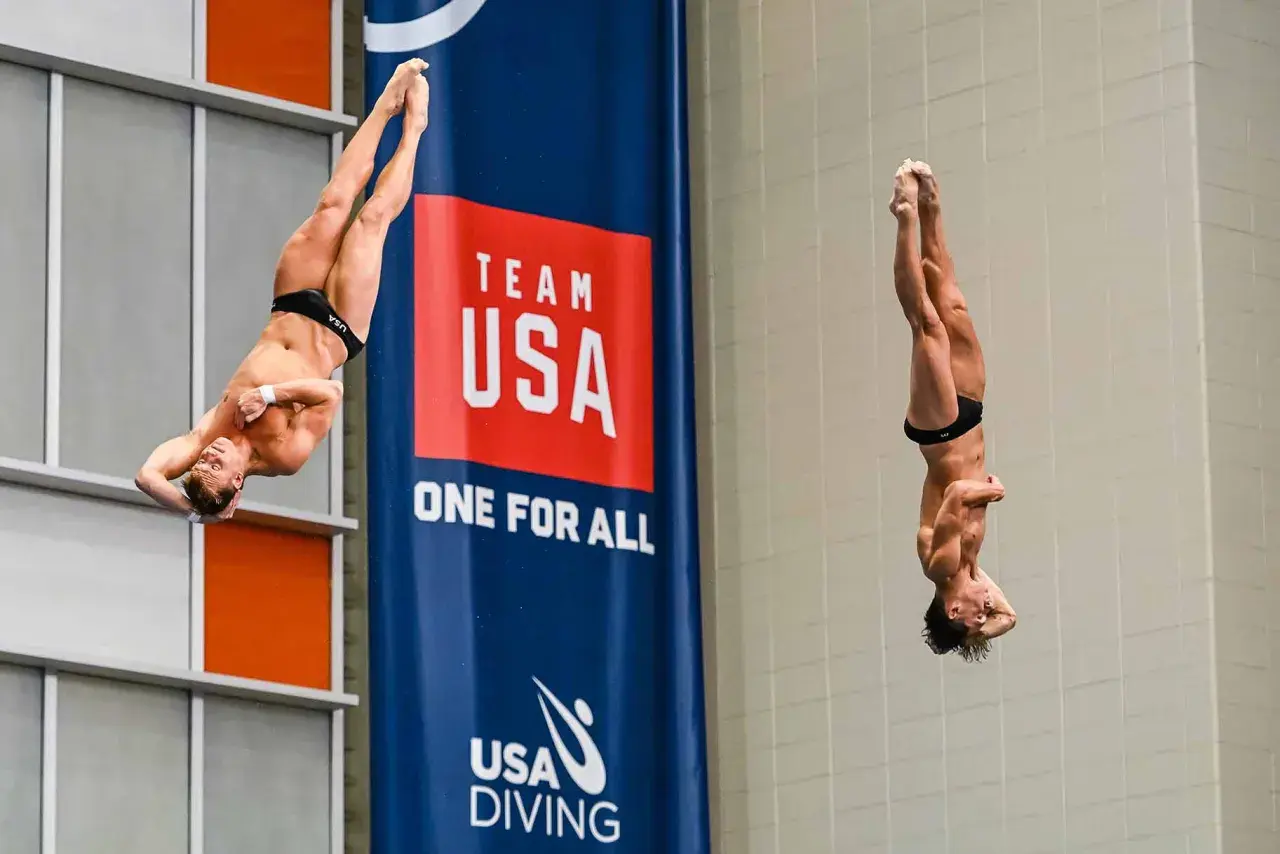
High diving is the most dramatic branch of competitive aquatics, but it is not just a stunt off a tall platform. The practical answer to what is high dive is that it is a precision sport in which athletes twist, turn, and enter the water from extreme heights with very little room for error. I like to explain it as gymnastics, diving, and composure meeting at the edge of a tower. This guide covers how the sport works, how it differs from regular platform diving, what judges look for, and why training matters more than raw nerve.
High diving in a nutshell
- Elite women compete from 20 m and elite men from 27 m.
- The sport rewards body control, timing, and a clean vertical entry.
- Compared with 10 m platform diving, the margin for error is much smaller.
- Athletes build up through lower platforms, dry land work, and repeated progressions.
- In the U.S., Fort Lauderdale is giving the sport a visible competitive stage in 2026.
What high diving actually is
High diving is a competitive event in which athletes launch from much greater heights than standard platform divers. In elite international events, the women’s platform is 20 m and the men’s is 27 m, which changes everything: the entry speed, the time in the air, the force on the body, and the need for exact body shape. That is why the sport looks theatrical from the outside but is built on repeatable technical habits from the inside. Once you understand that, the next comparison makes the differences much clearer.
How it differs from platform diving and cliff diving
High diving sits next to platform diving, but it is not the same discipline. Platform diving in major competition tops out at 10 m, while high diving goes higher and demands a larger, more carefully managed environment. Cliff diving is even less standardized because the takeoff point may be a natural rock face rather than a purpose-built tower. It also sits alongside water polo in the broader aquatics family, even though the equipment and venue requirements are completely different.
| Aspect | High diving | Platform diving | Cliff diving |
|---|---|---|---|
| Typical height | 20 m for women, 27 m for men at elite level | Up to 10 m in major competition | Varies by site |
| Venue | Freestanding tower or dedicated structure | Standard pool platform | Natural cliff or outdoor ledge |
| Main challenge | Air control under extreme time pressure | Precision and timing from a lower height | Unpredictable setting and takeoff conditions |
| What stands out most | Height, speed, and difficulty | Technical form and consistency | Spectacle and environment |
The table makes the practical difference obvious, but the bigger point is this: the higher the platform, the more the sport becomes about controlling time, space, and entry position. That leads straight into how judges separate a clean high dive from a merely spectacular one.
How a dive is judged
Judging in high diving still starts with execution, not drama. A strong dive has a stable takeoff, clean rotation, tight body positions when needed, and a vertical entry with minimal visible disruption. Difficulty matters too, because a harder dive should earn more when it is executed well. In practice, judges are looking for whether the athlete stayed in control from the instant of takeoff until the hands or feet pierced the water.
- Takeoff should be balanced and committed.
- Air position should stay tight and symmetrical.
- Timing matters most when the athlete opens for entry.
- Entry line should be as vertical as possible.
One reason this sport is so unforgiving is that there is almost no mid-air recovery. If the timing slips by a fraction, the entry shows it immediately, which is why training is built around repetition and control rather than improvisation.
Why training and safety matter more than the spectacle
According to World Aquatics, elite women compete from 20 m and elite men from 27 m, and that height only works because the athletes have spent years building the right base. I think the most important mistake outsiders make is assuming courage is the main ingredient. It is not. Progression, coaching, and body awareness matter far more.
Most serious training plans include dry land preparation, trampoline or gymnastics-style air awareness, core strength, shoulder stability, hip mobility, and repeated platform progressions. Athletes usually start low and work upward only when the same dive is controlled at each stage. That layered approach matters because a high dive can be over in a few seconds, which leaves almost no time to fix a bad line or a late opening.
- Dry land drills build rotation and shape before water work begins.
- Trampoline sessions sharpen air awareness and spatial timing.
- Mobility work keeps the shoulders, hips, and spine from fighting the dive.
- Video review helps athletes see errors that feel small in the moment.
- Height progression reduces risk and makes the movement repeatable.
If you want the shortest honest answer here, it is this: the platform gets more dangerous when athletes rush the process, not when they respect it. That is a useful lens for understanding where the sport is actually growing in the United States.
What high diving looks like in the United States
USA Diving continues to support participation across the sport, but high diving is still niche compared with springboard and 10 m platform diving. That said, the U.S. has become more visible in 2026 because Fort Lauderdale is hosting major high-diving competition, giving fans a real place to watch the sport at its highest level. That matters more than it sounds like it does: a sport grows faster when athletes can train, compete, and be seen in the same place.
For swimmers, divers, and water polo athletes, that environment also reinforces a broader aquatics truth. The best programs are not only about volume in the pool; they are about specialization, progression, and matching the right event to the right athlete. High diving is simply the most extreme version of that logic.
The U.S. scene is still smaller than the mainstream diving pipeline, but the presence of major events and a recognizable training hub gives the sport a stronger future than casual spectators might assume. That raises a practical question for anyone thinking about trying it: where do you begin without making a dumb leap?
How to get involved without skipping the basics
The safest entry point is not a tall platform. It is a local diving club, a coach who understands progression, and a training path that starts with lower boards, basic entries, and controlled acrobatics. Strong swimming helps, but it does not replace rotational control or a reliable water entry.
If I were advising a young athlete, I would focus on four checkpoints before ever thinking about serious height:
- Comfort in the water and disciplined breath control
- Solid body tension in straight and tucked positions
- Clean entries from lower heights
- Consistent coaching feedback instead of self-testing
That route may feel slow, but it is the difference between building a skill and chasing a thrill. It also keeps the sport aligned with what makes it impressive in the first place: precision under pressure.
What matters when the platform gets higher
High diving is easy to misunderstand because the visual impact is so strong. From the stands, it can look like fear, speed, and showmanship. Up close, it is something more exacting: timing, geometry, discipline, and trust in a progression that has been built one level at a time.
If you want the practical takeaway, keep it simple. High diving is not defined by how extreme it looks, but by how controlled it remains at extreme height. That is the standard that separates an athlete from a daredevil, and it is the detail that makes the sport worth watching, learning, and respecting.
