Water polo looks simple until the clock starts squeezing every possession. The way water polo periods are timed changes how players attack, recover, and manage fouls, and it also explains why a match feels much longer than the printed game time. I’ll walk through the structure, the rest windows, and the timing details that matter most for swimmers, divers, and anyone trying to read the game with a little more confidence.
Here is the timing logic that matters most
- Senior games are usually four periods of eight minutes. That is 32 minutes of game time, not 32 minutes of real-world action.
- The clock stops often. Goals, fouls, exclusions, and timeouts keep breaking the rhythm.
- World Aquatics’ current possession limits are 25 seconds for men and 30 seconds for women. The shot clock shapes pace as much as the period length does.
- Breaks are short but strategic. Teams usually get 2 minutes between periods and a longer halftime to reset.
- Youth and event-specific formats can be shorter. In U.S. age-group play, quarter length may change by division or tournament round.
How the periods are structured
At the top level, I think of a match as four smaller games stitched together. Each one starts fresh, each one can swing on a few possessions, and each one tests a different kind of discipline. That is why the quarter structure matters so much: it rewards repeat effort, but it never lets anyone settle into a lazy rhythm.
In international and college-style play, the standard layout is four eight-minute periods. Between them, teams usually get short reset windows, and halftime is longer than the between-period breaks. Those pauses are tactical, not decorative. They give coaches a chance to adjust matchups, settle nerves, and change the pace before the next sprint begins.
USA Water Polo also notes that substitutions are allowed after a goal, during a timeout, or between periods. That sounds like a small detail, but it shapes everything from fatigue management to late-game defense. Once you understand that, the next question is obvious: how does each period actually begin?

How each period starts and why the sprint matters
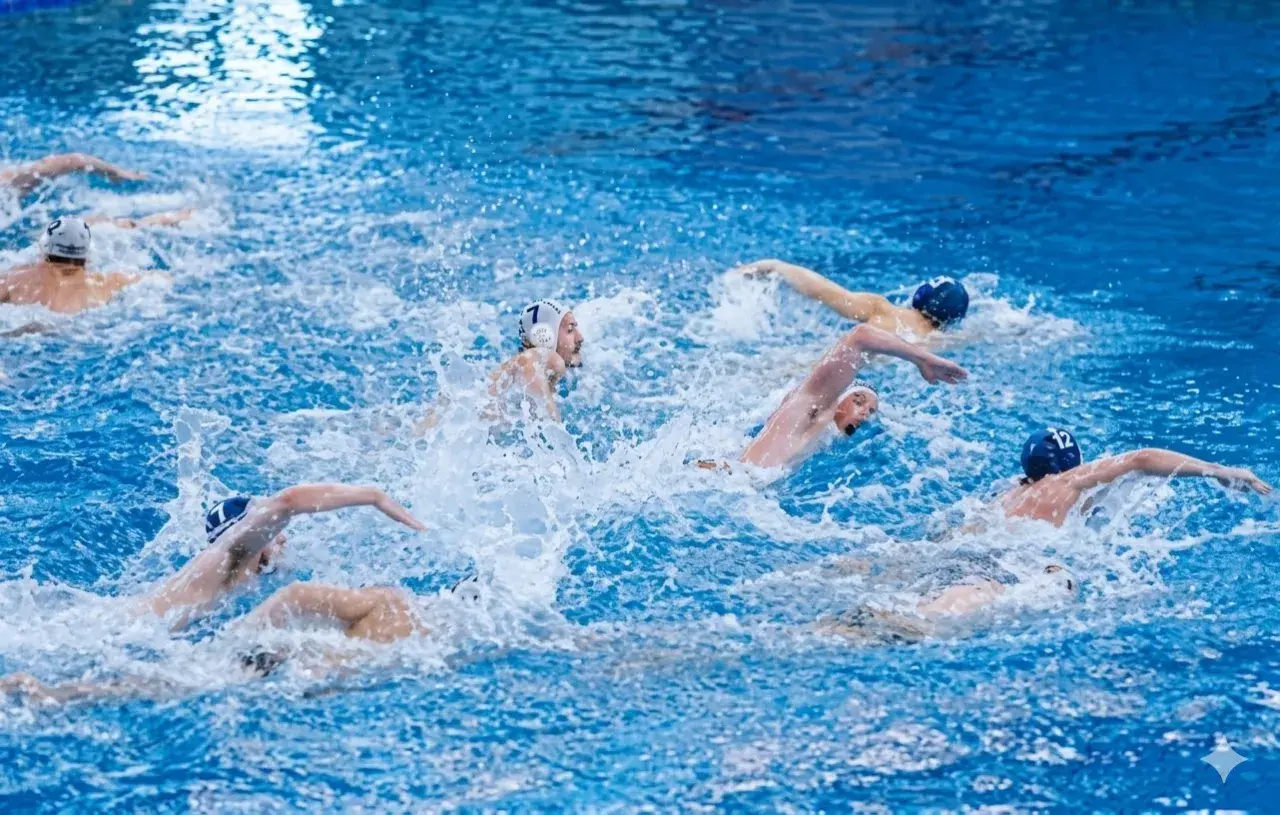
Every period begins with both teams lined up on their goal lines, then racing to the ball at center. The opening swim-off is not a ceremonial reset; it is a real battle for first possession, and that first possession often decides which team gets to play on its own terms.
I like this detail because it reveals the sport’s personality. Water polo is not a slow possession game. It is a chain of resets, and the first few seconds after the whistle often determine whether a team can settle into offense or gets dragged straight into defense.
For swimmers, the pattern is familiar. For divers, the useful crossover is body control under speed: staying compact, exploding cleanly, and recovering fast enough to repeat the effort again almost immediately. A strong start is nice, but in water polo it only matters if the next recovery is just as sharp.
That is why the opening minute of a period deserves more attention than casual viewers usually give it. The period may last eight minutes on paper, but the opening race can shape the entire rhythm that follows.
Why 32 minutes often turns into an hour
The printed game time is short, but the stoppages are constant. The clock stops after goals, during many fouls, after exclusions, on timeouts, and whenever the referee has to reset play, so real time stretches quickly. World Aquatics updated its competition regulations in February 2026, and the current international framework still makes the possession clock part of that pressure: 25 seconds for men and 30 seconds for women.
That means the offensive team is working against two clocks at once, the period clock and the shot clock. If you are new to the sport, the easy mistake is to judge intensity by the official playing time instead of the repeated bursts inside it. I never do that. I judge it by how often the players are forced to spike, recover, and spike again.
In practice, a regulation match usually feels closer to a full hour than to half an hour because the game is stopped so often. That matters for conditioning, and it also matters for pacing, because the best teams conserve energy without ever looking passive.
Once you see that, the way teams use each quarter starts to make more sense.
How the pace changes across the four quarters
I usually explain the four quarters like this: the first is for discovery, the second for discipline, the third for adjustments, and the fourth for stress. That is not a rulebook definition, but it matches how strong teams behave.
| Quarter | What teams usually try to do | What it tells you |
|---|---|---|
| First | Establish tempo, test matchups, and find the referee’s standard | The game is still forming; early errors are often about nerves, not quality |
| Second | Protect possessions and avoid soft exclusions | Bench management starts to matter |
| Third | Make the first serious tactical push after halftime | Fitness and coaching adjustments begin to show |
| Fourth | Spend the clock well and attack only high-value chances | Decision-making is usually the separator |
The better the team, the more intentional the fourth quarter looks. Lazy entries, rushed shots, and casual fouls get expensive there. That is also why the U.S. format differences are worth checking before a tournament starts.
What changes in U.S. competitions
In the United States, the broad shape of the game is familiar, but the exact timing still depends on the level. College and senior-style matches are commonly built around four eight-minute periods, while youth and tournament formats can shorten the quarters to fit age, field size, or event logistics.
USA Water Polo’s junior-event guidance is a good example of why you cannot assume every bracket runs the same way. Quarter lengths can vary by age group and even by stage of the tournament, so a team may play one set of lengths in pool play and another once the format advances. That is the kind of detail that saves a coach from building the wrong warm-up or tempo plan.| Setting | Typical period structure | What to expect |
|---|---|---|
| International senior play | Four 8-minute periods | Stopped-clock rhythm, quick tactical swings, and strong shot-clock pressure |
| U.S. college play | Usually four 8-minute periods | Similar quarter structure, with substitutions and pacing shaped by dead-ball moments |
| Youth and Junior Olympic formats | Shorter, age-based quarters that may change by round | Check the event sheet; a division can run shorter periods than senior play |
That variation is normal, not confusing. Once you get the competition level right, the training advice becomes much easier to apply.
Why the clock matters for swimmers, divers, and conditioning
This is the part I care about most from a performance angle. Water polo is built on repeated fast efforts with short rest, which is why the best training patterns look more like interval sets than steady-distance swimming. If you come from diving or swimming, that should sound familiar: the sport rewards explosiveness, body tension, and the ability to keep producing quality after you are already uncomfortable.
That has a practical consequence. Pure conditioning without repeat-sprint work is incomplete, and endless sprint work without enough recovery or technique also falls short. The sweet spot is a mix of short bursts, vertical leg work, and enough aerobic base to let the athlete recover between those bursts.
- Short sprint sets build the first-attack burst that matters at the start of each period.
- Eggbeater and treading work support balance, passing height, and late-quarter stability.
- Recovery swimming helps athletes clear the last sprint and be ready for the next possession.
- Breath control matters because contact and pressure make every effort feel more expensive.
When I coach around this theme, I tell athletes to train for the second and third repeat, not just the first one. That is where the game usually exposes weak conditioning. The final piece is knowing how to use the clock instead of fighting it.
What I tell athletes to check before the first whistle
Before a match, I want one thing clear: know the period length, know the possession clock, and know how the tournament handles substitutions and timeouts. That sounds basic, but it is usually where the first avoidable mistakes start.
- Start the game with a plan for the first minute, not just the first shot.
- Save energy for the last quarter, because close games are often decided there.
- Use the breaks to reset breathing and roles, not just to get a drink.
- Check age-group or event rules in advance, especially if you are moving from junior club to college-style play.
Once the timing is clear, the sport becomes easier to read and a lot easier to train for. For me, that is the real value of understanding the clock: it turns water polo from a blur of whistles into a game with patterns you can actually use.
