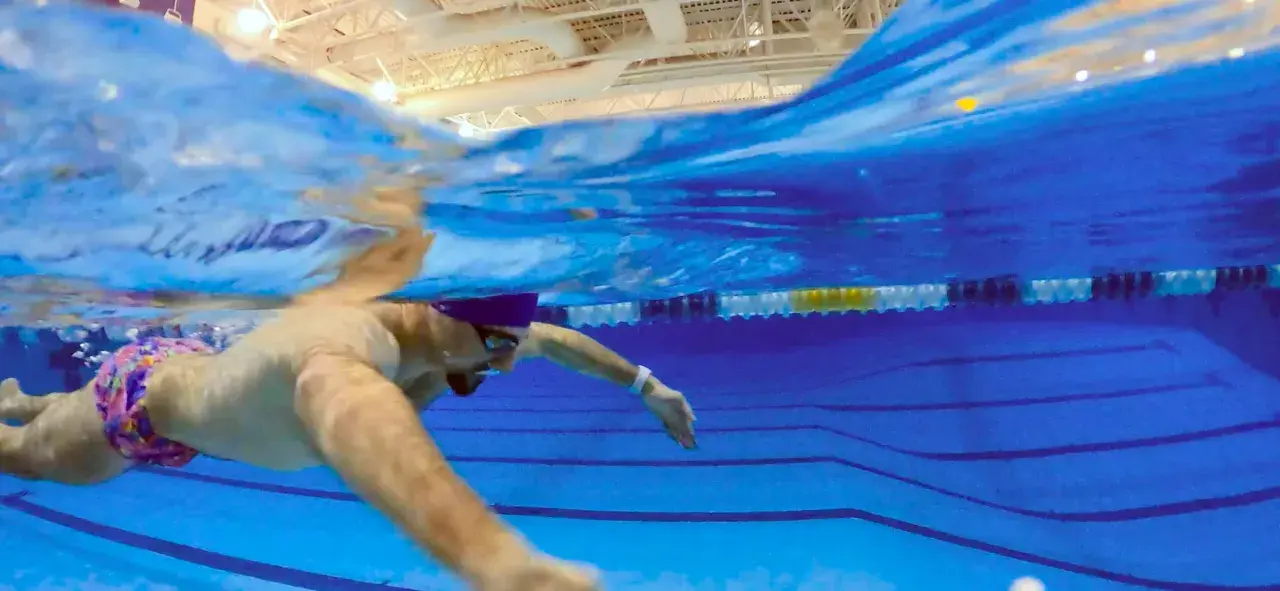
Sculling is one of the quiet skills that changes how swimming feels from the inside out. If you want to know what is sculling, the short answer is that it is a controlled hand-and-forearm action used to feel, hold, and direct water, not a separate race stroke. In this guide I break down how it works, which variations matter, and how to practise it so it improves balance, body position, and the catch.
The essentials at a glance
- Sculling is a skill, not a stroke. It helps your hands and forearms learn how to grip water instead of slipping through it.
- The motion is small and controlled. Think figure-eight or gentle side-to-side sweeps, with relaxed shoulders and quiet elbows.
- It improves more than propulsion. Good sculling also sharpens body position, balance, rotation control, and treading water.
- UK coaching uses it early. Swim England builds sculling into its learn-to-swim pathway and water-safety work.
- Bad sculling usually looks busy. If the water is splashing and the shoulders are tense, the hand angle is probably wrong.
How the movement works in the water
I usually explain sculling as a way of setting the hand in the water rather than pulling through it. Your palm and forearm change angle just enough to create pressure differences, and that pressure gives you support or movement. When the hand is pitched correctly, the water seems to hold you; when it is pitched badly, it slips past and you feel as if you are chasing the water instead of controlling it.
That is why hand position matters more than force. Sculling is not about muscling the pool. It is about learning how to place the hand so the water pushes back in the direction you need, whether that means staying still, staying high, or moving a little bit forward.
Once you understand that pressure concept, the different scull shapes make a lot more sense.
The main sculling positions swimmers use

Different positions teach slightly different things, but they all train the same basic idea: make the water work for you. I like to separate them by where the body is and what the hands are trying to do.
| Variation | Body position | What it trains | Key cue |
|---|---|---|---|
| Front scull | Face down, arms extended in front | Early catch, hand pitch, feel for water | Keep the sweep small and let the forearm do real work |
| Mid scull | Hands under the shoulders, elbows softly bent | Support, stability, control in the middle of the stroke | Keep the elbows quiet and the shoulders relaxed |
| Hip scull | Hands near the hips | Finish phase of the pull and subtle propulsion | Press water out and back without sweeping wide |
| Vertical scull | Upright, little or no travel | Treading water, survival work, body control | Stay tall and keep the head clear of the surface |
| Travelling scull | Any of the above while moving | Orientation, balance, and control while changing position | Hold the water while the body moves past the hands |
If you are not sure where to start, I begin most swimmers on front and vertical sculling. Those two versions show very quickly whether the hand is actually holding water or just waving through it. Once that feels familiar, the drill work gets much more productive.
A simple drill sequence that teaches it properly
I prefer a progression that removes distractions. A front snorkel helps if breathing breaks the body line, and a pull buoy can keep sinking legs from hijacking the session. The point is not to hide bad technique behind equipment; it is to make the hand path easier to feel.
- Start in chest-deep water or a horizontal float with a relaxed body line.
- Place the hands slightly wider than shoulder width and make a small figure-eight or sweeping motion.
- Keep the elbows and shoulders as still as possible so the movement comes from the hands and forearms.
- Do a short set such as 4 x 20 seconds, resting long enough to keep the motion precise.
- Repeat the same idea in vertical position for 20 to 30 seconds so you learn to stay stable while upright.
- Finish with a little travelling scull, then swim a few strokes and notice whether the catch feels cleaner.
That sequence sounds simple because it should be. If the drill is working, you will feel the water more clearly, not less. You will also notice that the body stays calmer while the hands do the job. Once you can feel that difference, the common errors become much easier to spot.
Common mistakes that stop the drill from working
Sculling often fails for one reason: swimmers make it look active instead of effective. The water does not reward drama. It rewards clean pressure and quiet control.
- Turning it into circles. The motion should feel like a controlled figure-eight or sweep, not a mini breaststroke pull.
- Pressing straight down. If the palms drive only towards the pool floor, the body bobs instead of moving efficiently.
- Letting the shoulders take over. The upper body should stay calm; the hands and forearms should do the delicate work.
- Using too much kick. A hard kick can hide poor hand position, but it also makes the drill less honest.
- Chasing speed too early. Fast sculling with bad shape is just noisy water. Slow down until you can actually feel the pressure.
The clean version usually feels almost too small at first. That is normal. The cleaner the pattern, the more useful it becomes when you return to full strokes.
Why coaches keep coming back to sculling in UK swimming
In the UK, sculling is treated as a foundation skill, not a novelty drill. Swim England includes a 5-metre head-first scull on the back in Stage 4, then adds stationary and travelling sculls in Stage 5, which tells you how early coaches expect swimmers to learn water control. Later aquatic-skill stages build on that same idea with travelling sculls and more advanced body positions.
Swim England’s water-safety guidance uses sculling as well, especially for stabilising a float and supporting treading water while keeping the head clear of the surface. That matters because it shows the skill is useful in both performance and survival contexts. It is one of the few techniques that genuinely serves both.
You also see the same logic in artistic swimming and water polo, where the body often has to stay organised while the hands do quiet but constant work. That crossover is one reason I keep returning to sculling even with experienced swimmers. It builds control that carries across disciplines.
The real test, though, is whether the skill carries over into your full strokes.
The cues that tell you it is carrying over into full strokes
When sculling starts helping rather than just occupying time in the session, the water feels different. I look for a few simple signs:
- Less splash. The movement is quiet, not frantic.
- More support. Your body stops dropping between hand sweeps.
- Clearer direction. You can move forward, backward, or stay still on purpose.
- Better carry-over. Freestyle catch, breaststroke insweep, butterfly finish, or backstroke support all feel cleaner.
- Calmer breathing. You are not fighting the drill just to stay afloat.
When those cues show up, I know the drill has stopped being separate from swimming and started becoming part of it. Keep the movement compact, patient, and honest, and it will pay you back in every stroke you take.