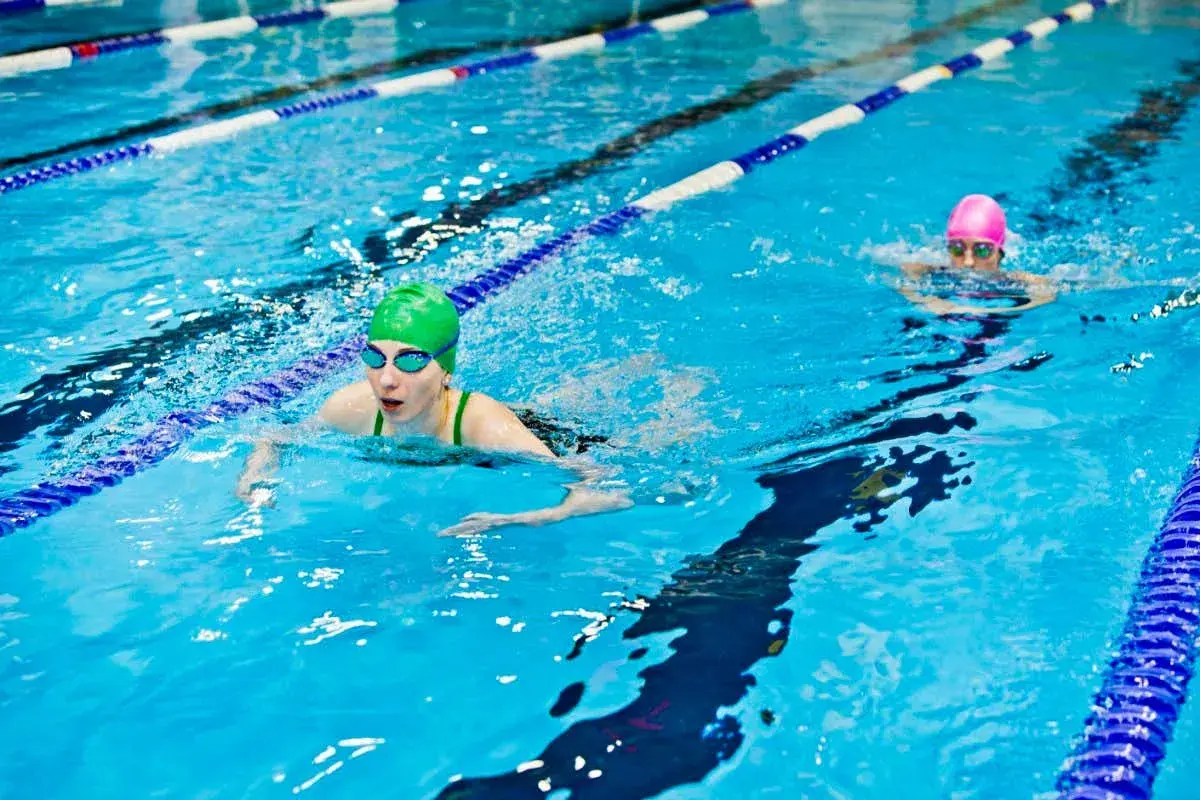
When I compare breaststroke vs freestyle, I am really comparing two different ways of moving, breathing, and managing effort in the water. Freestyle, or front crawl, is built for speed and distance, while breaststroke rewards timing, control, and a more relaxed breathing pattern. In this article I’ll show you where each stroke wins, which mistakes slow swimmers down, and how to choose the one that fits your goal.
The short version of what matters most
- Freestyle is usually the faster, more efficient stroke for distance and pace control.
- Breaststroke is more technical than it looks, and a strong kick matters more than many swimmers expect.
- Front crawl asks more of the shoulders and core; breaststroke asks more of the hips, knees, ankles, and timing.
- For fitness, triathlon, and open-water preparation, freestyle usually comes first.
- For recovery, confidence, and rhythm work, breaststroke still earns its place in the session.
How the two strokes differ in the water
In British coaching, freestyle usually means front crawl, and that is the stroke most swimmers use when they want to move efficiently. Breaststroke, by contrast, is a short-axis stroke with a very different rhythm: you pull, breathe, kick, and then briefly settle into a glide. Swim England’s guidance for front crawl focuses on a flat, streamlined body line, which is exactly why it feels so different from the more up-and-down timing pattern of breaststroke.
| Factor | Breaststroke | Freestyle |
|---|---|---|
| Body line | More rise-and-fall through each cycle, with a short glide | Flatter, longer, and more streamlined with body rotation |
| Arm action | Simultaneous pull and recovery underwater | Alternating arm recovery over the water |
| Kick | Frog kick, with most propulsion coming from the legs | Flutter kick, smaller but continuous |
| Breathing | Built naturally into the stroke cycle | Rotational breathing to the side |
| Typical speed | Usually slower, with more drag between cycles | Usually faster and easier to hold over distance |
| Best use | Control, technique, and relaxed pacing | Fitness, racing, and longer continuous swimming |
Why freestyle usually wins on speed and efficiency
Freestyle tends to be faster because it allows more continuous propulsion. One arm is always working while the other recovers, and that steadier rhythm helps preserve speed between breaths. In practical terms, that makes a big difference in a 50 metre sprint, a 400 metre set, or a long pool swim where every small pause adds up.
I usually describe freestyle as the stroke that rewards economy. You do not need huge, dramatic movements to swim it well; you need a stable body line, a clean catch, and a breathing pattern that does not break your rhythm. Most swimmers find that breathing every two or three strokes is easier to sustain than trying to lift the head and force a breath, because the stroke keeps moving while the breath happens.
Breaststroke can still feel “slower” even when the swimmer is powerful, simply because the stroke is built around a stop-start rhythm. That is not a flaw. It is the trade-off. You get more control and a natural breathing moment, but you give up some of the constant forward drive that makes freestyle the default choice for distance and race pace. That trade-off is exactly why the technique details matter so much.
The technique details that actually change the result
This is where most swimmers lose time without realising it. The difference between a clean stroke and a tiring one is rarely brute strength. It is usually timing, body position, and whether the swimmer is fighting the water or moving with it.
Breaststroke timing
Breaststroke works best when the pull, breath, kick, and glide flow in a precise order. The kick is especially important. Swim England notes that the breaststroke kick provides most of the propulsion, so if the kick is rushed, too wide, or badly shaped, the whole stroke feels flat. I tell swimmers to think “compact power” rather than “big splash”; that usually produces a cleaner line and less drag.
Two things matter most here. First, the head should rise only enough to breathe, not climb out of the water. Second, the glide should be brief enough to keep momentum alive. A long pause can make the stroke look calm, but it often kills speed. Clean timing beats a long glide almost every time.
Freestyle body line and breathing
Freestyle depends on staying long and narrow through the water. A flat body position, controlled rotation, and a relaxed recovery usually do more for speed than forcing the stroke. Swim England’s front crawl guidance pushes that same idea: keep the body streamlined and the head in line with the body so the stroke stays efficient.
Breathing is the point where many swimmers unravel. If you lift the head to breathe, the hips drop and the stroke gets expensive fast. I prefer to cue a side breath with one goggle still in the water and a full exhale underwater. That keeps the body calmer and helps the next arm entry feel less rushed. In other words, freestyle looks like one continuous system, and the breath has to fit inside it instead of interrupting it.What each stroke asks from your body
Breaststroke and freestyle load the body in different ways, and that matters if you swim often. Freestyle tends to challenge the shoulders, lats, and core over a longer period, while breaststroke places more demand on the hips, inner thighs, knees, and ankles. That is one reason a swimmer can find freestyle tiring in the upper body but still find breaststroke technically awkward or tight through the lower body.
| Body area | Breaststroke | Freestyle |
|---|---|---|
| Shoulders | Moderate load | Higher load, especially in longer sets |
| Core | Important for timing and stability | Important for rotation and body line |
| Hips and inner thighs | Highly involved in the kick | Less dominant |
| Knees and ankles | Can be stressed if the kick is forced | Usually less stressed by the kick |
| Fatigue pattern | Short bursts with pauses between cycles | More even, but can build steadily over distance |
That does not mean breaststroke is automatically gentle or that freestyle is automatically harder. It means the stress lands in different places. If your shoulders are the weak link, freestyle volume needs careful management. If your hips or knees are sensitive, breaststroke needs cleaner technique and less forceful kicking. The smarter swimmer respects those differences instead of pretending all strokes train the same systems.
Common mistakes that slow both strokes down
Most speed loss comes from a few repeatable errors, and once you spot them, the fix is usually simple. I would rather see a swimmer make one clean change than chase five small cues at once. The biggest win is usually removing drag, not adding effort.
Breaststroke mistakes I see most often
- Holding the glide too long, which makes the stroke feel smooth but slow.
- Lifting the head too high to breathe, which drops the hips and breaks the line.
- Kicking too wide, which creates resistance instead of forward drive.
- Pulling the arms too far back, which wastes energy before the kick even begins.
Read Also: Butterfly Arm Action - Master Your Technique
Freestyle mistakes I see most often
- Crossing the hands over the centre line, which twists the body and wastes momentum.
- Breathing by lifting the head instead of rotating the body.
- Overkicking from the knees, which makes the legs sink and tires the swimmer quickly.
- Looking forward too much, which pushes the hips down and increases drag.
Most bad strokes are not really strength problems. They are body-line problems. Once that clicks, swimmers usually improve faster because they stop fighting the water and start using a shape the water can accept. That leads straight into the practical question: which stroke should you actually choose for your own training?
Which stroke to choose for training, fitness, and racing
If I am helping someone choose between the two, I start with the goal. The right answer depends less on preference and more on what the session is supposed to do.
| Goal | Better choice | Why it tends to work |
|---|---|---|
| Swim faster over distance | Freestyle | Continuous propulsion and easier pace control |
| Build confidence in the water | Breaststroke | Natural breathing and a slower, more controllable rhythm |
| Train for triathlon or open water | Freestyle | Matches the demands of race swimming and sustained pace |
| Work on coordination and timing | Breaststroke | It punishes sloppy sequencing and rewards precision |
| Use a recovery stroke | Breaststroke or easy freestyle | Depends on shoulders, breathing comfort, and session intensity |
For most adults and older juniors, freestyle becomes the main fitness stroke because it opens up more training options. Breaststroke still matters, though, especially for swimmers who want a stroke that feels calmer, more deliberate, or easier to regulate over short distances. In my own coaching mindset, freestyle builds the engine and breaststroke checks the timing. Used together, they give you a better all-round feel for the water.
What I would work on first if I had only one session
If I had one short pool session to improve both strokes, I would not try to fix everything at once. I would swim a few easy lengths of freestyle first and focus on a long exhale, a quiet kick, and a stable head position. Then I would switch to breaststroke and concentrate on a compact kick, a brief glide, and breathing without lifting the chest too high.
A simple structure is enough: a small freestyle block to lock in body line, a short breaststroke block to sharpen timing, and then a mixed set where you keep the same effort but notice which stroke falls apart first. That tells you more than endless yardage does. Breaststroke teaches control; freestyle teaches economy. If you can move between them with intention, you become a more adaptable swimmer in every kind of session.