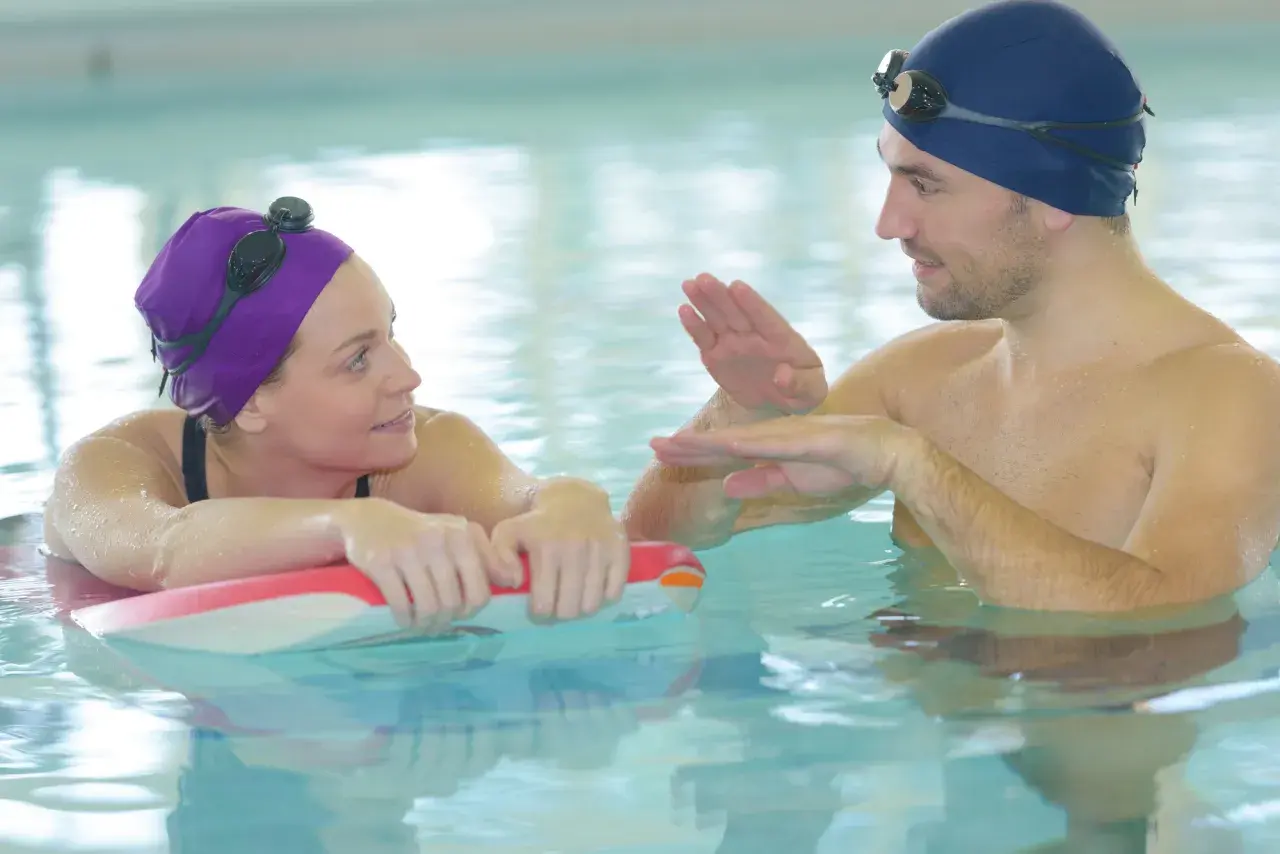
What matters most when you compare adult swim programs
- Start with water comfort, exhalation, floating, and body position before chasing lap speed.
- Group lessons are usually the best value; private lessons usually move faster when fear or schedule is the barrier.
- A strong instructor teaches adults differently than children, with clearer explanations and more patient correction.
- Useful credentials include adult-learn-to-swim training, Red Cross Water Safety Instructor certification, and CPR/AED experience.
- Early progress is often subtle: calmer breathing, easier floating, and less tension in the neck and shoulders.
What adult swim lessons are designed to solve
The real job of adult swim lessons is not to make someone look like a competitive swimmer overnight. It is to remove the biggest barriers that keep adults out of the water: fear, poor breathing control, bad body position, and uncertainty about what to do when the water gets deeper than expected.
The scale of that problem is larger than many people assume. The CDC reported that 54.7% of U.S. adults had never taken a swimming lesson, and U.S. Masters Swimming says about one-third of adults cannot safely swim the length of a pool. That is why a good beginner class starts with basic comfort and survival skills, not with a perfect freestyle stroke.
That also changes how I judge a program. If the class is only teaching arm motion but never helps you relax in the water, breathe under control, or recover from a brief moment of panic, it is missing the point. Once that is clear, the next step is choosing the format that matches your goal.
How to choose the right lesson format
Adult programs in the U.S. usually fall into four practical buckets: group lessons, private lessons, semi-private lessons, and stroke-focused classes for swimmers who already have basic water comfort. Many YMCA programs sort adults by skill level rather than by age alone, which is the right idea. A calm beginner and a confident lap swimmer should not be taught the same way.
| Format | Best for | Typical setup | Main strength | Main tradeoff |
|---|---|---|---|---|
| Group lessons | Adults who want structure and lower cost | 30 to 60 minutes with several swimmers | Good value, social momentum, clear progression | Less individual correction |
| Private lessons | Fearful beginners, busy schedules, or fast progress goals | One instructor, one swimmer | Most personalized feedback | Highest cost |
| Semi-private lessons | Couples, friends, or two adults with similar goals | One instructor, two swimmers | Balanced attention and cost | Shared pace |
| Stroke clinics | Adults who can already float and swim short distances | Often 45 to 60 minutes | Technical refinement | Usually too advanced for true beginners |
Pricing in the U.S. varies sharply by city, facility, and instructor experience. I have seen public-program packages as low as $70 for seven adult classes, public pool private lessons listed at $47.50 for one session or $170 for four, and private instruction elsewhere priced much higher. That spread is normal; what matters is how much direct coaching time you are buying and whether the format matches your current comfort level.
If your biggest obstacle is fear, private lessons often pay for themselves quickly. If your biggest obstacle is budget, a well-run group class is usually enough to build the foundation. Once the format is right, the instructor becomes the real difference-maker.
What a strong instructor does differently
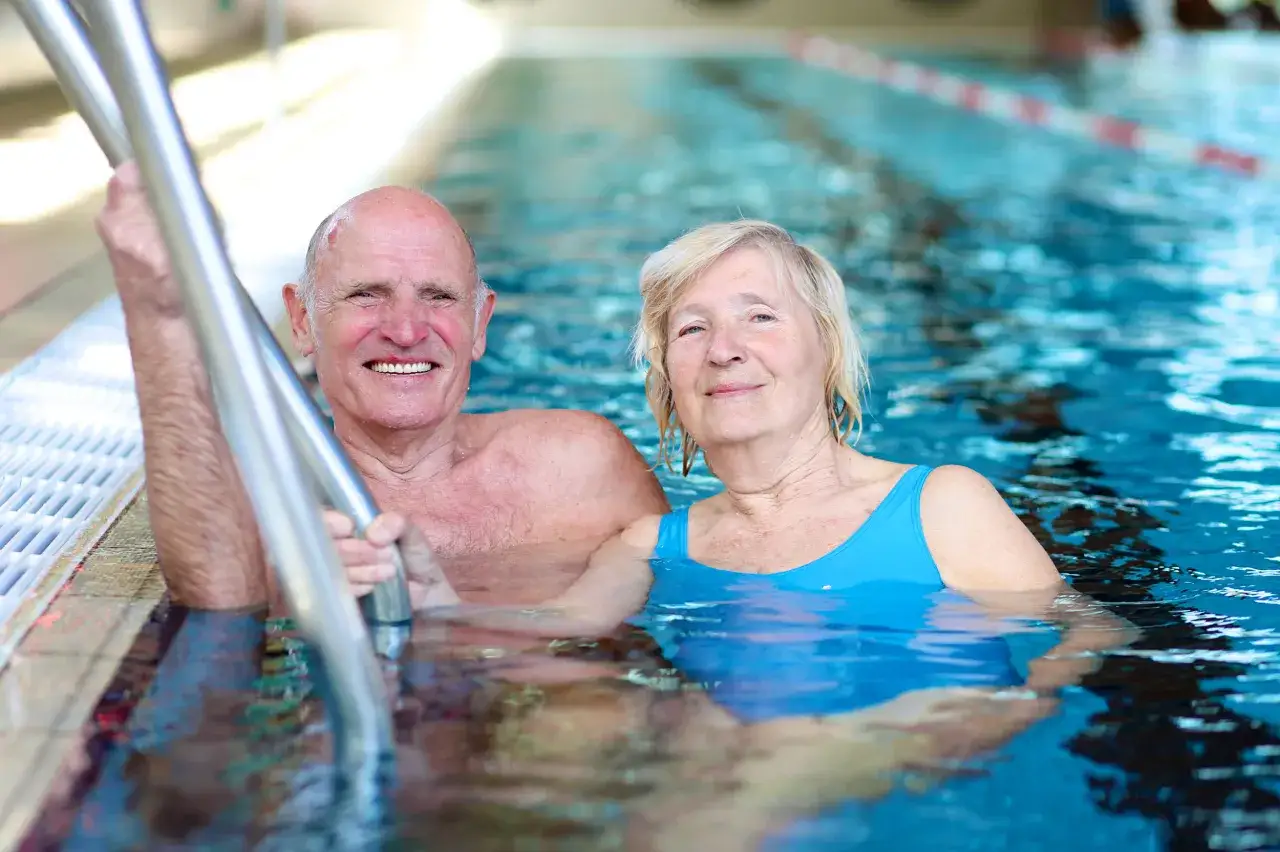
I care less about a coach’s lap time and more about whether they can teach an adult who is tense, self-conscious, or stuck. The best instructors use simple language, demonstrate clearly, and keep the session moving without making you feel like you are being tested every minute.
Credentials worth checking
For adult learners, I look for an instructor with adult-learn-to-swim training, Red Cross Water Safety Instructor certification, CPR/AED knowledge, and real experience teaching beginners. U.S. Masters Swimming offers adult learn-to-swim instructor certification, which is a strong signal that the coach understands how adults learn differently from children.Read Also: Swim Lesson Essentials - Your Ultimate Packing Guide
Teaching style that matters more than flash
- They give one or two cues at a time instead of twenty.
- They correct fear without dismissing it.
- They can explain why a drill matters, not just what to copy.
- They adjust the lesson when a swimmer is tired, anxious, or overwhelmed.
- They keep the pool environment calm enough for real learning.
A strong adult instructor also understands pacing. Adults often need a little more time to process a movement, but they do not need endless repetition of the same vague instruction. When the coaching is good, you should leave the pool knowing exactly what improved and what to practice next. That leads naturally into the first skills a serious program should cover.
What the first classes usually cover
In the opening lessons, I expect the instructor to work from the water up: getting comfortable with entry and exit, learning to exhale underwater, floating with support, recovering to standing, and building trust in shallow and deep water. If a beginner class skips those steps, it is moving too fast.
- Water entry and exit - This builds immediate safety and reduces the sense that the pool is a mystery.
- Breathing control - Adults often hold their breath too long; learning to exhale steadily changes everything.
- Floating and gliding - These skills teach buoyancy and body position before full strokes are added.
- Kick and streamline basics - Good alignment reduces drag and makes movement feel easier.
- Simple propulsion - Short freestyle work usually comes before long distance swimming.
- Treading water - Many programs treat 30 seconds as an early goal and one minute as a useful next milestone.
That sequence is not glamorous, but it works. Once an adult can float, breathe, and move without panic, stroke mechanics improve much faster. The problem is that many learners accidentally sabotage that progress, which is what I want to address next.
The mistakes that slow adults down
Most adult swimmers do not fail because they are incapable. They slow themselves down by trying to solve the wrong problem first.
- Trying to swim before learning to breathe - A tight breath pattern makes every other skill harder.
- Picking a level that is too advanced - Confidence drops fast when the class assumes too much.
- Holding tension in the neck and shoulders - That tension sinks the body and wastes energy.
- Expecting one lesson to change everything - Adult learning depends on repetition, not one perfect session.
- Choosing a coach who teaches children the same way they teach adults - Adults need more explanation and more respect for fear.
- Practicing only on lesson day - Even 10 to 15 minutes of extra pool time, when safe and supervised, can help the body remember.
I also see adults get stuck because they confuse embarrassment with inability. The first few sessions can feel awkward, especially if the pool environment is busy or the instructor is too fast. That is not failure. It is information, and it should guide the next adjustment. From there, the right question becomes how to measure progress without inventing it.
How to measure progress without guessing
Progress in swimming is easy to miss if you only look for distance. For adults, the better signs are smaller and more useful: calmer breathing, less fear at depth, smoother body position, and the ability to repeat a skill with less coaching.
| Checkpoint | What improvement looks like | Why it matters |
|---|---|---|
| Comfort | You can put your face in the water, exhale, and recover without rushing | Breathing panic is usually the first bottleneck |
| Control | You can float, glide, or tread water for 30 to 60 seconds with less strain | That shows usable body awareness, not just survival effort |
| Consistency | You can repeat the same skill across several reps, not just once | Repeatability is what turns a drill into a real skill |
| Movement | You can cover short distances without losing breathing rhythm or body position | That is the bridge from lesson work to actual swimming |
For most adults, I expect the first meaningful shift within a handful of lessons, not months of confusion. The exact pace depends on fear level, pool frequency, instructor quality, and whether the swimmer is practicing outside class. Once the basics start to click, the focus should change again.
What to do after the basics start to click
When an adult can float, breathe, and move with basic control, the next step depends on the goal. Some people want casual pool confidence, some want fitness, and some want open-water or triathlon preparation. Those are not the same path, and a good instructor should say so plainly.
- If your goal is general confidence, keep building freestyle, back float, safe entries, and treading water.
- If your goal is fitness, add stroke efficiency, pacing, and longer repeat sets.
- If your goal is open water, practice sighting, directional awareness, and comfort without walls.
- If your goal is speed, work on stroke mechanics only after body position and breathing are stable.
I like programs that end each phase with one practical homework drill and one safety skill. That keeps adult swim lessons from turning into vague pool time. If your instructor can point to the next clear milestone, you are in the right place; if not, you may be paying for motion without real progress.