What matters most before you book home-visit swim lessons
- Private lessons work best when the swimmer needs calm, repetition, and one-to-one feedback.
- In the UK, I would look for a current DBS check, safeguarding training, insurance, and a recognised teaching qualification.
- Good sessions are short, focused, and planned around a clear goal rather than “just getting in the water”.
- Travel, pool access, and lesson length all affect price, so the cheapest quote is not always the best value.
- Five- or ten-lesson blocks usually make progress easier to track than one-off bookings.
What a mobile swim instructor actually does
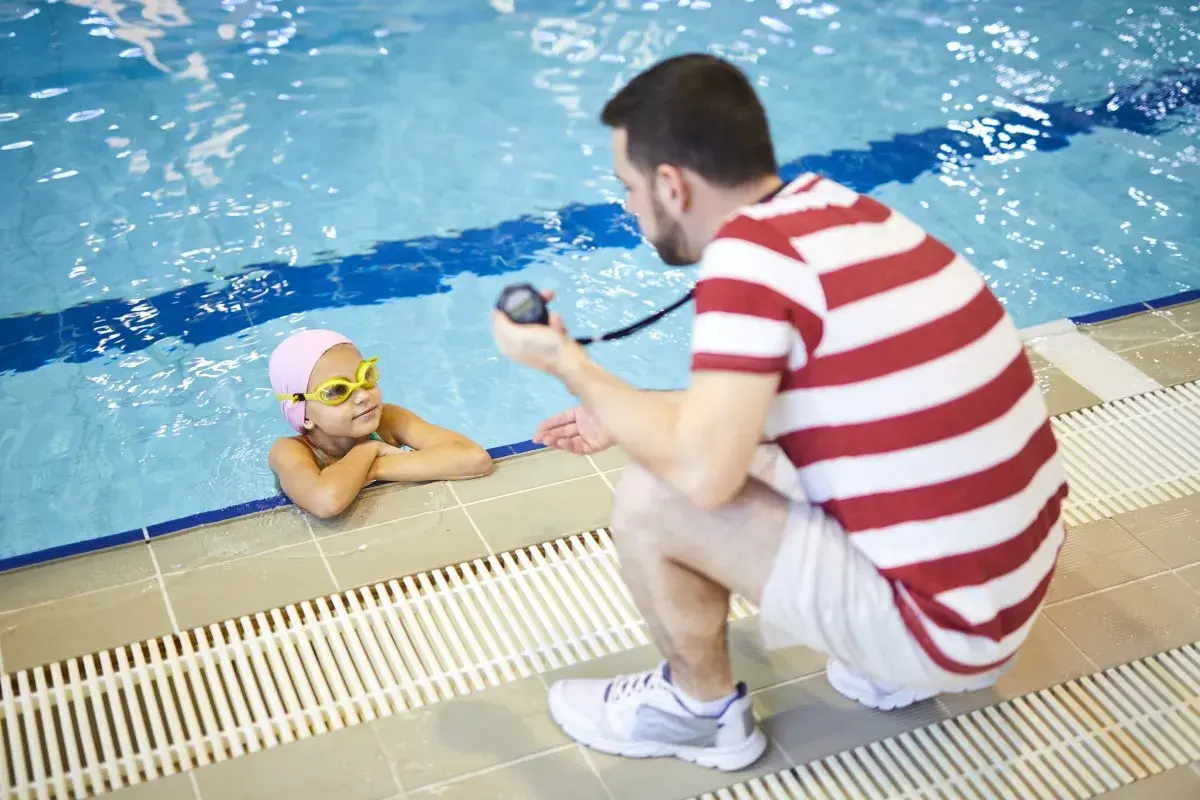
In practical terms, this is a swimming teacher who travels to you and runs the lesson where it suits the swimmer best: a home pool, a hired private pool, a hotel pool with permission, or a community facility that allows outside coaching. That setup removes a lot of friction, which matters more than people expect. If a child arrives less flustered, or an adult does not lose energy before the lesson even starts, the teaching tends to land better.I find this format especially useful for nervous beginners, adults returning after years away, children who get overwhelmed in busy pools, and stronger swimmers who need stroke correction without lane pressure. It also suits families who want lessons to fit around school runs, work, and nap times. The trade-off is simple: you are paying for convenience and attention, so the session needs to be structured well or the premium is wasted.
That is why the best instructors are not just good swimmers. They are good at adjusting pace, giving one clear cue at a time, and reading what the swimmer can actually handle on that day. From there, the question becomes when this format is the right choice and when it is not.
When private lessons beat group classes
Not every swimmer needs a travelling teacher. Some people progress perfectly well in group lessons, especially when budget matters or social learning helps motivation. The point is to match the setting to the problem you are trying to solve.
| Lesson type | Best for | Strengths | Limitations |
|---|---|---|---|
| Home-visit private lesson | Nervous swimmers, busy families, technique work, swimmers with a private pool | Highly personalised, no travel to a lesson, familiar environment | Higher cost, depends on pool access and a safe setup |
| Leisure-centre private lesson | Swimmers who want one-to-one teaching but do not have a private pool | Structured pool environment, often easier to schedule than classes | Less convenient, fixed venue and time slots |
| Group lesson | Budget-conscious families, social learners, steady long-term progression | Lower cost, peer motivation, established programmes | Less individual feedback, slower correction of specific faults |
For early water confidence, I usually prefer a private format. For routine stamina work, race skills, or consistent long-term progression, a group programme can be enough. The real answer depends on how much correction the swimmer needs, which leads naturally to the lesson setup itself.
The lesson setup that saves time and avoids awkwardness
A good session starts before the teacher steps in the water. I like to see the essentials ready: clear access to the pool, a towel and goggles within reach, a safe entry and exit point, and a small kit of teaching aids if needed. That might include a kickboard, pull buoy, fins, or a flotation aid, but I would rather see a tight, purposeful kit than a bag full of gadgets.
The instructor should also know the swimmer’s age, confidence level, and any relevant concerns before the lesson begins. If a child needs parent support, that should be agreed in advance. If an adult is anxious, the session should start with simple familiarisation rather than immediate drill work. I find that one focused goal per lesson works better than trying to fix everything at once.
Pool conditions matter too. Outdoor pools are workable, but they are less forgiving because weather and water temperature can change the whole mood of the session. Shared pools can work well, but only if access is allowed and the environment is not chaotic. If ten minutes of every lesson are swallowed by logistics, you are buying admin instead of instruction. Once that setup is right, the next decision is choosing the right person to teach it.
How to choose a reliable instructor in the UK
This is the part where I would be picky. In the UK, I want to see a current DBS check, safeguarding training, appropriate insurance, and a recognised teaching qualification from a route such as Swim England or the STA. Those basics do not guarantee a brilliant lesson, but without them I would not move forward, especially with children or vulnerable swimmers.
Beyond paperwork, the better question is whether the instructor can explain how they teach. Good signs are simple: they talk clearly about progression, they are comfortable with beginners and improvers, and they can tell you how they adapt a lesson for a nervous swimmer, a child with short attention, or an adult who wants technical refinement. If their answer is vague, the lesson usually feels vague too.
I also look at venue experience. Teaching in a home pool is not the same as teaching in a busy public lane. A solid travelling coach should understand how to work around a smaller space, how to manage parent involvement without creating distractions, and how to keep the swimmer moving with minimal waiting time. A short trial lesson is often enough to see whether the style fits.
If you are still comparing options, price will matter next, but I would treat it as only one part of the decision.
What the service usually costs and where the value goes
Pricing varies a lot across the UK because travel, pool type, lesson length, and instructor experience all affect the number. Airtasker UK puts the average cost of swimming lessons in the UK at roughly £6 to £80 per session across different formats, while some London private providers start from about £50 per lesson. For a home-visit private session, I would expect the quote to sit towards the higher end of the market once travel is included.| Booking style | Planning value | Why it costs what it costs |
|---|---|---|
| 30 minutes | Young children, first introductions, short attention spans | Lower total price, but less time for repetition and feedback |
| 45 minutes | Most private lessons for children and adults | Good balance between focus and stamina |
| 60 minutes | Stroke correction, adults, older swimmers, deeper technical work | Best value when the swimmer can stay engaged for the full session |
| Block of 5 to 10 lessons | Ongoing development | Usually lowers the per-lesson rate and creates a clearer progression path |
The real value is not just convenience. You are also paying for fewer disruptions, more precise correction, and lessons that can be shaped around the swimmer’s exact starting point. If a quote looks very cheap, I would check whether travel is included, whether cancellation terms are strict, and whether the teacher actually brings the equipment they need. Those details make a bigger difference than people think, which is why avoidable mistakes deserve their own section.
The mistakes that slow progress fastest
The first mistake is booking lessons that are too long for the swimmer’s age or attention span. A tired child or a mentally overloaded adult learns slowly, no matter how talented the instructor is. The second is expecting one session to fix a technical problem that has been built over years. Swimming usually changes through repetition, not a single breakthrough.
The third mistake is treating the lesson like an isolated event. Progress improves when the same cue is repeated over several sessions and backed up with simple practice between lessons. I also see families ignore the environment: poor access, cluttered poolside space, or unclear permission to use the pool can waste a surprising amount of time. Finally, price-only shopping often backfires. The cheapest instructor is not a bargain if their setup is messy or their feedback is too generic to be useful.Once those issues are out of the way, the service becomes much more effective, and the final gains usually come from what happens between lessons.
How to turn convenience into real swimming progress
The smartest clients keep the process simple. They choose one main goal, one regular slot, and one or two technical cues to focus on, not five. If the swimmer is a beginner, I would rather see short, frequent lessons than occasional long ones. If the swimmer is more advanced, I would rather see a clear technical theme, such as body position, breathing control, or a stronger kick, than a scatter of unrelated tips.Between sessions, small habits matter: arrive with goggles, towel, and swimwear ready; note the instructor’s main correction in plain language; and keep home practice short enough that it stays consistent. For younger swimmers, parent involvement helps, but only if it stays calm and does not turn into overcoaching. For adults, a mobile lesson works best when the goal is specific and measurable, not just “get better at swimming”.
That is the version of home-visit teaching I trust most: convenient, but not casual; personalised, but not improvised; and focused on steady progress rather than novelty for its own sake.