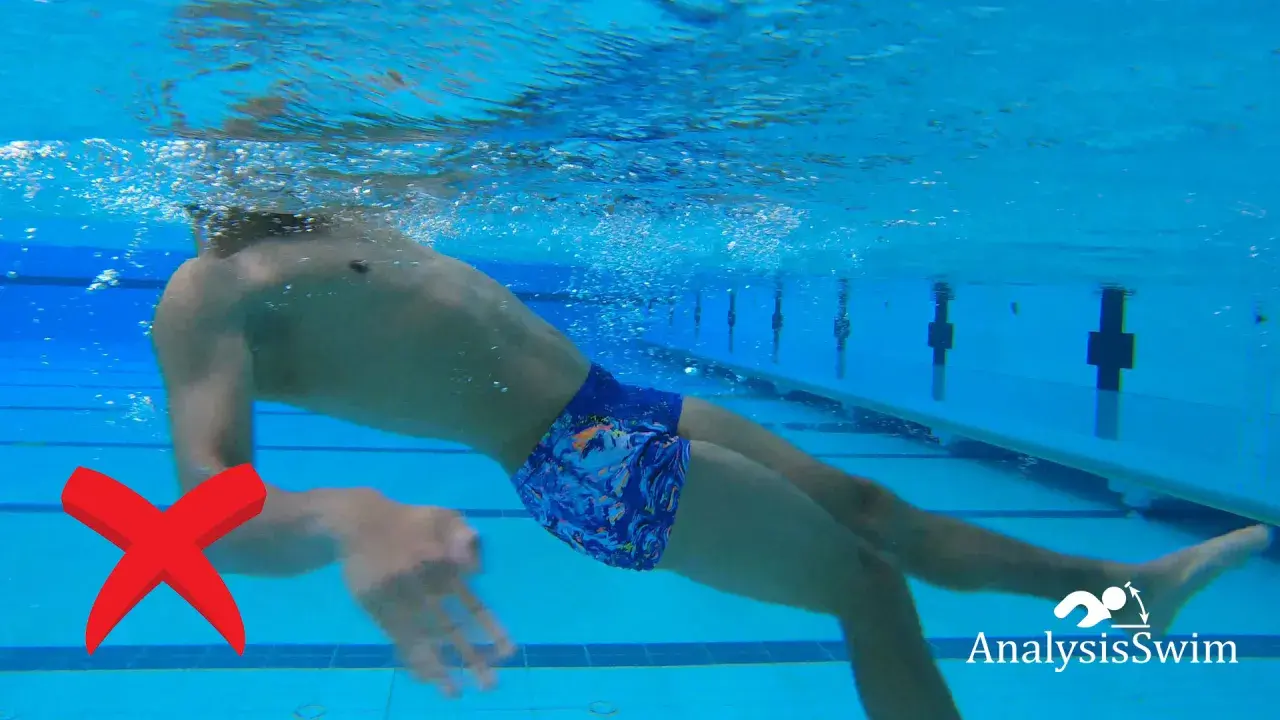
The cleanest backstroke is built from the arms: a calm entry, an efficient underwater press, and a recovery that wastes almost no energy. When those pieces line up, the stroke feels lighter, faster, and much easier to repeat over a full set. In this article, I break the motion down step by step, point out the mistakes that usually slow swimmers down, and show a few drills that make the movement easier to feel in the pool.
The fastest backstroke is built on a tidy arm cycle
- One arm should be pulling underwater while the other arm recovers in a relaxed line over the surface.
- The hand should enter little-finger first, in line with the shoulder, not across the head.
- The underwater pull should press straight back with the forearm and hand, not sweep side to side.
- Body rotation helps the shoulder move freely and keeps the recovery efficient.
- Most swimmers do best when the stroke stays compact and the hand accelerates through the pull.
What the arm action is trying to do
In backstroke, the arms do most of the forward work. The legs help, of course, but if the arm cycle is sloppy, the whole stroke loses speed very quickly. I like to think of it as a continuous exchange: one arm is creating propulsion underwater while the other is resetting cleanly above the surface.
That is why the stroke is not really about making the arms look busy. It is about making each movement earn its place. A good backstroke arm cycle gives you three things at once: forward pressure, a smooth recovery, and enough rhythm to keep the body from going flat and draggy.
| Part of the cycle | What it should do | What usually goes wrong |
|---|---|---|
| Entry | Set up the next pull without crossing the head | Hand lands too wide or cuts across the midline |
| Catch | Turn the forearm and hand so they can press backward | Swimmer starts pulling too soon or with the wrong angle |
| Pull | Apply steady pressure straight back toward the hip | Arm sweeps outward or bends too much too early |
| Recovery | Swing the arm over the water with almost no effort | Elbow bends, shoulder lifts, or the arm is forced out of the water |
Once the goal of the stroke is clear, the next question is how that motion should actually look from entry to exit.

The pull and recovery from entry to exit
When I coach this stroke, I ask swimmers to think in four simple phases. The details matter, but the order matters just as much. A clean backstroke cycle usually starts with a stable hand entry, moves into an early catch, finishes the underwater push near the hip, and then lets the arm recover without strain.
| Phase | What to do | Practical cue |
|---|---|---|
| Entry | Bring the hand in line with the shoulder, little finger first. | Think “straight in, not across.” |
| Set-up | Rotate the forearm so the hand and forearm face backward early. | Feel the palm and forearm start to load the water. |
| Pull | Press straight back with a firm but controlled path. | Move the water toward the hip, not toward the side wall. |
| Exit and recovery | Let the hand leave near the thigh and swing the arm over the water with a straight elbow. | Recover the arm, don’t lift it. |
The underwater part should feel like a strong backward press, not a sculling motion. That matters more than it sounds. A lot of swimmers try to make the hand work in little circles or side-to-side sweeps, but that usually leaks force. I prefer a simpler idea: set the forearm early, keep pressure on the water, and accelerate through the pull so the hand exits with speed left in it.
The recovery should look almost effortless. The hand leaves the water near the thigh, the arm stays long, and the shoulder guides the hand back into position over the same lane line. If the recovery feels heavy, the usual cause is not the recovery itself; it is that the swimmer held on to the pull too long and killed the momentum needed to swing the arm forward.
That hand-to-hip line is the backbone of the stroke, and it works best when the body is helping instead of fighting the motion.
Why body rotation changes everything
Backstroke is not just an arm stroke on your back. It is a whole-body rhythm, and the torso rotation is what gives the shoulders room to work. When the body rolls toward the pulling arm, the shoulder opens, the catch gets cleaner, and the recovering arm has space to travel over the water without strain.
I usually cue swimmers to rotate enough to free the shoulder, but not so much that the stroke collapses onto the side. If the body stays too flat, the arm path gets short and stiff. If the roll gets exaggerated, timing breaks down and the head, hips, and feet start wandering. The best version sits in the middle: controlled rotation, quiet head, stable hips, and a steady surface line.
One rhythm that helps here is the classic three-kick pattern for each full arm cycle. It is not a magic rule, but it gives the stroke a useful beat. The kick keeps the hips up, the roll stays organized, and the arms can alternate without making the body wobble from side to side.
When that rhythm is in place, the arms feel less forced because the whole stroke is sharing the load.
Common arm mistakes that slow backstroke down
Most problems I see in backstroke come from trying to make the stroke stronger before it is cleaner. That usually creates more effort, not more speed. The good news is that arm problems in this stroke are easy to spot once you know what to look for.
- Crossing the head on entry. This narrows the stroke and forces the hand back out into position before the pull even starts.
- Entering too wide. A hand that lands far from the shoulder often misses part of the water you want to press against.
- Pulling with a completely straight arm. That usually feels long but weak, because the forearm never sets up a useful paddle.
- Bending the elbow too early and too sharply. That turns the pull into a short, narrow motion and reduces the surface area that can press water backward.
- Forcing the recovery. If the arm has to be lifted over the surface instead of swinging there naturally, the stroke will feel heavy very quickly.
- Losing body roll. A flat body makes the shoulder work harder and makes the arm path feel tight.
When I see one of these issues, I do not usually try to fix everything at once. I start with the entry because a bad entry contaminates the rest of the cycle. If the hand lands cleanly and the shoulder can rotate, the catch and recovery become easier almost immediately.
That is also why shoulder fatigue often shows up in swimmers who “muscle” backstroke. The arm motion is supposed to be smooth and repeatable, not dramatic.
Drills I use to clean up the motion
If the full stroke feels messy, I like to strip it down. Short, focused drills make the arm path easier to understand because they remove some of the speed and noise. The goal is not to rehearse a slow version forever. The goal is to teach the body where the stroke should travel.
- Single-arm backstroke. Keep one arm extended while the other completes the stroke. This helps you feel the entry line, the pull direction, and the relaxed recovery without extra moving parts.
- Entry-and-set drill. Pause briefly after the little-finger entry so you can feel the forearm set before the pull begins. This is a useful fix when swimmers rush straight into the underwater phase.
- Tempo backstroke on short repeats. Swim 15 to 25 meters or yards with the same arm shape, then try a slightly faster turnover without losing the clean hand path. This shows whether speed is coming from efficiency or from panic.
- Three-kick rhythm swims. Count the kicks through each full arm cycle. This keeps the body roll and the arm timing connected instead of turning the stroke into disconnected pieces.
I also like simple cues that swimmers can remember under fatigue: “little finger first,” “press to the hip,” and “recover, don’t lift.” Those are plain words, but they solve a lot of technical problems because they keep attention on the right part of the stroke. A swimmer who can repeat those cues cleanly for six or eight lengths is usually on the right track.
Drills work best when they point back to the full stroke, so the last step is deciding what to lock in next time you swim.
What I would focus on in the next session
If I were refining this stroke in the pool, I would focus on one change at a time. First, I would clean up the hand entry so it stays in line with the shoulder. Then I would make sure the forearm sets early enough to press water straight back. After that, I would check that the recovery stays long, loose, and almost effortless.
That sequence gives the arms a better path without asking the shoulders to do extra work. It also tends to improve the rest of the stroke faster than chasing a bigger pull or a flashier recovery. In backstroke, the best-looking arm action is usually the one that feels the simplest to repeat.
If you keep the entry tidy, the pull purposeful, and the recovery relaxed, the stroke starts to look and feel like one continuous line instead of a collection of separate movements. That is the version I would build on in every set, whether the goal is speed, efficiency, or simply better control in the water.