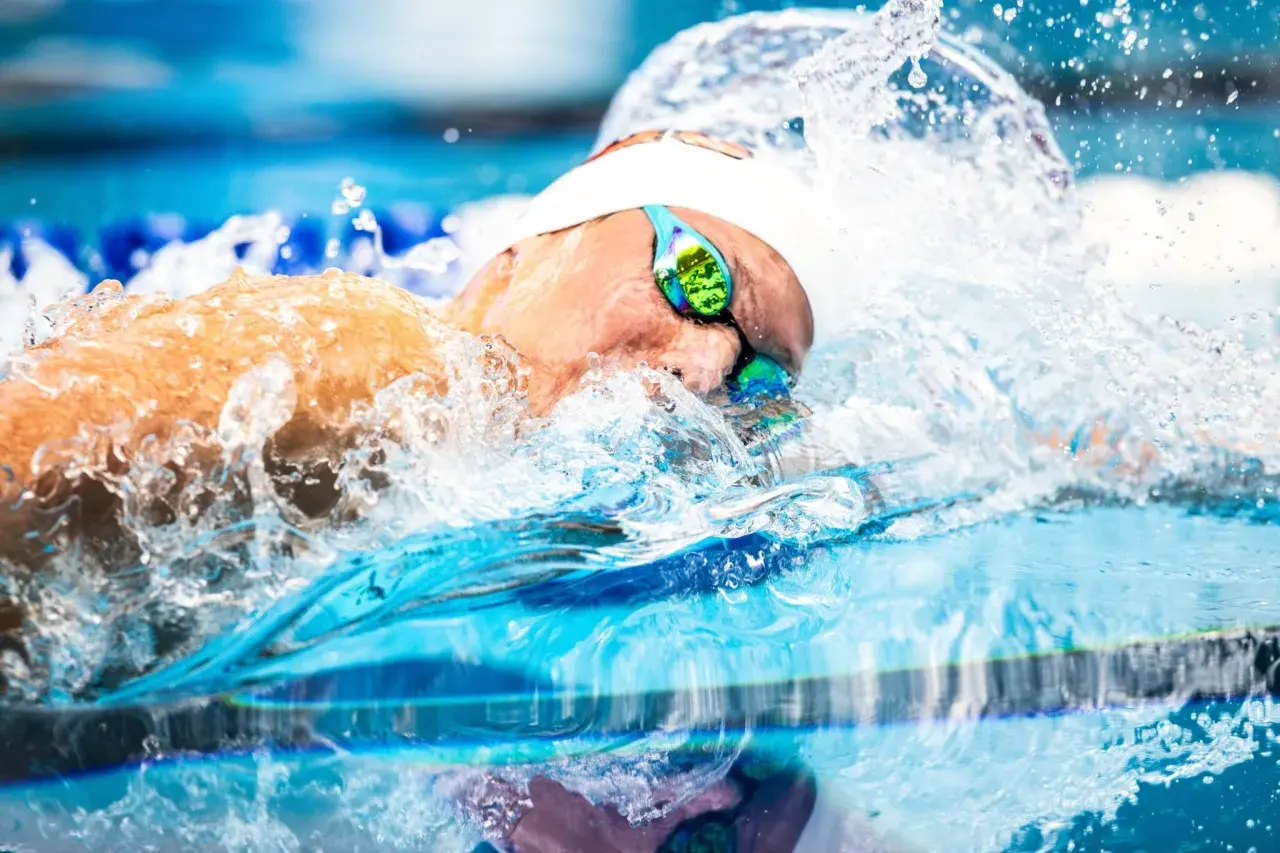
Swimming gets more enjoyable when each repeat gives you a clear answer: better breathing, a cleaner line, a stronger catch, or a calmer body position. The best fun swim drills do not feel like random filler; they make technique easier to notice, easier to repeat, and easier to improve. In this guide I focus on the drills I would actually use, how to make them feel engaging, and how to structure them so they work in a UK pool without wasting time.
Keep every drill tied to one cue, one feeling, and one small win
- Start with body position and breathing, because they shape almost everything else.
- Use short repeats, usually 25m or 50m, so the feedback is obvious before fatigue takes over.
- Alternate drill and swim lengths to transfer the skill into your full stroke.
- Use gear only when it clarifies the movement, not when it hides a weakness.
- Track one simple metric, such as stroke count, breath pattern, or how straight you travel.

What makes a drill fun and actually useful
I define “fun” in a very practical way here: a drill is fun when it gives feedback fast enough to stay interesting. U.S. Masters Swimming coaches often talk about feel for the water, and that is the right standard for me too. A good drill changes what you sense, not just what you know, and the first few reps often feel awkward for exactly that reason.
- One cue only. If I am working on breath timing, I do not also chase kick tempo, hand entry, and turns in the same length.
- Short reps. A 25m or 50m repeat is usually enough to expose the pattern without turning the set into a survival swim.
- Immediate feedback. You should be able to tell within one length whether the body line improved, whether the catch felt cleaner, or whether the breath calmed down.
- A clear target. Count strokes, count breaths, or count how long you can hold a stable streamline. The brain likes something measurable.
- Low friction. In a shared lane, the best drill is one you can start, stop, and reset without disrupting everyone else.
Once that is clear, the next step is choosing a drill menu that fixes the right problem instead of just filling pool time.
A drill menu that fixes the problems swimmers feel first
If I had to keep only a small set of options on hand, I would choose drills that solve body line, breath control, water feel, and timing. That is why Swim England coaching material on front crawl breathing and backstroke basics keeps circling back to the same idea: clean position first, then add speed.
| Drill | Best for | Why it stays engaging |
|---|---|---|
| Bubble-count breathing ladder | Breath control and rhythm | You can beat your own count from one length to the next without rushing the stroke. |
| Side-kick switch | Body line and balance | Holding one side for six kicks, then switching, turns simple balance work into a small challenge. |
| Sculling in front of the chest | Feel for the water and early catch | The feedback is immediate because tiny hand movements produce very clear pressure changes. |
| Catch-up freestyle | Entry path and timing | It is easy to turn into a stroke-count game without losing the technique focus. |
| One-arm backstroke with rotation | Rotation and head stability | You feel the difference between a clean roll and a rushed, flat stroke almost at once. |
| Kick-glide breaststroke | Timing and patience | Each clean glide gives a clear reward, which makes the drill surprisingly addictive. |
I do not reach for paddles first. A snorkel is often the cleaner tool when the goal is to take breathing out of the equation, while fins are useful when I want more speed and a clearer body line. In a busy UK leisure centre, that also keeps lane etiquette simple because the drill is easy to start and stop. With the menu in hand, the same ideas need to be matched to the stroke you are actually trying to improve.
How I would adapt the same ideas to each stroke
The principle stays the same, but the cue changes. A drill only works if it teaches the right problem for the stroke in front of you.
Freestyle
For freestyle, I care most about continuous exhalation, a quiet head, and enough rotation to breathe without lifting the body line. A breathing ladder, such as alternating between every two and every three strokes, shows whether the rhythm stays intact when the air supply changes. If a swimmer always breathes to one side, I like a few repeats to the other side or a snorkel set to compare how the stroke feels when the breath is removed.
Backstroke
Backstroke breaks down fast when the head starts hunting for the wall. I use a ceiling reference, then a simple rotation drill where the swimmer rocks from side to side with one arm out, because it teaches the body to roll without the chin tuck that drops the hips. If the swimmer drifts or feels unstable, that is useful information, not failure; the drill is exposing the imbalance we need to fix.
Breaststroke
Breaststroke rewards patience more than effort. I like a kick-glide drill where the swimmer kicks, locks into streamline, and checks how far a clean glide carries them before the next pull. If the recovery rushes, the shape of the stroke falls apart almost immediately. The lesson is simple: in breaststroke, timing usually matters more than force.
Read Also: Pool Workouts for Weight Loss - Your Guide to Fat Burning
Butterfly
For butterfly, I keep the reps short and the goal modest. Short body-dolphin sets, single-arm work, or a snorkel-based rhythm drill can help without turning the session into a shoulder fight. If the stroke is still fragile, I would keep the repeats very short and focus on the wave through the chest and hips rather than trying to win the length through brute force.
Those stroke-specific tweaks matter because the same drill can teach the wrong lesson if the cue is mismatched. Once the stroke is sorted, the session itself needs a structure that keeps the pool time lively.
How to turn drill work into a real training set
The easiest way to drain the fun out of technique work is to separate the drill from the swimming that follows. I prefer alternating them so the nervous system gets the pattern, then immediately has to keep it in the full stroke.
- 200m easy warm-up with relaxed breathing and a few long body lines off the wall.
- 4 x 25m drill on 15 to 20 seconds’ rest, with only one cue per repeat.
- 4 x 25m swim using the same cue, so the drill carries into real swimming.
- 4 x 50m smooth aerobic swimming, still protecting the same feeling.
- 4 x 25m challenge finish, either best form or the same time with cleaner technique.
- 100m easy cool-down to reset the shoulders and breathing.
If I only had 20 minutes, I would cut that down to 8 x 25m and keep the drill-swim alternation. The shorter the pool time, the more important it is to know exactly what you are trying to improve. That structure only works if you avoid a few common traps that quietly sabotage the result.
The mistakes that make technique work feel dull
Technique work stops being fun when it becomes noisy, overcomplicated, or so hard that every repeat looks the same. I see the same errors again and again, and they are all fixable.
- Too many cues. If the swimmer is thinking about five things at once, nothing gets cleaner.
- Too much gear too soon. Fins, paddles, and snorkels can help, but only when they make the movement easier to read.
- Drill blocks that are too long. After a point, the brain stops learning and the body just gets tired.
- Using tools to hide weak mechanics. Gear should reveal a problem, not cover it up.
- Not carrying the cue into full swimming. If the stroke only looks good in drill mode, the set is incomplete.
- Ignoring pain or fatigue. A sore shoulder or a tight neck is a sign to simplify, not to push harder.
The four-week rotation I would use in a busy pool
Instead of inventing a new session every time, I like a simple rotation. It keeps the work fresh, but it also makes progress easier to see.
- Week 1 - body line and breathing: side-kick switch, exhale ladder, streamline off the wall.
- Week 2 - catch and water feel: sculling, catch-up freestyle, one-arm work.
- Week 3 - rotation and rhythm: backstroke roll drills, freestyle breathing patterns, short butterfly rhythm work if relevant.
- Week 4 - test and tidy: combine the best two drills from the month and finish with a benchmark set.
If I were training someone who swims only once or twice a week, I would keep one theme per session rather than trying to cover everything. I would also keep a tiny log: the cue, the drill, and one number such as stroke count, breaths per length, or glide distance. That is usually enough to show real progress without turning pool time into paperwork, and it is often the difference between a session that feels like admin and one that keeps you coming back.
