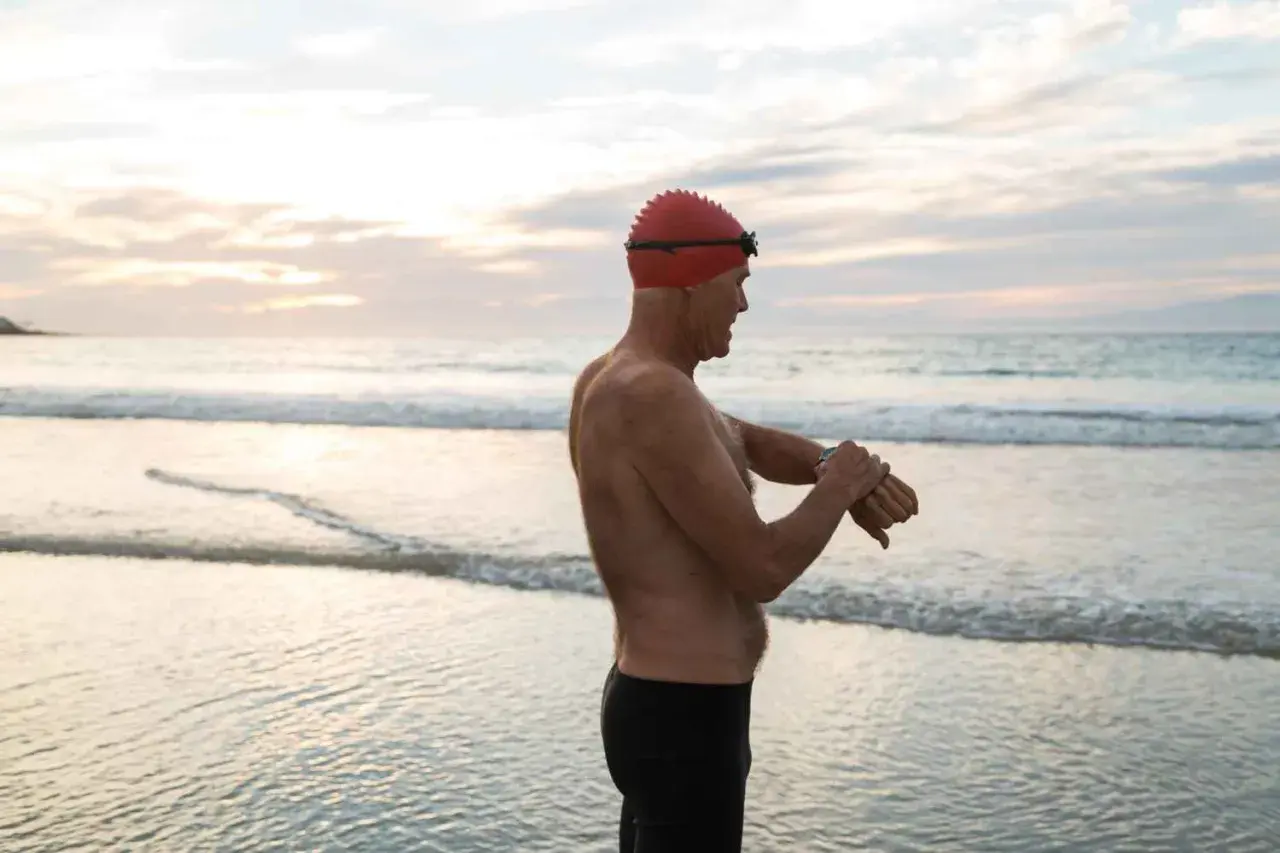
Swimming is one of the most efficient low-impact ways to build a calorie deficit without beating up your joints, but the timing question is usually simpler than people expect. The best time to swim for weight loss is the slot you can repeat consistently, while still swimming hard enough to challenge your heart and muscles. In this article I break down morning, lunchtime, and evening swims, explain whether fasted training helps, and show how to build a weekly pool routine that actually shifts body fat.
Key takeaways for choosing your swim time
- Consistency beats the perfect hour. A repeatable slot wins more often than a theoretically ideal one.
- Morning swims help many people protect the habit, but they are not a magic fat-loss switch.
- Later sessions often support better performance, which can mean more useful work in the water.
- Three to five swims a week, lasting 30 to 60 minutes, usually beats one heroic session.
- The real driver is a calorie deficit backed by enough weekly swimming volume and recovery.
- In the UK, the NHS target for adults is 150 minutes of moderate activity, or 75 minutes of vigorous activity, each week.
The answer I would give most swimmers
There is no single clock time that automatically burns more fat. If I had to give one practical answer, I would say this: pick the time that lets you train often, train properly, and avoid constant cancellations. For most people, that means the pool slot that fits around work, family, and travel without becoming a negotiation every day.
For weight loss, the weekly total matters far more than whether you swim at 6:30 a.m. or 6:30 p.m. A 30-minute swim twice a week is a start, but it is a small dose. Four 40-minute sessions, or three 50-minute sessions, are much more likely to move the scale because they build enough volume to matter. If you have been inactive for a while, or you have a medical condition, I would check in with your GP before turning any new routine into a hard training block.That is why the morning-versus-evening debate should be about behaviour first and physiology second. Once the habit is stable, the details of timing start to matter in a more useful way.
Morning swims can help, but not for the reason most people think
Morning sessions work well for a simple reason: they are harder to skip. The day has not had time to pile on meetings, errands, or fatigue, so the decision is already made. For many swimmers, that alone is enough to improve consistency, and consistency is what creates long-term body-fat loss.
I would not treat a fasted morning swim as a secret advantage, though. A fasted session can increase fat oxidation during the workout, but that does not automatically translate into greater fat loss over weeks. If you feel flat, light-headed, or strangely slow in the water, you are not failing the session by eating a small snack first. A banana, a piece of toast, or a yoghurt before the pool is often a smarter choice than forcing a stubborn fasted workout.Morning also suits people who want a calmer lane, a shorter warm-up to their day, or a habit that feels protected before work starts. If that is you, keep the session simple: an easy warm-up, a steady main set, and a short cool-down. If it feels stiff at first, spend a little longer loosening up on deck or in the first few lengths. That usually matters more than chasing the “empty stomach” idea.
Once the body is awake, later sessions can offer a different kind of advantage: better output in the water.
Later swims often produce better training quality

By late afternoon or early evening, many swimmers feel looser, warmer, and more capable of pushing pace. That is useful because fat loss is not just about time in the pool; it is about how much quality work you can actually do in that time. If you swim harder, rest less, or keep your stroke cleaner, you can create a stronger training stimulus in the same 45 minutes.
| Time of day | Why it works | Main drawback | Best for |
|---|---|---|---|
| Early morning | Fewer distractions, strong habit protection, easy to protect from cancellations | Stiffness, lower top-end performance, sometimes lower appetite control later | Busy professionals, people who skip after work |
| Lunchtime | Breaks up the workday, keeps energy up, often easier to keep regular than evening sessions | Shorter window, limited pool access, can feel rushed | Office workers with flexible breaks |
| Late afternoon or evening | Usually better mobility and stronger pace, especially for intervals and longer sets | Can clash with dinner, family time, or sleep if it runs too late | Swimmers who want harder sessions and can still recover well |
If an evening swim keeps you out so late that dinner turns into a second meal, or sleep gets worse, I would move the session earlier. Poor sleep can quietly undermine appetite control and recovery, and that matters more than squeezing the pool into the last possible minute. The best later session is the one that still leaves the rest of the day stable.
Once timing is sorted, the real fat-loss work is deciding how much swimming to do and how hard to make it.
How much swimming you actually need
According to NHS activity guidance, adults should aim for at least 150 minutes of moderate activity or 75 minutes of vigorous activity each week. Swimming fits that target well, but only if the sessions are long enough and frequent enough to add up. A single 20-minute splash once in a while is better than nothing, but it is not a serious weight-loss plan.
I usually think in terms of weekly structure rather than a single “perfect” swim. One steady session, one harder interval session, and one mixed session is a solid template. The point is not to turn every swim into a test; the point is to accumulate enough useful work that your body has a reason to adapt.| Session type | What it looks like | Why I use it |
|---|---|---|
| Steady swim | 30 to 45 minutes at a pace you can hold without feeling wrecked | Builds consistency, increases weekly calorie burn, and suits beginners |
| Interval set | 10-minute warm-up, then 8 to 12 x 50m hard with 20 to 30 seconds rest, then cool-down | Raises intensity and improves conditioning without needing a very long session |
| Mixed session | Easy warm-up, a few longer repeats, then short fast lengths at the end | Keeps the workout interesting and lets you build volume without drifting too easy |
One detail that people miss: rest time at the wall counts. Two swimmers can both say they did a 45-minute session, but one actually swam far more lengths because they rested less between repeats. If your goal is body-fat reduction, I would care more about the amount of effective work than the calendar time written on a watch.
If you are new to swimming, start with 15 to 20 minutes every other day, then add about 5 minutes when that feels manageable. That is boring advice, but it works. Aggressive starts usually create sore shoulders and missed sessions, and missed sessions are the fastest way to stall progress.
Food timing is the next piece, because the pool does not matter much if the kitchen undoes the deficit.
What to eat before and after the pool
I would not make fasted swimming the centre of a weight-loss plan. If you enjoy a morning swim before breakfast and you feel fine, that is acceptable. If the session is hard, long, or done after a long gap since your last meal, a small pre-swim snack is often better. The goal is to train well enough to keep the routine alive, not to win a purity contest.
For a pre-swim option, keep it light: something you can digest without heaviness. For example, a banana, toast, or a small yoghurt can be enough before a morning or lunchtime swim. After the session, eat a normal meal rather than treating the workout as an excuse to snack more. I see a lot of progress disappear when people mentally “earn” extra food after every swim.
Post-swim recovery does not need to be complicated. A protein-rich meal and enough overall calories for the day are usually sufficient, especially if your sessions are under an hour. If you are training hard several times a week, recover properly and keep the rest of the day predictable. That is where fat loss becomes repeatable instead of accidental.
Food, recovery, and timing all work better when the weekly pattern is realistic for your actual life.
A realistic weekly swim plan for a UK schedule
In the UK, the most practical choices are usually a pre-work lane session, a lunch break swim, or an after-work visit before the pool gets too crowded. You do not need a glamorous plan; you need one that survives commuting, weather, and a normal work week. A 25m pool is enough. You are trying to build a routine, not stage a competition.
| Plan | Example timing | Why it works |
|---|---|---|
| Busy schedule | Monday morning, Wednesday evening, Saturday late morning | Spreads sessions out and gives you two protected weekday anchors plus one flexible weekend swim |
| Office routine | Tuesday and Thursday lunchtime, Sunday morning | Keeps the habit away from after-work fatigue and keeps evenings free |
| Fat-loss focus | Three to four swims a week, one steady, one interval, one mixed, one optional recovery swim | Combines volume and intensity without making every session exhausting |
The smartest weekly plan is the one that leaves you feeling slightly underwhelmed, not crushed. That sounds unambitious, but it is usually the difference between a two-week burst and a six-month habit. If a slot fits your life, you can protect it when work gets messy, and the pool visit starts to become automatic.
Even a good schedule can fail if a few common mistakes creep in.
The mistakes that quietly cancel the benefit
- Chasing the perfect hour instead of a repeatable routine. A theoretically ideal time that gets cancelled every week is useless.
- Swimming too gently every time. If every session feels like a relaxed float, the training stimulus may be too small to change much.
- Eating back the calories. A hard swim does not justify a full reward meal, dessert, and extra snacks.
- Finishing too late. If late sessions reduce sleep quality, fat-loss progress can slow even if the swims themselves are good.
- Ignoring technique. Sloppy strokes waste energy, especially on longer swims, and make you tire before you have done enough useful work.
- Trusting smartwatch calorie estimates too much. Treat them as a rough guide, not as permission to overeat.
If I had to choose the biggest problem, it is the first one. People spend too much energy trying to identify the “best” time and too little energy protecting the time they already know they can keep. That is a bad trade.
So here is the rule I would actually use for myself.
The rule I would use before booking the pool
If fat loss is the goal, I would choose the time that I can repeat for at least eight weeks without constant friction. If I am more likely to skip evenings because work runs late, I would choose mornings. If mornings make me sluggish and I can train harder after work, I would go later. If lunch is the only slot that survives real life, I would take lunch and build the week around it.
Then I would set the swimming around three anchors: one steady session, one harder interval session, and one flexible session that keeps the habit alive. That combination gives you enough volume, enough intensity, and enough recovery to make the pool useful for body-fat reduction. It is not fancy, but it is the approach I trust most.
For most swimmers, the winning formula is simple: protect the slot, swim with intent, and keep the food side boring enough that the work in the pool can actually show up on the scale.