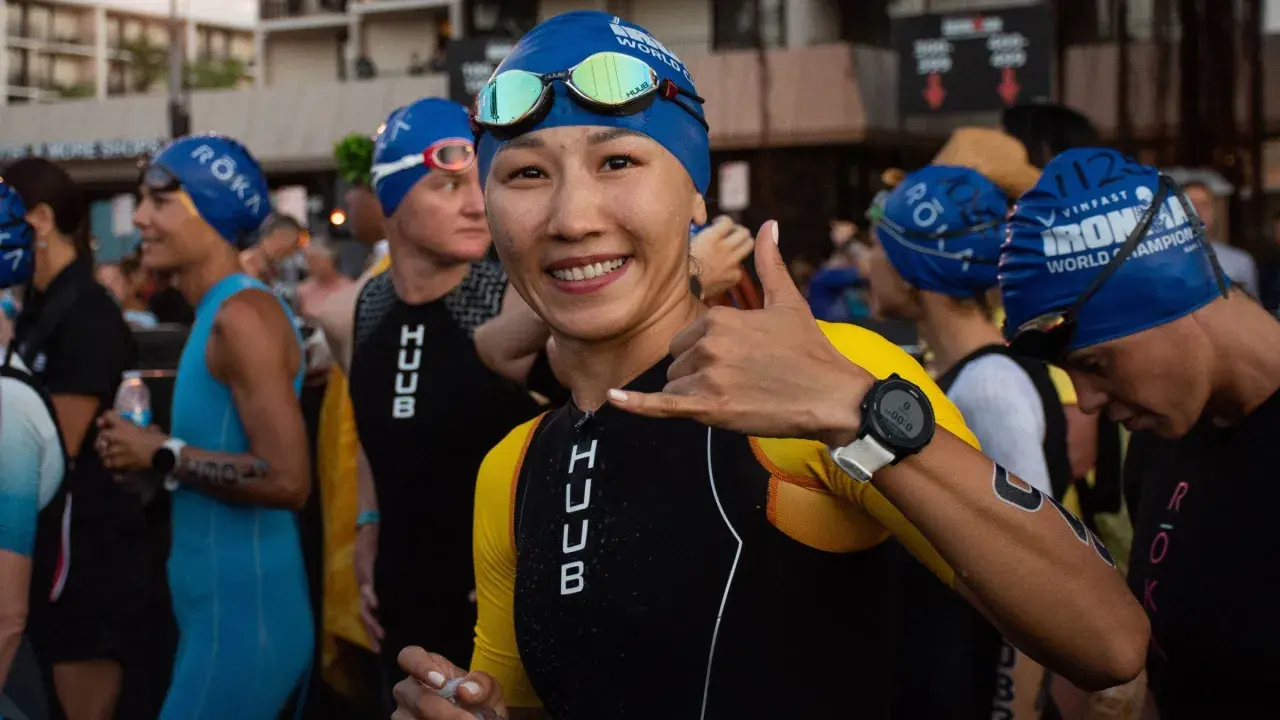
The honu triathlon is one of the more distinctive half-Ironman races in the United States: an open-ocean swim at sunrise, a bike leg that rolls through lava-country terrain, and a run that rewards patience more than bravado. In this guide I break down what the event actually is, what makes the course different, and how I would prepare for it if I were racing or coaching someone who wanted a clean, controlled day.
What matters most before you commit to race day
- Honu is the nickname for IRONMAN 70.3 Hawaii, a 1.2-mile swim, 56-mile bike, and 13.1-mile run.
- The swim starts at Pauoa Bay, so open-water composure and sighting matter more than pool speed alone.
- The bike is exposed and rolling, which means pacing discipline beats early aggression.
- The run is two loops and can feel tougher than it looks on paper if you overbike.
- For 2026, the official race-week schedule places the event on May 30, with check-in and briefings before race day.
- If you want a strong finish, train the swim, nutrition, and transition habits together instead of as separate skills.
What Honu is and who it suits
Honu is the nickname for IRONMAN 70.3 Hawaii, and that alone tells you a lot about the race. It is not just a scenic destination event; it is a serious half-Ironman that attracts athletes who want a challenging course with real payoff if they stay patient. I usually think of it as a swimmer-friendly race in the sense that the first leg sets the tone, but the entire day still punishes sloppy pacing and underplanned fueling.
The race appeals to three types of athletes: people chasing a bucket-list start in Hawaii, age-groupers hunting a strong 70.3 result, and competitors who like courses with meaningful environmental variety. The payoff is that you race in one of the most memorable settings in triathlon. The tradeoff is that the island setting also adds wind, heat, travel fatigue, and a little less margin for error than a flatter, more sheltered course.
If you are comfortable in open water, can keep your effort under control on hilly terrain, and know how to execute nutrition without improvising, this is the kind of event that can feel excellent. If you tend to go out too hard because the setting looks beautiful, the course will usually collect that debt later. That tension is exactly what makes the race interesting, and it leads directly into the course itself.
Why the course demands a different race plan
IRONMAN’s official course page describes the swim as starting at Pauoa Bay on the grounds of the Fairmont Orchid, with the sun rising over the island during the 1.2-mile leg. That matters because sunrise swims are not just prettier; they are harder to read. Light changes, glare, and crowded first buoys can make a good swimmer feel suddenly ordinary unless they are calm and efficient.
The bike then heads toward the Kohala Coast and up toward Hawi, where the course becomes more about patience than watts for the sake of watts. You are dealing with rolling terrain, exposed sections, and the kind of terrain where athletes who chase a split too aggressively often pay twice, once on the bike and again on the run.
The run is two loops through Mauna Lani Golf Course, with lava fields, an out-and-back stretch on Hoohana Road, and a finish at Honu Pointe. That layout sounds smooth, but two-loop runs are mentally revealing: you see exactly how well you managed the bike, and there is nowhere to hide if your hydration or sodium plan falls apart.
| Race segment | What it feels like | What I would do differently |
|---|---|---|
| Swim | Open water, sunrise glare, crowded first minutes | Start controlled, sight often, and practice breathing on both sides |
| Bike | Rolling, exposed, and easy to overpush early | Cap effort in the first hour and save matches for the return |
| Run | Two loops, heat buildup, fatigue from the bike | Hold an effort ceiling and drink early, not after you feel thirsty |
| Transitions | Remote-feeling race logistics, extra cognitive load | Rehearse your setup so nothing in T1 or T2 requires thinking |
That mix of open water, terrain, and heat is why this race rewards athletes who train with purpose instead of just accumulating fitness. Once you understand that, the next step is building the right preparation around it.
How I would train for the swim, bike, and run
If I were building a plan for this race, I would treat the swim as a skill problem, the bike as a pacing problem, and the run as a durability problem. Fitness matters, of course, but the athletes who usually surprise themselves here are the ones who train the race-specific behaviors, not just the race distance.
Swim
- Include one continuous open-water-style effort each week, ideally 2,000 to 2,500 meters or broken into long repeats with short rest.
- Practice sighting every 6 to 10 strokes so you do not zigzag when the light is low or the pack is tight.
- Train the first 300 to 500 meters at controlled speed, because the start is where many otherwise solid swimmers overcook the day.
- Mix in bilateral breathing and crowded-start simulations so your breathing pattern does not collapse when athletes are around you.
Bike
- Do at least one long ride per week that reaches 3 to 4 hours, with steady work in the middle rather than only soft endurance spinning.
- Add climbing or resistance intervals, because the Kohala-side profile rewards athletes who can stay smooth under load.
- Practice riding in the aero position for extended blocks, then check whether your neck, hips, and lower back still behave on the run.
- Use brick rides with 20 to 40 minutes of running afterward so your pacing decisions on the bike are not theoretical.
Read Also: Road Triathlon Guide - Master Your Race Day Strategy
Run
- Build one weekly brick run off the bike, even if it is only 30 to 45 minutes, because the first half of the Honu run is where pacing errors show up.
- Include one steady tempo session and one shorter interval session each week to keep your lactate threshold honest.
- Train in similar heat when possible, but do not force heroic workouts in bad conditions; the goal is adaptation, not a summer cautionary tale.
- Practice finishing strong on tired legs, since the last 5 kilometers often decide whether the day feels controlled or messy.
I would not overcomplicate the plan beyond that. The race is demanding, but it is not mysterious. If your swim is calm, your bike is disciplined, and your run is built on fatigue resistance, you are already ahead of most of the field. From there, gear and fueling become the next obvious leverage point.
Gear and fueling that actually matter here
The equipment list for this race does not need to be exotic, but it does need to be reliable. Sun, salt water, wind, and travel all expose weak decisions quickly. I would rather see an athlete with boring, tested gear than one with a flashy setup that was never proven in training.
IRONMAN’s official course page currently lists Maurten gels and solids, plus PH 1000 electrolyte drink, among the on-course options for 2026. That is useful as a backup, but I would still build my own fueling plan in training and treat course nutrition as support, not as the foundation of race day.
| Category | What to prioritize | Why it matters here |
|---|---|---|
| Swim | Well-fitting goggles, anti-fog, and a clear or lightly tinted lens | Sunrise glare and open water make vision the first problem, not the last |
| Bike | Stable hydration storage, flat kit, and a setup you have already tested on long rides | Rolling terrain and exposure punish improvisation |
| Run | Hat or visor, socks you trust, and a sodium plan you have rehearsed | Heat and cumulative fatigue can turn small discomfort into lost pace |
| Travel | Spare goggles, charging cables, sunscreen, chafe protection, and a backup race kit | Island travel makes simple mistakes more expensive to fix |
Race-week logistics that save energy on the day
For 2026, IRONMAN’s race-week schedule places the event on May 30, with athlete briefings on Thursday and Friday before the race. Check-in is at the Fairmont Orchid, the swim start is at Pauoa Bay, and the finish line is at Honu Pointe on the same property. That sounds simple, but it matters because the less energy you spend figuring out where to go, the more you preserve for race morning.
- Be ready for bib numbers to be assigned dynamically onsite, so do not panic if your packet differs from a standard fixed-bib race.
- Bring proof of a valid USAT membership if yours does not extend through race day.
- Confirm that you are 18 or older on race day, because that is a stated requirement.
- Attend the athlete briefing even if you think you already know the course; small venue-specific details are often the difference between calm and confusion.
- Arrive early enough to walk transitions and understand how the swim, bike, and finish areas connect physically.
I also like to tell athletes to treat the day before the race as part of the race. If your bike is assembled late, your nutrition is not labeled, or your transition plan is still abstract, you are spending mental energy you should be saving for the first hour of the swim and the first climb on the bike.
The final details I would lock in before race week
If I were narrowing the whole preparation down to a small set of priorities, I would focus on five things: an open-water swim that feels boring in a good way, a bike pacing ceiling you refuse to exceed, a fueling plan that has been tested under fatigue, a transition routine you can do without thinking, and a run strategy that assumes the course will feel harder than it looks on paper.
- Swim calm, not hard: your first job is to stay efficient and sight well.
- Bike within limits: the course rewards control more than early heroics.
- Fuel early: do not wait until you feel flat to fix the problem.
- Keep transitions simple: every extra decision costs focus.
- Protect the run: your best finish is usually built on restraint, not adrenaline.
That is the version of Honu I would respect most: a race that looks beautiful, feels demanding, and gives back only what you earn with discipline. If you prepare around the swim, respect the terrain, and keep your fueling and pacing honest, you give yourself a real chance to race well from the first stroke to the finish at Honu Pointe.