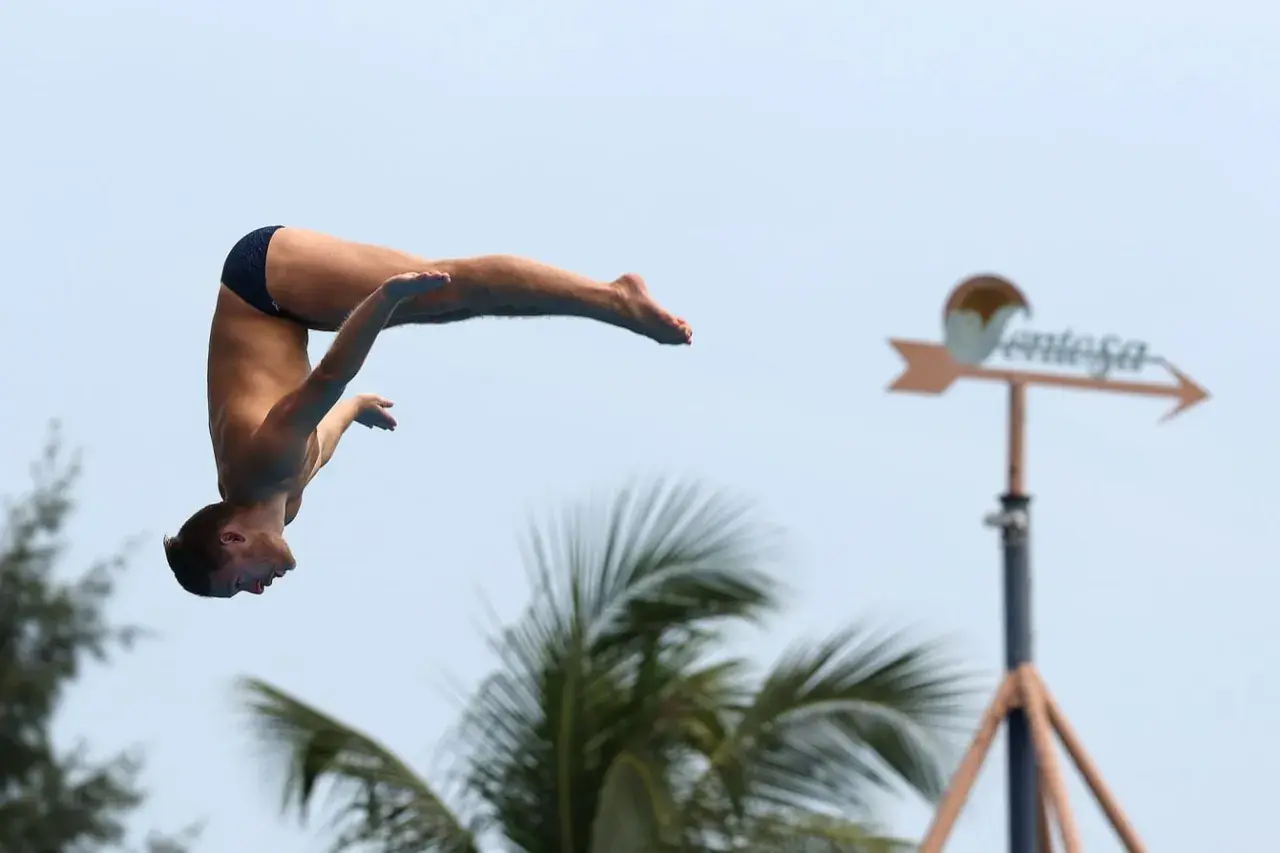
The short answer and the part people miss
- 10 meters is the standard senior platform height in platform diving.
- True high diving is higher: 20 meters for women and 27 meters for men.
- People often use “high dive” loosely, so the context matters as much as the label.
- At 10 meters, the air time is short, so body line and timing matter more than bravado.
- For U.S. swimmers and water polo athletes, the main takeaway is that platform work is a technical skill, not just a tall jump.
What people usually mean by a high dive
In everyday conversation, “high dive” can mean almost anything taller than a normal springboard. In sport, though, I separate three things: a springboard, a platform, and high diving. A springboard flexes; a platform is rigid; and high diving pushes the height well beyond standard pool events.For senior competition, USA Diving’s glossary puts the platform at 10 meters, or roughly 33 feet. That is the number most readers are after when they ask about the standard height of a high dive. The confusion comes from casual pool language, where a local “high dive” might simply be the tallest board at a neighborhood pool, not an elite platform tower.
That distinction matters, because the same word can describe very different experiences once you are standing at the edge. Next, I want to show the actual height ladder so the numbers make immediate sense.
How 10 meters compares with the rest of the diving ladder
If you only remember one comparison, make it this: 10 meters is the standard platform height, but it is not the ceiling in diving. World Aquatics uses 20 meters for women and 27 meters for men in high diving, which is a different discipline altogether and a much bigger vertical challenge.
| Height | Feet | Common label | What it means in practice |
|---|---|---|---|
| 1 meter | 3.3 ft | Springboard | Used for basic springboard work and entry mechanics. |
| 3 meters | 9.8 ft | Springboard | The main competitive springboard height in standard pool diving. |
| 10 meters | 32.8 ft | Platform | The standard senior platform height and the usual answer to the high-dive question. |
| 20 meters | 65.6 ft | Women’s high diving | Higher-impact discipline with more air time and stricter control demands. |
| 27 meters | 88.6 ft | Men’s high diving | The tallest current World Aquatics competition height. |
The jump from 3 meters to 10 meters is already dramatic, but the jump from 10 meters to 20 or 27 meters changes the rhythm of the whole dive. At 10 meters, the fall lasts only about 1.4 seconds; at 20 meters, it is about 2 seconds; at 27 meters, about 2.3 seconds. That is not much time to correct anything, which is why the next section is less about courage and more about control.
Why 10 meters changes the dive itself
I usually tell athletes that height does not just make a dive look bigger. It changes the entire execution window. Once you are on the platform, you have a fixed amount of time in the air, and every part of the dive has to fit into that window cleanly.
- Takeoff becomes more sensitive. A small mistake at the start is harder to hide when there is less room to rebuild the dive in the air.
- Rotation timing matters more. If the diver opens too early or too late, the entry suffers immediately.
- Body line gets punished faster. A loose position through the core or shoulders becomes obvious at 10 meters because the body has more time to drift.
- Entry angle is unforgiving. The water will expose a flat or twisted entry far more quickly than a lower board does.
This is why I think people sometimes overestimate what a tall platform is for. It is not just a scarier version of a springboard. It is a different timing problem, and the athlete has to solve it in a very short amount of time. That shift also explains why training matters so much, especially when safety is part of the conversation.
What the height means for training and safety
Once a diver gets to 10 meters, the stakes are technical before they are theatrical. I would not treat the platform as a place to “just try it” without a proper progression. Clean diving at height depends on a stable approach, consistent hurdle mechanics, strong core tension, and a coach who knows when an athlete is actually ready to move up.
In practice, I look for a few basics before anyone spends real time on the platform:
- A solid progression from lower boards, not a leap straight to the tallest deck.
- Enough dryland and trampoline-style work to control rotation and body shape.
- Warm-up habits that keep the shoulders, hips, and ankles ready for repeated entries.
- Clear supervision and a facility that is built for platform work, not improvised jumping.
The same logic applies to any athlete training around a dive well. The taller the platform, the less useful raw nerve becomes, and the more useful repetition becomes. That is the point where I start thinking about how the idea of height crosses over into other aquatic sports, especially water polo.
Why water polo athletes should care
Water polo and diving are different sports, but they share the same truth: body control under pressure wins more often than brute force. A water polo player will not need a 10-meter platform in competition, yet the sport still rewards the same underlying qualities that make diving work well: explosive legs, tight core engagement, shoulder stability, and the ability to keep the body organized while moving fast.
If I were coaching a water polo athlete around dive-based dryland or pool work, I would focus on the transfer, not the spectacle. The useful parts are clean alignment, confident takeoff mechanics, and disciplined entry posture. The less useful part is chasing height for its own sake. A taller platform does not automatically make a better athlete; it just magnifies the habits already there.
That is also why many swimmers and water polo players are surprised when they step near a true platform. The air time is short, the margin is thin, and the body has to be much more precise than the height suggests. From here, the practical question becomes what number you should actually remember when you are choosing a pool, a facility, or a training setup.The number I would keep in mind before stepping onto the tower
If I had to reduce the whole topic to one clean rule, I would use this: 10 meters is the standard platform height, while 20 meters and 27 meters belong to true high diving. That is the simplest way to separate platform diving from the higher-risk, higher-specialization world of high diving.For U.S. swimmers, coaches, and families, that distinction is useful because pool marketing can be sloppy. A facility may call its tallest board a “high dive” even when it is nowhere near elite high-diving height. When I am evaluating a venue, I want the exact height first and the label second.
So the practical answer is simple: if you are asking about the standard platform used in high diving, think 10 meters. If you are asking about the sport called high diving, think higher still. And if you are standing on the deck, remember that the number matters less than the control you bring to it.