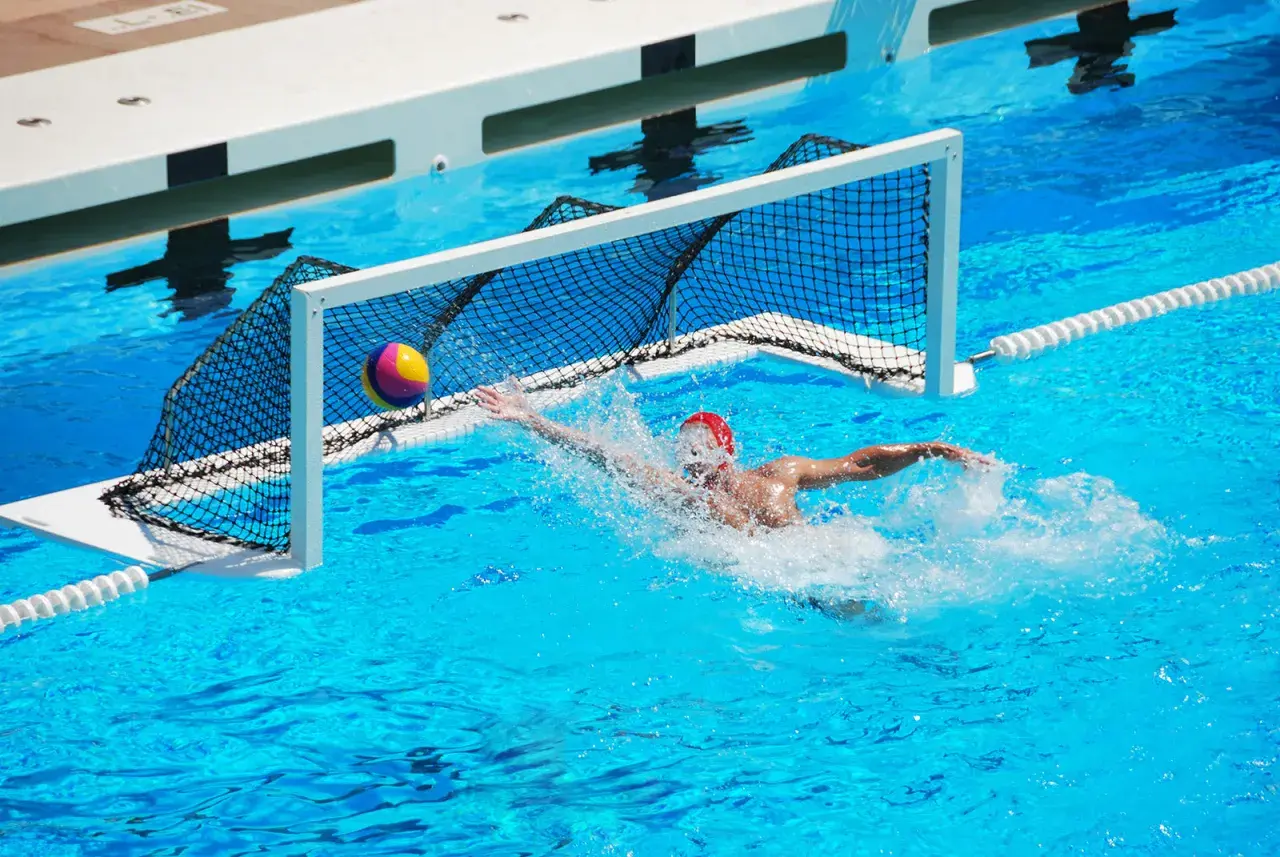
Underwater games can mean very different things, but two of the most recognizable pool sports are diving and water polo. One is built on precision, body control, and a clean entry; the other demands stamina, contact balance, and fast decisions under pressure. This guide breaks down how each sport works, what equipment and pool setup matter, and how to decide which one fits your goals.
Two pool sports, two very different skill sets
- Diving rewards timing, flexibility, air awareness, and a splash-free entry.
- Water polo rewards conditioning, leg strength, passing under pressure, and tactical awareness.
- In the U.S., both sports are usually easiest to start through club programs or school-based aquatics teams.
- Pool depth matters: diving needs specialized deep-water setups, while championship water polo courses are at least 1.8 m deep.
- If you already swim well, diving asks for more body control; water polo asks for more repeated effort and contact tolerance.
What people usually mean by pool-based underwater sports
When I talk about pool-based underwater sports, I usually split them into two camps: events judged on execution, and games judged on possession and scoring. Diving belongs to the first group. Water polo belongs to the second. That difference matters, because a beginner who loves one of them may find the other frustrating if they expect the same kind of challenge.
Diving is a technical performance sport. Water polo is a fast team sport with a heavy conditioning load. Both require comfort in the water, but they reward that comfort in different ways. One asks, “How clean was that movement?” The other asks, “Can you keep control while someone is trying to take the ball from you?”
That split is the best place to start, because it tells you why the training, pool setup, and coaching style look so different from one discipline to the next.
Diving is a sport of control, timing, and clean entries
Competitive diving is usually built around two apparatus: the springboard and the platform. Springboard diving uses flexible boards, typically at 1 m and 3 m. Platform diving uses fixed heights such as 5 m, 7.5 m, and 10 m. In major competition, the 10 m platform is the standard. The higher the takeoff, the more air time a diver has, but the more unforgiving the entry becomes.What the judge is really looking for
I think beginners often underestimate how much of diving is decided before the athlete even leaves the board. Judges reward a controlled approach, a strong hurdle, a balanced takeoff, tight body shape in the air, and a vertical entry with minimal splash. A near-silent entry is often called a rip, and that is still one of the clearest signs that a dive was cleanly executed.
Three details separate good practice from sloppy repetition:
- The hurdle is the jump at the end of the approach that lands the diver at the tip of the board.
- The fulcrum is the adjustable pivot under a springboard that changes how much bounce it gives.
- The entry is the final contact with the water, and it can make or break an otherwise strong dive.
Common beginner mistakes
- Rushing the approach and losing balance at the board tip.
- Chasing difficulty before the body line is stable.
- Opening too early in the air and losing rotation control.
- Accepting a noisy entry as “good enough” instead of treating it as a scoring problem.
Competition diving is also a pool-design sport. The water has to be deep enough for the height being used, and official diving pools are commonly around 4 m to 5 m deep depending on the setup. That is why diving is not something you casually improvise in any neighborhood pool. Water polo, by contrast, lives in a much more ordinary pool environment, which changes the access story completely.
Water polo turns the pool into a high-speed team battlefield
Water polo looks simple from the stands until you try to play it. A standard championship course in the United States is 30 m by 20 m for men and 25 m by 20 m for women, with a depth of at least 1.8 m, although many local U.S. pools use smaller nonstandard setups. Each team starts with seven players in the water, including one goalkeeper, and the game is built around positioning, passing lanes, and quick transitions.
The sport becomes much easier to understand once you focus on the key lines. The 2 m line limits how attackers can camp in front of goal. The 5 m area is where fouls can turn into immediate scoring chances. That is why water polo feels chaotic even when the athletes are being tactical: the game keeps moving, and the most valuable space changes constantly.
The skill that holds everything together
If I had to name one movement that separates casual swimmers from effective water polo players, it would be the eggbeater kick. It is a circular leg action that keeps the upper body high and stable without scissor-kicking. That stability is what lets a player pass, block, shoot, and absorb contact without sinking every few seconds.
Good water polo also depends on a short list of habits that are easy to underestimate:
- Head-up swimming so the player can read the play.
- Fast passing under pressure, not just in open water.
- Strong shoulders and trunk control for repeated throws.
- Enough leg endurance to stay elevated for the entire possession.
- Smart fouling and spacing, because small errors quickly change possession.
Unlike diving, where the athlete can build a routine around one performance at a time, water polo forces constant adjustment. That is why it feels more like basketball in the water than like a pure swimming race.

Diving and water polo are built for different kinds of athletes
If I had to reduce the choice to one sentence, I would say diving is a precision sport and water polo is a controlled chaos sport. Both are demanding, but they ask for different instincts. Diving asks for patience and trust in the body. Water polo asks for endurance and problem-solving while you are tired.
| Aspect | Diving | Water polo |
|---|---|---|
| Primary goal | Produce the cleanest, most controlled dive possible | Score more goals than the other team |
| Main demand | Air awareness, flexibility, explosive takeoff, clean entry | Conditioning, leg strength, passing, defending, spatial awareness |
| Team format | Mostly individual, sometimes synchronized pairs | Seven players in the water per team |
| Learning curve | High for body control and fear management | High for stamina, ball handling, and game reading |
| Pool setup | Specialized boards or platforms, deep water | Deep championship pool, often with standard lane-marked dimensions |
| Best fit | Athletes who like repetition, technical feedback, and solo performance | Athletes who like contact, tactics, and constant movement |
That table is useful because it exposes the real decision: not which sport is “harder,” but which type of difficulty you want to train every week. Once you know that, the practical questions about gear and safety become much easier to answer.
The gear and pool setup are not interchangeable
The biggest mistake I see outside the sport is assuming that water-based activities can share the same setup. They cannot. Diving needs the right height, the right depth, and a coach who understands progression. Water polo needs enough depth to keep play fair, enough space for movement, and equipment that allows contact without turning the game into a safety problem.
What matters for diving
- A properly designed springboard or platform.
- Deep water that matches the height being used.
- A coach who can control progression from entry drills to harder rotations.
- Dryland mobility and core work, because body position is trained both in and out of the pool.
What matters for water polo
- A deep pool with enough room for full-court movement.
- Caps, suits, and a ball suited to the level of play.
- Conditioning work that supports repeated sprints and vertical leg effort.
- Rules knowledge, because fouls, exclusions, and spacing decisions shape the game as much as swimming speed does.
Safety is the non-negotiable part here. In diving, the depth and supervision protect the athlete from bad landings. In water polo, the depth prevents players from using the bottom to gain an unfair or unsafe advantage. When the pool is wrong, the sport is wrong. That is why the next step should always be choosing the right entry point, not chasing the fanciest version of the sport.
How to start in the U.S. without wasting a season
In the United States, the most reliable starting point is usually a club or school program, not self-teaching. That is especially true for diving, where the quality of feedback changes everything, and for water polo, where basic passing and treading habits are hard to build alone. If I were advising a swimmer who wants to test both, I would keep the first month very simple.
- Find a local club, school team, or community aquatics program that actually teaches beginners.
- Ask whether the pool setup matches the sport, especially for diving depth or water polo course size.
- Start with technique goals, not performance goals. For diving, that means entries and body line. For water polo, that means eggbeater, passing, and head-up swimming.
- Get a coach’s opinion before buying specialized gear beyond the basics.
- Stick with one sport long enough to feel the learning curve instead of sampling sessions and expecting immediate comfort.
For water polo families, one useful reality check is that official U.S. championship courses are not the same as the smaller pools many clubs use for training, so the experience can vary a lot by location. For diving, a good early program should spend time on dryland, board awareness, and water-entry consistency before it asks for difficult rotations.
That is the difference between “trying a sport” and actually building a base in it.
The choice comes down to the kind of pressure you want to train under
When I look at diving and water polo side by side, the decision usually comes down to personality as much as athleticism. Choose diving if you like precision, repetition, and solo execution. Choose water polo if you enjoy constant movement, team tactics, and the feeling of solving problems while tired.
- Diving is best when you want technical feedback and measurable execution.
- Water polo is best when you want conditioning, contact, and live decision-making.
- Both reward strong swimming ability, but they stress that ability in different ways.
