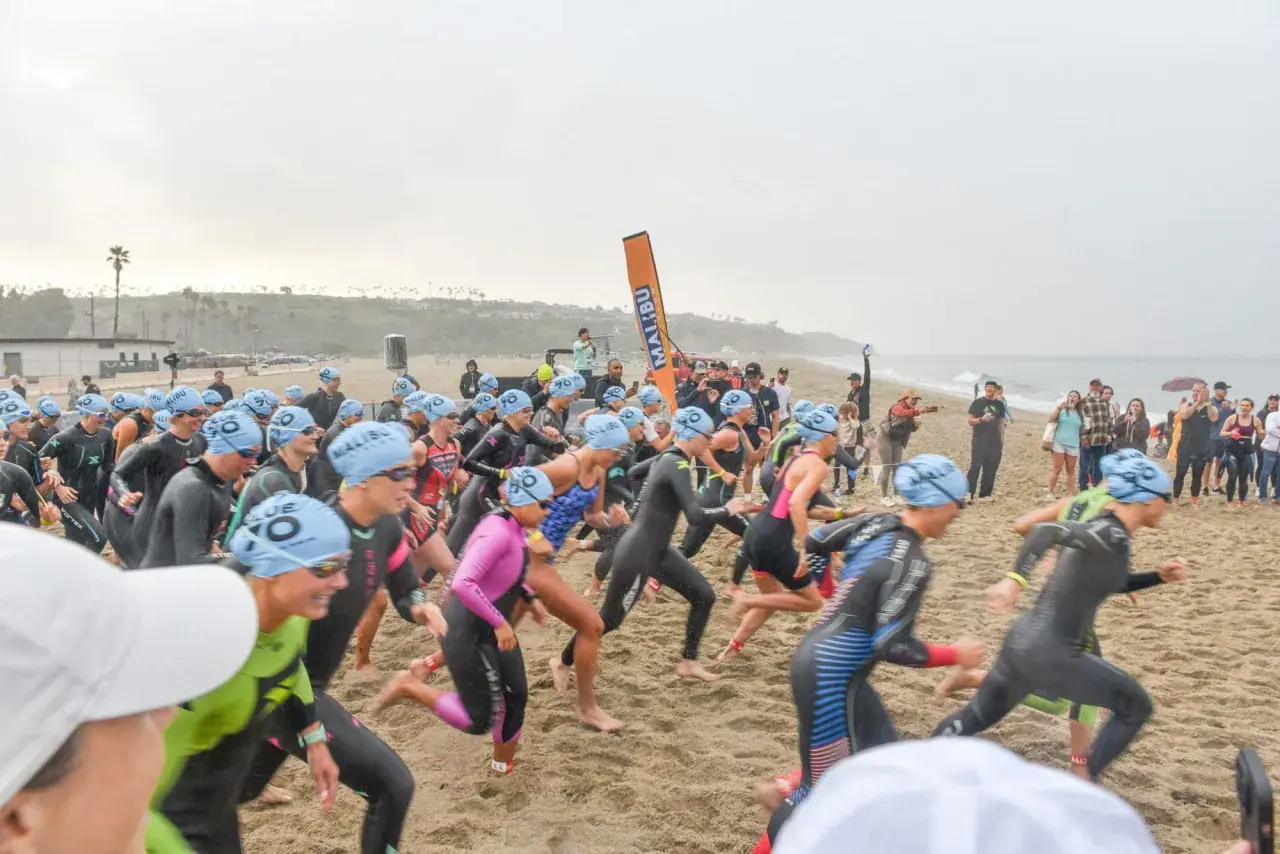
The Zuma Beach Triathlon is one of those races where the venue shapes the whole experience. You are not simply choosing a distance; you are choosing an ocean swim, a closed coastal bike leg, and a run that rewards composure more than bravado. In this guide I cover the 2026 race weekend, the course, the logistics that matter, and the preparation I would prioritise if I were racing it from the UK.
At a glance for athletes planning Malibu
- The 2026 race weekend runs on September 19-20 in Malibu, California, with kids racing and the expo on Saturday and the main adult races on Sunday.
- The primary adult options are the Zuma Distance and the Olympic Distance, plus kids and corporate team events.
- The swim is open water at Zuma Beach with LA County Lifeguards present, and wetsuits are optional rather than mandatory.
- The Olympic field is capped at 500 competitors, so this is not a race where you can leave registration late.
- Packet pickup is mandatory on Saturday between 12:00 PM and 4:00 PM, and the transition area closes at 7:00 AM on race morning.
- For British athletes, the main challenge is usually not the distance itself but the combination of surf, pacing, and travel fatigue.
What kind of race this Malibu event really is
I like this race because it is built around a real coastal environment, not a generic closed loop. The event sits at Zuma Beach in Malibu and uses the setting properly: an ocean swim, a bike leg on the Pacific Coast Highway, and a run that tracks the shoreline and the Point Dume cliffs. That makes it beautiful, but it also makes it honest. If your swim confidence is weak, or if you usually hide in the pool and hope race day will feel the same, this course will expose that quickly.
The weekend format is straightforward. The kids’ triathlon and beach expo happen on Saturday, September 19, 2026, and the adult distances take place on Sunday, September 20, 2026. The event also includes a corporate challenge, so the race has a broader community feel than a pure elite-focused meet. In practice, that means you get a proper triathlon atmosphere without the sense that only one type of athlete belongs there. That matters, because it makes the event approachable while still being competitive.
If I had to describe the appeal in one line, I would say this: it is a scenic race, but it still demands race discipline. That balance is what makes the choice of distance important, which is where I would go next.
Which distance makes sense for your current fitness
For most athletes, the right question is not “Which race looks more impressive?” It is “Which race lets me execute well?” That is especially true here, because the swim and the bike reward confidence and pacing, not just raw engine. The official adult options are clear, and I would think about them like this:
| Distance | Swim | Bike | Run | Best fit |
|---|---|---|---|---|
| Zuma Distance | 1/2 mile | 16 miles | 4 miles | First-timers, returning racers, and athletes who want a shorter but still meaningful challenge |
| Olympic Distance | 1.5 km | 40 km | 10 km | Experienced triathletes, athletes chasing a strong result, and anyone comfortable with open water |
| Kids Triathlon | 100-200 yards | 3-6 miles | 1/2-1 mile | Younger athletes aged 9-14 |
| Corporate Challenge | Team-based event | Workplace groups that want a shared endurance day rather than a solo effort | ||
The Zuma Distance is the smarter choice if your swim is solid but not yet automatic in open water. The Olympic Distance is the one I would choose only if I can already hold form when I am slightly stressed, because the combination of surf entry, traffic-free speed on the bike, and a flat run can encourage overconfidence. A flat course looks friendly on paper. In reality, it often rewards the athlete who paces with restraint for the first half and races harder later.
There is one more practical threshold worth noting: adult races are for athletes aged 14 and up, and the Olympic field is limited to 500 competitors. That makes early planning less of a convenience and more of a necessity. From here, the next question is what the course actually feels like when you are on it.
How the course behaves from swim start to finish line
The swim is the feature that changes everything. It is a beach start with a rectangular open-water course at Zuma Beach, which means you are dealing with surf, sighting, and the psychological effect of not having a wall to grab every few lengths. For readers new to open water, sighting simply means lifting your eyes briefly to stay on course without breaking your rhythm. It sounds small; it is not. A swimmer who sights well saves energy and avoids the slow drift that turns a clean race into extra metres.
The swim is supervised by LA County Lifeguards, and that is reassuring, but I would not confuse safety support with a licence to be casual. The water temperature is usually 65-69°F, which is roughly 18-21°C, so many athletes will race in a wetsuit even though it is not required. That is the kind of detail that matters for British athletes in particular, because the water may feel cold enough to tighten the first few minutes of your stroke if you are under-clothed or under-prepared.
The bike is where the course starts to feel fast. The Olympic bike leg is 40 km over two laps on the Pacific Coast Highway, and the Zuma Distance uses 16 miles on the same fully closed road. A closed road matters more than people think. It removes the stop-start stress of traffic and lets you settle into a proper power effort. At the same time, ocean breezes and a flat profile can tempt you into riding harder than you should. I would treat this as a steady effort course, not a place to burn matches early because the scenery feels easy.
The run is flat and coastal, with the Olympic route stretching to the Point Dume cliffs and back. That kind of course looks simple, but simple courses can be deceptive because they leave nowhere to hide. If you overbike, the run will expose it. If you pace the bike well, the run becomes an opportunity to pass athletes who spent too much energy trying to win the race in the first hour. That dynamic is exactly why course-specific preparation matters.
How I would prepare if I were coming from the UK
For a British athlete, the biggest adjustment is usually not the training volume. It is the combination of travel fatigue, warm coastal conditions, and open-water uncertainty. If I were preparing for this race from the UK, I would focus on four things long before I worried about race-day split times.
- Open-water confidence - I would get at least a few sea or lake sessions in before travel, with a beach-style start if possible, because the first 200 metres of the swim will feel very different from a pool start.
- Transition practice - T1 is the swim-to-bike change and T2 is the bike-to-run change. I would rehearse both under mild fatigue so the movements feel automatic when race morning gets busy.
- Cold-water kit decisions - Even though a wetsuit is optional, I would decide early whether I am a comfort-first swimmer or a non-wetsuit swimmer. If you lose calm in cold water, the wetsuit usually pays for itself in control alone.
- Course-specific pacing - I would practise holding back on the bike and finishing the run strongly, because this course punishes athletes who start too hard.
Kit choices matter too. The official race guidance suggests bringing your wetsuit if you plan to use one, goggles, a bright towel for locating your bike in transition, helmet, cycling shoes, running shoes, sunscreen, a water bottle, and a change of clothes. I would add a spare pair of goggles, because goggles are one of the easiest pieces of kit to fail at the worst possible moment. If you are travelling with limited luggage, those are the items I would protect first.
The training resources around the event are also worth using. The organisers list six open-water swim clinics at Zuma Beach from July 25 to September 12, 2026, plus free 8-week sprint and 16-week Olympic training plans. For an athlete coming from the UK, that kind of race-specific preparation is more valuable than another generic indoor session. It bridges the gap between fitness and readiness, which is exactly what this race demands.
Once your training is in order, the remaining mistakes are mostly logistical, and those are easier to fix if you know them in advance.
Race-week details that can save you time and stress
This is the section I would print mentally before I board a plane. The biggest race-day errors here are usually not fitness-related. They are timing mistakes, parking mistakes, or simple misunderstandings about the schedule. Here is what matters most:
| Item | What to know | Why it matters |
|---|---|---|
| Packet pickup | Mandatory on Saturday, September 19, from 12:00 PM to 4:00 PM at the race site | If you miss it, your race morning gets much harder |
| Transition access | You can rack your bike on Saturday or from 5:00 AM on Sunday; transition closes at 7:00 AM | Late arrivals lose time and composure before the start |
| Parking | Athletes and spectators park in the Zuma Beach lots; Sunday parking closes at 6:30 AM and no exit is allowed until after 10:30 AM | This affects both arrival time and any plan to leave quickly after the finish |
| Registration extras | Finisher medal, T-shirt, swim cap, timing chip, bike number, bib number, and wristband | Useful for checking that your race kit and check-in are complete |
| Membership rule | The event is USA Triathlon sanctioned; non-members need a one-day pass | Important for budgeting and registration accuracy |
| Changes and capacity | Bib transfers are allowed for a $30 administrative fee, there is no waitlist, and entries are limited | Useful if your travel plan changes or if the race is close to selling out |
I also think the minimum age rule is worth calling out: the adult races require athletes to be at least 14. That is a detail that can be easy to overlook if you are organising family travel or trying to race with a younger teen. The practical takeaway is simple: build the weekend around the schedule the organisers have set, not the schedule you wish they had set. That mindset leads naturally into the final piece, which is how I would actually race it well.
How to turn a scenic race into a solid result
If I were lining up here, I would make three priorities non-negotiable. First, I would treat the swim as the technical centre of the race, not a warm-up. Second, I would stay disciplined on the bike even if the road and scenery make me feel invincible. Third, I would run the first kilometre of the final leg with control, not adrenaline. Those three choices do more for the end result than any last-minute equipment swap.
- Start the swim calmly and hold position before chasing speed.
- Choose a wetsuit only if it helps you stay relaxed and efficient in 18-21°C water.
- Use open-water practice to reduce panic, not just to build fitness.
- Set up transition so your bright towel, shoes, helmet, and nutrition are exactly where you expect them.
- Arrive early enough to absorb the day instead of rushing through it.
That is the real shape of this event: it rewards athletes who are organised, technically competent, and honest about their limits. If you respect the ocean, prepare for the logistics, and pick the right distance, the Malibu setting stops being a distraction and becomes an advantage. And for most athletes, that is the difference between just finishing and having a race that feels under control from the first buoy to the line.