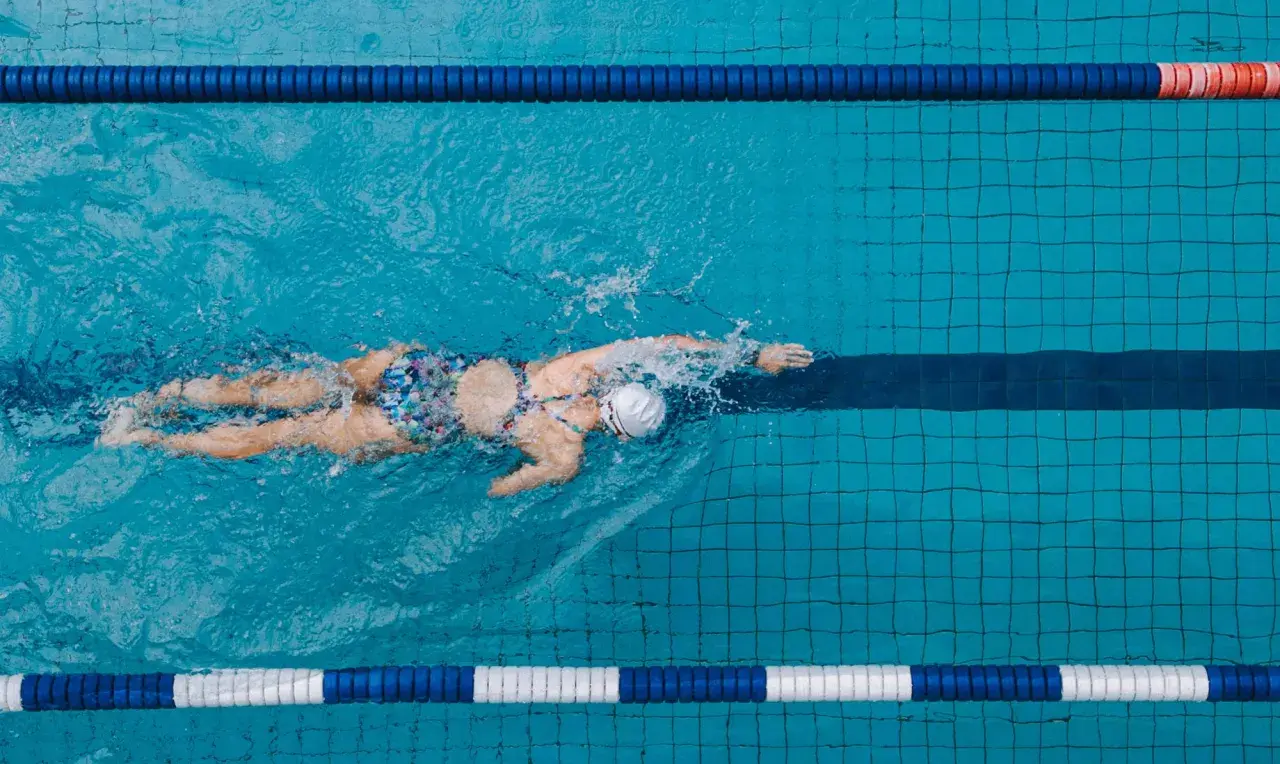
Swimming is usually kind to the body, but the back can still get irritated when technique, volume, and recovery stop lining up. In swimmers backs, the issue is usually not one dramatic injury; it is a pattern of extension, rotation, and fatigue that the hips and core fail to absorb. This article breaks down what that means in practice, which strokes tend to load the spine most, and what I would change first to keep training without feeding pain.
The back usually hurts because technique, training load, and recovery stop sharing the work evenly
- Butterfly and breaststroke tend to ask the most of the lower back, especially when the chest lifts too high or the kick comes from the lumbar spine.
- Freestyle and backstroke are often easier on the back, but poor breathing, over-rotation, or a broken body line can still trigger pain.
- Core control, glute strength, hip mobility, and thoracic rotation do more for back comfort than endless stretching alone.
- If pain changes your stroke, lasts longer than a few weeks, or comes with numbness, weakness, or pain down the leg, it deserves a medical look.
What swimmers backs usually mean in practice
When I say swimmers backs, I mean the lower-back and mid-back problems that show up when the trunk keeps absorbing load the hips and shoulders should be sharing. That can look like ordinary post-training soreness, but it can also be the first sign that a stroke is asking for more spinal extension or rotation than the body can comfortably give.
I separate ordinary soreness from a real warning sign by looking at the pattern, not just the pain score. If the discomfort fades after a lighter day or two, stays dull, and does not change your stroke, it is often just training fatigue. If it gets sharper, shows up in the same part of the stroke every time, or makes you shorten your kick or breathing pattern, I treat it as a load problem.
- Dull ache after a hard set or a long kick set.
- Stiffness when arching for butterfly, turning, or pushing off the wall.
- Tightness through the middle back after lots of breathing to one side.
- Sharp or one-sided pain that changes how you move in the water.
Once you know whether the back is simply tired or actually being overloaded, the next question is which parts of swimming are most likely to provoke it.
Which strokes load the spine most
Not every stroke stresses the back in the same way. Some ask for more extension, some for more rotation, and some only become a problem when the timing breaks down.
| Stroke | Typical back demand | What usually aggravates it | Practical adjustment |
|---|---|---|---|
| Butterfly | High extension and wave-like trunk movement | Repeated chest lift, aggressive dolphin kick, and poor timing | Shorter repeats, smaller body wave, more hip-driven kick |
| Breaststroke | Repeated extension with timing pressure | Lifting the chest too far and forcing the kick from the low back | Keep the head lower, reduce the arch, and compact the kick |
| Freestyle | Moderate rotation and breathing demand | Cranking the neck to breathe or crossing over the body line | Rotate as one unit and keep the breath smooth |
| Backstroke | Usually lower extension demand, but still technical | Overarching the lumbar spine or letting the hips drop | Stay long, keep the ribs settled, and avoid forcing range |
I do not treat any stroke as automatically safe or unsafe. A swimmer can tolerate backstroke for weeks and still flare up on a freestyle breathing set if the body line collapses. The pattern matters more than the label, which is why technique work comes next.

Technique fixes that protect the back
The fastest way to calm a cranky back is to stop borrowing motion from it. When I coach this, I look first for a stacked ribcage, a quiet lumbar spine, and a kick that starts at the hips instead of the lower back.
Keep the ribcage stacked
When the ribs flare up and the pelvis tips forward, the lower back becomes the hinge. That is common in swimmers who try to stay long by arching harder instead of stabilizing better. A more useful cue is simple: keep the chest open, but do not throw the sternum upward.
Let the breath stay small
Big, frantic breaths tend to lift the head and break the body line. In freestyle, I want a smooth turn of the head with one goggle in the water. In butterfly and breaststroke, I want the breath to come from timing, not from heaving the chest out of the pool.
Read Also: Swimming While Pregnant - Your Safe Exercise Guide
Use the hips to drive the kick
A kick should feel like a ripple, not a lumbar crunch. If dolphin kick or breaststroke kick makes the back tighten immediately, the swimmer usually needs less range and better hip contribution, not more force. A front-mounted snorkel can help during drill work because it removes breathing rotation, but it only works when the body line is already respectable.
These cues sound small, but they are often the difference between a back that tolerates volume and one that protests after every hard session. Once the stroke is cleaner, the next lever is what you do on land.
Dryland work that earns its place
I prefer 10 to 15 minutes of targeted dryland work three times a week over one heroic core session that leaves everyone sore. Boston Children's Hospital also points out that core strengthening and work around the shoulder and upper back can reduce injury risk, and that matches what I see in practice.
| Exercise | Why it helps | Simple dose |
|---|---|---|
| Dead bug | Teaches trunk control without spinal extension | 2 to 3 sets of 6 to 10 reps per side |
| Bird-dog | Builds anti-rotation control | 2 to 3 sets of 6 to 8 slow reps per side |
| Glute bridge | Takes load off the lumbar spine by improving hip extension | 2 to 4 sets of 8 to 12 reps |
| Side plank | Stabilizes the pelvis during rotation and kicking | 2 to 3 holds of 20 to 40 seconds per side |
| Hip flexor stretch | Reduces the forward pull that encourages lumbar arching | 30 to 45 seconds per side |
| Thoracic rotation drill | Keeps more twist in the middle back, where it belongs | 6 to 8 controlled reps per side |
If a drill causes pain during or after, it is not the right drill yet. I would rather see a swimmer do a smaller amount of clean work than chase volume in exercises that irritate the same area they are trying to protect. With the body better supported, the next step is adjusting training intelligently when symptoms show up.
How I would adjust training when pain shows up
The goal is not to stop moving; it is to stop rehearsing the exact pattern that irritates the back. In practical terms, that means trimming the right load first instead of panicking and dropping every session.
- Cut total yardage by 20 to 40 percent for 3 to 7 days.
- Keep easy swimming only if the pain stays at or below 3/10 and does not change your mechanics the next morning.
- Remove the trigger first: butterfly, breaststroke, hard dolphin kick, aggressive sprint push-offs, or repeated underwater work.
- Swap in technique sets, easy aerobic swimming, or land cardio until the back settles.
- Reintroduce harder work in short repeats, not by jumping straight back to full volume.
I also pay attention to the next morning, not just the session itself. If the back feels worse after sleep, the load was still too high, even if the set felt fine in the moment.
When the problem needs a clinician, not just a lighter session
If the pain lasts longer than a few weeks, keeps coming back every time you swim, or forces you to change your stroke, I would book a sports medicine or physical therapy visit. Mayo Clinic treats back pain that lingers, worsens, or comes with leg weakness, numbness, or tingling as a reason to get checked rather than guessed at.
- Pain shooting below the knee or traveling down one leg.
- Numbness, tingling, or weakness in either leg.
- Loss of bladder or bowel control.
- Back pain after a fall, hard push-off, or other impact.
- Fever, unexplained weight loss, or night pain that keeps you awake.
Those are not push-through-it signs. If any of them show up, the goal shifts from training modification to proper assessment.
A simple four-week reset that keeps you in the pool
When I want to keep a swimmer active without letting the back spiral, I use a simple four-week reset: reduce the aggravating volume, keep one or two technical sessions, and build trunk and hip capacity on land. That approach usually protects fitness better than total rest, and it gives a cleaner signal about what actually hurts.
- Week 1: cut the painful sets, keep easy aerobic work, and track which stroke or phase triggers symptoms.
- Week 2: add dryland work and re-test one short set of the problem stroke only if the next morning feels normal.
- Week 3: bring back load gradually, not by doubling volume after one good day.
- Week 4: review technique with a coach or therapist if the back still feels fragile.
A small technical note can matter here: a snorkel, fins, or a pull buoy may help a drill feel cleaner, but none of them fix a bad movement pattern on their own. Use equipment to expose better mechanics, not to hide the problem. The swimmers who stay healthiest are rarely the ones who train the hardest through pain; they are the ones who keep the spine from becoming the default motor.