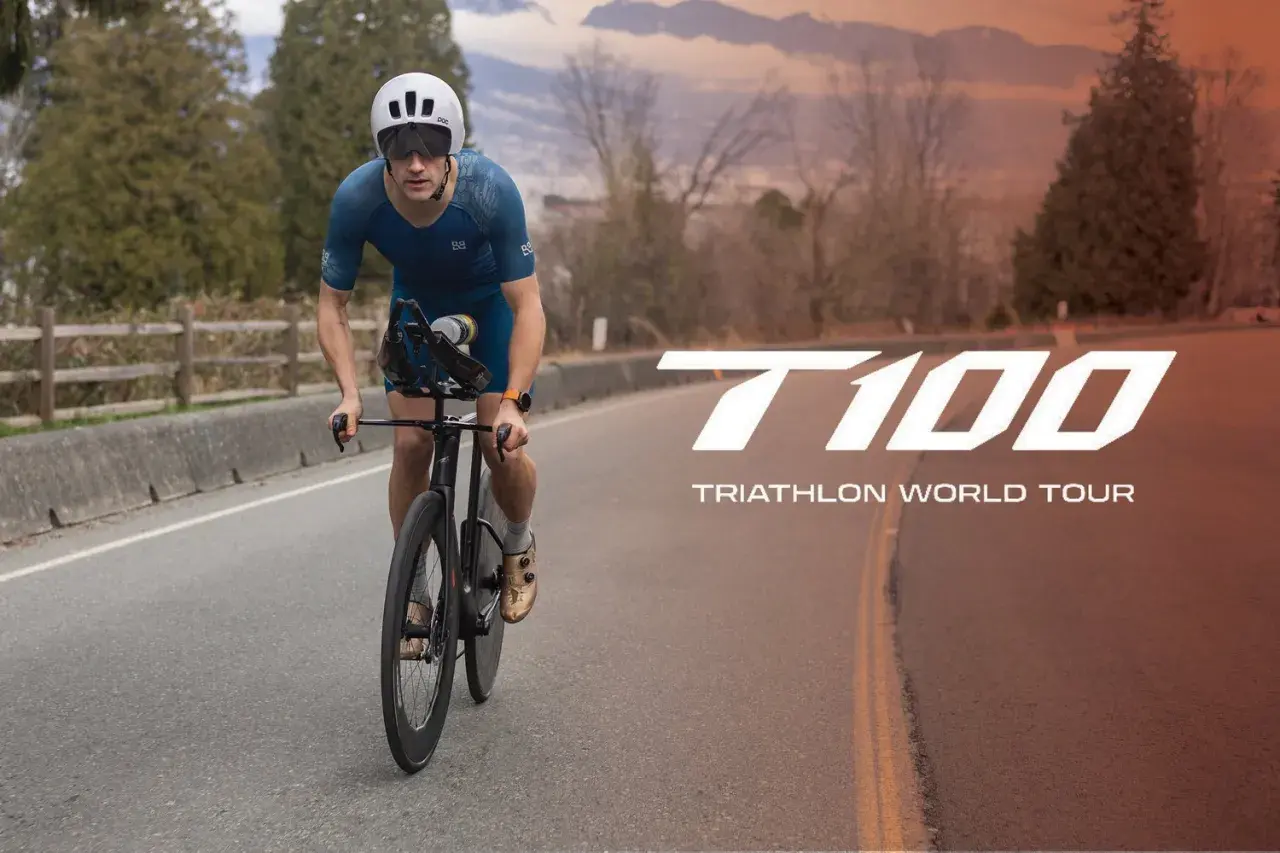
The T100 triathlon series sits in a very specific part of the sport: long enough to demand serious endurance, but short enough to keep the racing aggressive. In this article I explain what the series is, how the 100km format works, how the 2026 pro tour is structured, and what matters most if you want to race it in the UK. I also focus on the swim, because that is where many athletes waste the most energy before the real work even starts.
A 100km format that rewards balanced speed, strong pacing, and open-water skill
- The core race is 2 km swim, 80 km bike, 18 km run.
- In 2026, the pro season ends with a Qatar final and awards points across the year.
- The field is built from rankings, standings, and wildcards rather than an open pro mass start.
- For UK athletes, London on 25-26 July 2026 is the key home event.
- The swim matters more than many athletes expect, especially if you come from pool racing.
- The biggest time losses usually come from pacing mistakes, underfuelling, and poor transition habits.
What the T100 series actually is
I read the series as a hybrid: part elite world tour, part age-group festival, and part laboratory for a very specific race distance. The headline format is the 100km race, but the wider weekend often includes amateur opportunities, so the event is not just for professionals on TV. That matters because it changes the tone of the whole experience: it is competitive, but it is also built to be accessible to committed age-group athletes.
What makes it interesting is that the distance is not extreme in the way a full long-course race is extreme. Instead, it asks for a cleaner mix of swim speed, bike efficiency, and run durability. You cannot hide a weak discipline, but you also do not need to survive a full marathon to get the finishing reward. That is why the format has so much appeal for athletes who want a serious challenge without jumping straight to the longest events in the sport.For me, the biggest takeaway is simple: this is not just another branding exercise. It is a deliberate race model built to make triathlon easier to follow, more exciting to watch, and still demanding enough to test real endurance.

How the 100km format changes race day strategy
The 100km distance changes the balance of the day in a way that is easy to misunderstand from the outside. The swim is long enough to matter, the bike is long enough to punish impatience, and the run is short enough that you cannot rely on a huge aerobic bank if you blew the first two legs. In practice, that means the race rewards athletes who can stay controlled rather than athletes who simply want to attack everything at once.
| Format | Swim | Bike | Run | What it usually demands |
|---|---|---|---|---|
| T100 | 2 km | 80 km | 18 km | Fast but disciplined pacing, plus efficient swim positioning |
| Olympic distance | 1.5 km | 40 km | 10 km | Higher intensity and more sprint-like aggression |
| IRONMAN 70.3 | 1.9 km | 90 km | 21.1 km | Longer endurance, deeper fuel management, more run resilience |
| Full IRONMAN | 3.8 km | 180 km | 42.2 km | All-day durability, very precise nutrition, and strong mental control |
The comparison is useful because it shows where the series sits: it is longer than standard Olympic racing, but not so long that the day turns into pure survival. I think that is exactly why it is attractive to strong swimmers and balanced age-group athletes. A good open-water swim can move you into a better group without forcing you to carry full-Ironman fatigue for hours afterwards.
If you come from pool swimming, the key adjustment is that pace is only half the story. You also have to manage sighting, contact, water temperature, and the ability to settle your breathing quickly after a fast start. That is where many otherwise strong athletes leave time on the table.
How the 2026 pro tour is structured
The pro side is where the series becomes a season-long championship rather than a single race. In 2026, the tour features 20 athletes per race, with places awarded through standings, world rankings, and a small number of wildcards. The season ends in Qatar, and the athlete with the highest total in each gender is crowned champion.
- 20 athletes per race. That keeps the field tight and the racing easy to follow.
- Selection is merit-based. A mix of standings, rankings, and wildcards decides the start list.
- Best 3 results plus the final. That rewards consistency rather than one lucky day.
- 35 points for a win, down to 1 point for 20th. Every place matters.
- $4.2 million in prize money. The series is built to attract elite talent across the season.
What I find smart about that model is that it gives the year a narrative arc. Athletes cannot just arrive once, throw everything at a race, and disappear. They have to manage form, travel, recovery, and points over time. For viewers, that makes each stop feel connected. For athletes, it makes every decision count, from when to race hard to when to protect the body for the next venue.
Why the UK leg matters for British athletes
For British athletes, London on 25-26 July 2026 is the natural reference point. It gives home athletes a chance to experience the format without long-haul travel, and it makes the series feel much more immediate for a UK audience. If you are building a season around one realistic target, this is the race I would look at first.
The local advantage is not just about convenience. It is also about preparation. You can plan a proper spring and early-summer block, test your open-water kit in conditions that feel closer to race day, and avoid the fatigue of crossing time zones before a key event. If your swimming is strongest in calm pool water but less secure in cold or choppy conditions, the UK leg is exactly the kind of event that exposes that gap early enough for you to fix it.
I would also treat the London weekend as a reminder that course conditions matter. A global series is only as simple as its worst race environment, so it pays to assume that not every venue will suit every athlete. Some races will reward a strong swim, some will reward technical biking, and some will expose anyone who underestimates the run off the bike.
How to prepare for a T100-style race
The best preparation is not just more volume. It is more specific volume. That means rehearsing the skills that the race actually asks for, not the skills that feel comfortable in training. In my view, the most useful sessions are the ones that connect swim, bike, and run in the same workout rather than treating them as three separate sports.
Swim like it is open water, not a lane rope session
Start with open-water habits: sighting, swimming in contact, and settling quickly after the gun goes off. A strong pool pace does not help much if you panic in the first 300 metres or drift off course and add unnecessary distance. I would also practise breathing under mild stress, because race starts rarely feel calm even for experienced athletes.
Gear matters here too. The basics should be boring and reliable: goggles that do not leak, a suit or tri-suit you have already swum in, and a wetsuit that fits properly if race rules and conditions allow it. I would never choose race-day goggles for the first time on race morning. That sounds obvious, but it is one of the easiest mistakes to avoid.
Build the bike around control, not ego
The bike is where many athletes either make the race or quietly ruin the run. The temptation is to ride too hard because the swim felt good and the bike course feels manageable. That is usually a mistake. An 80km ride is long enough that small pacing errors become large run problems later.
What helps most is a sustainable effort, a position you can actually hold for the full ride, and a fuelling plan you have tested more than once. A bike that looks perfect on paper but leaves you stretched, undernourished, or cramped is not a fast bike. It is just expensive.
Make the run a continuation, not a rescue mission
The run is short enough that you can still race it well, but only if you arrive with something left. That is why brick sessions matter. A brick session is simply a bike-to-run workout, and it teaches your legs how to change gears without panic. I would rather see an athlete finish a controlled brick well than smash one session and limp through every run for the next month.
On the run itself, keep the first kilometre honest and boring. If you are sprinting past people in the opening minutes, you are probably paying for it later. The athletes who handle this format best are usually the ones who keep their effort narrow and let other people overreact.
The mistakes that cost the most time
I see the same errors repeated in long-course and middle-distance racing, and the 100km format magnifies all of them. The race is short enough that you can recover from one bad moment, but not short enough to hide multiple ones.
- Starting the swim too hard. You may gain a few places early, but you can also spike your breathing and lose efficiency for the rest of the leg.
- Riding by feel only. If the power or effort ceiling is too loose, the run usually pays the price.
- Underfuelling the bike. This is the most common silent error; by the time the run starts, the damage is already done.
- Skipping transition practice. A tidy T1 and T2 do not win races, but a chaotic one wastes free time and raises stress.
- Copying someone else’s setup. The fastest kit is the kit you have tested in your own position, on your own body, over your own distances.
There is also a deeper mistake underneath all of those: assuming that one strong discipline can compensate for everything else. It rarely can. In this format, balance beats brilliance in a single area more often than people want to admit.
What I would keep in mind before choosing a race in 2026
If I were choosing a T100 event in 2026, I would start with course profile and conditions, not with the glamour of the venue. A fast bike course is not automatically the best choice if you struggle to hold aero position, and a scenic open-water swim is not a gift if you are uncomfortable in cold water or choppy conditions. The right race is the one that matches your current strengths and exposes only one or two weaknesses at a time.
I would also enter with a realistic view of the build. For most age-group athletes, the smartest path is a steady swim block, regular bike endurance, and at least a few proper bricks before race day. That gives you a better feel for how the body behaves when the swim is over, the legs are not fresh, and the day is still far from finished. If you get that part right, the rest of the day becomes a lot more manageable.That is why the format works: it rewards athletes who can stay calm, pace well, and make clean decisions under pressure. If you can swim efficiently, ride with discipline, and run without panic, the 100km distance feels tough in the right way rather than chaotic.