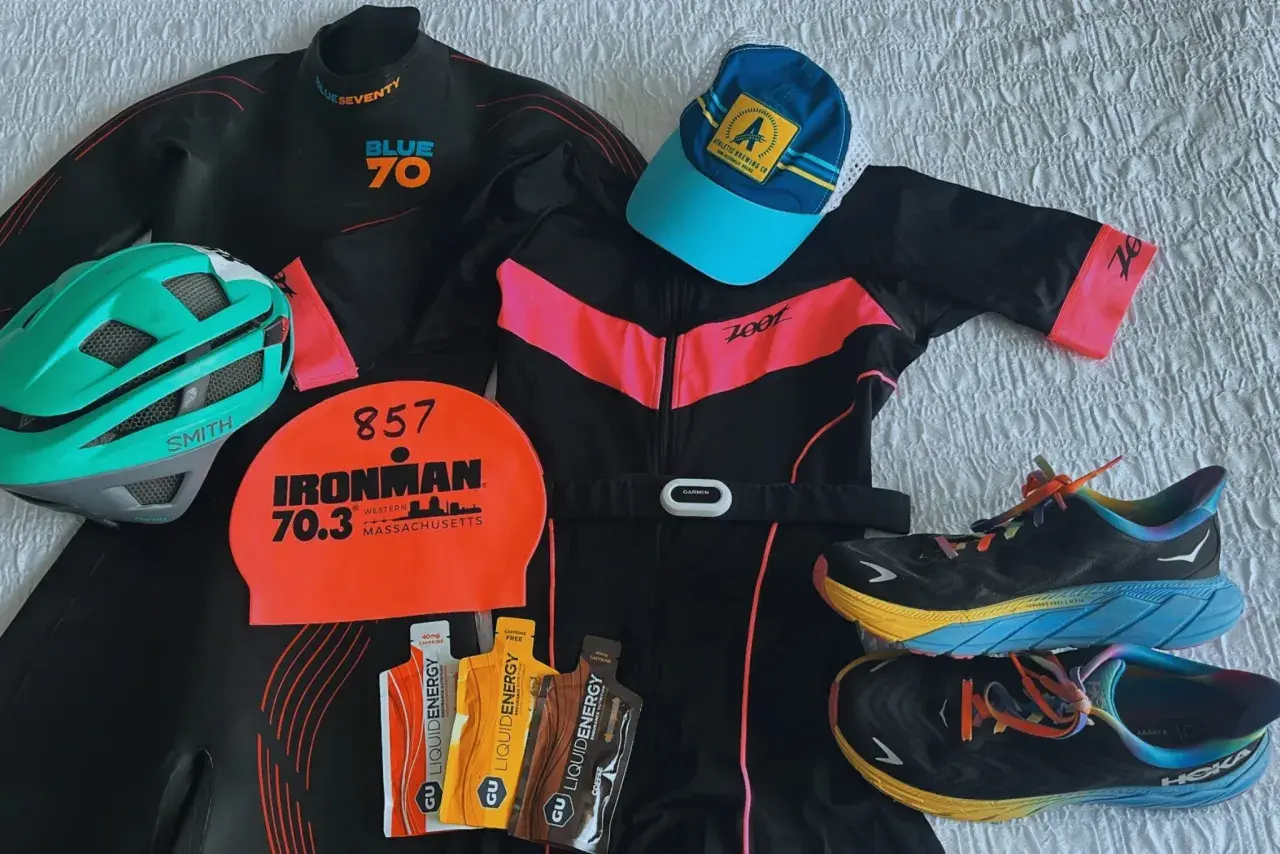
The safest beginner setup is a snug tri suit, a clear wetsuit plan, and transition-friendly shoes
- Default choice: a tri suit is the cleanest all-in-one option for most first-time athletes.
- Swim rule: wear a wetsuit only when the race allows it and the water temperature fits the event rules.
- Bike must-have: a CPSC-approved helmet is non-negotiable, along with bike shoes and sunglasses.
- Run comfort: thin, moisture-wicking socks and a good pair of running shoes matter more than flashy extras.
- Transition tip: practice your kit before race day; sockless, new shoes, and fresh anti-chafe products can all backfire.
The simplest race-day setup that works
When I build a first-race clothing plan, I usually start with one question: can this outfit survive all three legs without a change? If the answer is yes, you are already ahead. A tri suit is made for that job. It dries quickly after the swim, uses a thin chamois for the bike, and stays low-bulk when you start running.
| Option | Best for | Why I like it | Tradeoff |
|---|---|---|---|
| One-piece tri suit | Most beginners and most sprint-to-Ironman races | Fastest, simplest, and usually the least fussy in transition | Less flexible sizing than separate pieces |
| Tri shorts plus tri top | Athletes who want mix-and-match sizing or more layering control | Flexible, practical, and easier if your top and bottom fit differently | More seams and a slightly less streamlined feel |
| Swimsuit plus separate bike/run clothes | Budget-first racers or very long events with private changing areas | Familiar and simple to understand | Slower transitions and more opportunities for mistakes |
Match the swim layer to the water, not to your guess
A wetsuit can change the whole feel of the swim. It adds warmth, boosts buoyancy, and often makes newer swimmers more relaxed. But it is not automatic. Race rules decide whether you may wear one, whether you must wear one, or whether it is forbidden altogether.
| Condition | What usually makes sense | Why it matters |
|---|---|---|
| Warm water, wetsuit not allowed | Tri suit, goggles, swim cap | Less overheating and a faster exit from the water |
| Cool water, wetsuit allowed | Tri suit under an approved wetsuit | More warmth and easier body position in the water |
| Cold water, wetsuit mandatory | Tri suit plus the required wetsuit, with race-specific accessories if allowed | Safety and compliance matter more than preference |
World Triathlon’s age-group rules are a good reference point: for younger age groups, wetsuits are generally forbidden at 22°C / 71.6°F and above for swims up to 1500m, and mandatory at 15.9°C / 60.6°F and below; for athletes 60-64 and older, 24.6°C / 76.3°F is the upper no-wetsuit threshold across distances. The suit itself also has limits: it may cover the arms but not the hands, face, or feet, and it cannot exceed 5 mm thickness. In practice, I always tell athletes to check the race guide and race-morning briefing, because the final call is usually made close to start time.
Just as important, do not hide a sloppy swim plan under a wetsuit and assume it fixes everything. If the suit fits poorly at the neck or shoulders, it will feel like a fight before the bike even starts. Once the swim layer is sorted, the clothing that matters most is the gear you carry into T1 and beyond.
Build the bike-and-run layer without slowing transitions
Transition 1, or T1, is the move from swim to bike. Transition 2, or T2, is the move from bike to run. Those two handoffs are where clothing choices either save minutes or create chaos. I like to think of race-day gear in two buckets: what is mandatory and what is optional but useful.
- Helmet: mandatory on the bike, and in the U.S. I prefer a CPSC-approved road-style helmet with enough ventilation to stay comfortable.
- Bike shoes: better if you can put them on quickly, especially if they have a simple closure system.
- Sunglasses: useful for wind, glare, and UV protection once the swim goggles come off.
- Race belt: cleaner than safety pins and easier if your bib needs to go on the run.
- Running shoes: choose the pair you trust under fatigue, not the lightest pair in your closet.
- Socks: optional, but I prefer them for most athletes who blister easily.
The sock question deserves a little honesty. Going sockless can save a little time, but it is not something I would test on race morning. Wet feet, grit, and friction are a bad combination if you have not already practiced it. If you do wear socks, moisture-wicking materials are the right call. The same applies to shoes: if you use stretch laces or toggles, test them before the event so they are muscle memory, not a surprise.
One more detail beginners miss is the bib. In World Triathlon-style races, the bib is worn on the front during the run, not the entire event, which is one reason a race belt is such a practical buy. That little decision is not glamorous, but it keeps the transition area calmer and the run less awkward. The next issue is avoiding the clothing mistakes that make all of this harder than it needs to be.
The mistakes that make race day feel heavier than it should
The biggest clothing mistakes are usually not dramatic. They are small comfort errors that add up after an hour or more of effort. I see the same ones over and over: too much padding, too much cotton, too many new items, and too little attention to chafe points.
| Mistake | Why it hurts | What I would do instead |
|---|---|---|
| Wearing regular bike shorts | The padding is usually too thick for running | Use tri shorts or a tri suit with a thinner chamois |
| Choosing cotton | It holds water and rubs once you start sweating | Stick to quick-drying, technical fabric |
| Testing new shoes or socks on race day | Blisters and hot spots show up when it is too late to adjust | Break everything in during training |
| Ignoring seam placement | Flat seams matter when you swim, sweat, and move for hours | Choose smoother construction and fewer pressure points |
| Forgetting sun protection | Heat and glare make the bike and run more draining | Use a visor, sunglasses, and fabric with UV protection when possible |
If I had to narrow it down to one rule, it would be this: do not make race day the first time you discover how your kit behaves when it is wet, tight, and exposed to friction. That is where anti-chafe products, trim-fit clothing, and a few training sessions in full kit earn their place. The last step is matching the outfit to distance, because a good sprint setup is not always the best long-course setup.
Choose the kit that matches the distance and the weather
A sprint race rewards simplicity, while a longer race rewards comfort and planning. The farther you go, the more I care about pockets, sun protection, and a kit that does not turn annoying after two or three hours. For shorter races, speed and quick transitions matter more. For longer races, reducing discomfort starts to matter almost as much as reducing time.| Race type | What I would prioritize | Practical clothing choice |
|---|---|---|
| Sprint | Fast transitions and low bulk | One-piece tri suit or tri shorts plus top, with minimal extras |
| Olympic | All-day comfort plus enough storage for fuel | Tri suit with pockets, reliable socks, and race-tested sunglasses |
| Half-distance | Comfort under fatigue and more chafe control | Tri suit or separated tri kit that you already know works over long training sessions |
| Iron-distance | Comfort first, speed second | Anything legal that lets you stay comfortable for hours, including thoughtful layering and planned changes if the event allows them |
Weather changes the equation fast. In hot conditions, I lean toward lighter fabric, better ventilation, and enough sun protection to survive the bike and run without cooking. In cooler conditions, I care more about wetsuit legality, a suit that traps less water, and a race plan that keeps the transition from feeling like a shock. The goal is not to own the most gear; it is to pick the few pieces that keep your effort on the course instead of on your clothing.
The kit I would hand to a first-time triathlete before race morning
If I were putting together a first-race bag from scratch, I would keep it plain: one tri suit, one approved wetsuit if the conditions call for it, one pair of bike shoes, one pair of running shoes, a helmet, sunglasses, a race belt, goggles, and a pair of socks I had already worn in training. That is enough for most people to race well without overthinking the wardrobe part.
From there, I would add only what solves a real problem. If you blister, bring socks. If you ride in bright sun, bring better lenses. If you hate fiddling with pins, use a race belt. If your race guide says the swim is likely to be cold, leave room in your plan for a wetsuit that fits correctly rather than one that merely fits your budget. The best triathlon clothing is rarely the flashiest; it is the kit you stop noticing once the start horn goes off.So if I had to reduce the whole decision to one line, I would say this: wear the simplest legal outfit that keeps you dry enough, warm enough, and comfortable enough to move hard from the swim through the finish line.