The simple approach that works for most triathletes
- Short-course races usually need a lighter carb emphasis; long-course races need a more deliberate load.
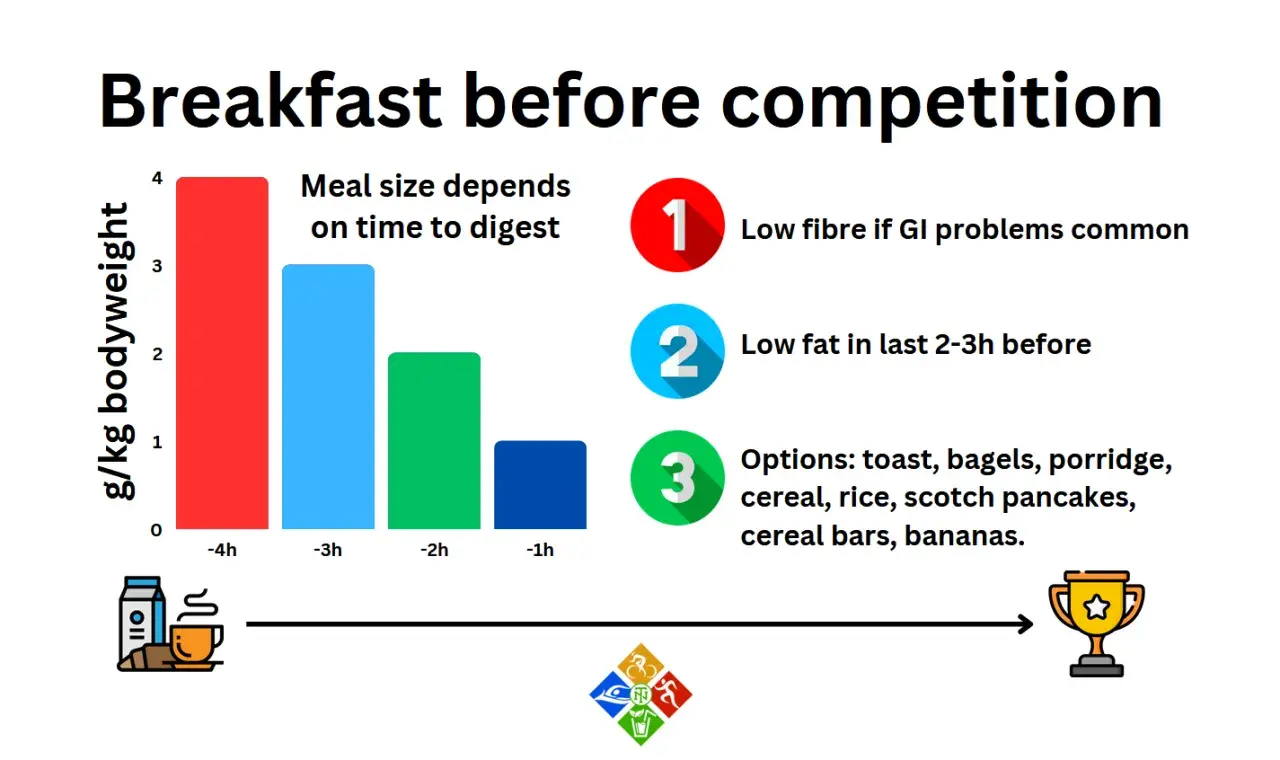
- Build meals around easy-to-digest carbs such as rice, pasta, potatoes, bread, oats, fruit, and sports drinks.
- Keep fat, fiber, and brand-new foods lower than usual so your stomach stays quiet.
- Hydrate steadily through the day instead of trying to catch up at night.
- A 70 kg athlete racing long-course may need roughly 490-700 g of carbs across the day, depending on tolerance and experience.
Match your dinner plan to the race distance
The best answer to the day-before nutrition question depends on how long you will be racing. A sprint triathlon and a full-distance event do not demand the same approach, and I would not feed them the same way.| Race distance | What the day before should look like | Main goal | Common mistake |
|---|---|---|---|
| Sprint | Normal meals with a stronger carb focus, but no heavy loading | Arrive fueled without feeling stuffed | Eating far more than usual just because it is race weekend |
| Olympic | Carb-forward breakfast, lunch, dinner, plus one or two snacks | Top off glycogen stores while keeping digestion easy | Overdoing fiber or fat in the name of “healthy” eating |
| Half Ironman or Ironman | A more deliberate carb-loading day, usually with lower-fiber meals | Maximize stored energy and reduce the risk of fading late | Waiting until dinner to start eating more carbs |
For short-course racing, I keep things simple and familiar. For long-course racing, I get more intentional and spread carbs across the whole day. Once that target is clear, the next step is choosing foods that actually sit well.

Build most meals around easy-to-digest carbs
The day before a race is not the time to prove how disciplined you are with salads, beans, or very high-fiber grain bowls. I want the plate to do one job well: give you usable carbohydrate without making your gut work too hard. That usually means moving toward familiar, lower-fiber starches and keeping rich sauces and heavy toppings in check.
| Food | Why it works | Practical serving |
|---|---|---|
| White rice | Easy to digest and simple to portion | 1.5 to 2 cups cooked |
| Pasta with a light tomato sauce | Classic race-eve fuel that is usually gentle on the stomach | 2 cups cooked pasta |
| Bagels, bread, or tortillas | Useful when appetite is low and you need carbs fast | 1 bagel or 2 to 3 slices of bread |
| Potatoes | Comfortable, filling, and easy to season with salt | 1 large baked or boiled potato |
| Oatmeal with banana or honey | Good earlier in the day when you still want something warm and steady | 1 cup cooked oats plus fruit |
| Applesauce, fruit juice, or a sports drink | Helpful when solid food feels too bulky | 1 serving with a meal or snack |
I still like to include small amounts of lean protein, such as chicken, eggs, yogurt, tofu, or fish. Protein helps keep meals satisfying, but it should stay in the supporting role. Too much of it can crowd out the carbs that matter most.
If you prefer a visual rule, I use this one: build the plate around starch first, add a moderate protein portion, then keep vegetables cooked and modest rather than raw and towering. That keeps the meal performance-focused instead of restaurant-sized. From there, the real question becomes how much carbohydrate the whole day should contain.
Use body weight to estimate the total carb target
There is no universal number that fits every triathlete, but body weight gives you a very usable starting point. For most athletes, I think in grams of carbohydrate per kilogram of body weight across the full day before the race. That sounds technical, but it is just a way to turn vague advice into a plan you can actually follow.
A workable range I use is this: 5-7 g/kg for short-course racing, and roughly 7-10 g/kg for longer-course events. If you are experienced, tolerate carbs well, and are heading into a long race, some athletes push toward the upper end of common sports-nutrition guidance, which is often 10-12 g/kg over the final 36 to 48 hours. That is not mandatory for everyone, and it is definitely not something to force if it leaves you bloated.
| Body weight | Short-course day before | Long-course day before |
|---|---|---|
| 60 kg | 300-420 g carbs | 420-600 g carbs |
| 70 kg | 350-490 g carbs | 490-700 g carbs |
| 80 kg | 400-560 g carbs | 560-800 g carbs |
To make that less abstract, here is what a solid race-eve menu for a 70 kg athlete can look like:
- Breakfast: oatmeal with banana, honey, and yogurt.
- Lunch: a rice bowl with chicken and a small portion of cooked vegetables.
- Afternoon snack: bagel with jam and a sports drink.
- Dinner: pasta with lean turkey or chicken and a light sauce.
- Evening snack: cereal, toast, or rice cakes with fruit.
That kind of day does two things well: it spreads carbs across multiple feedings, and it avoids the huge single meal that tends to sit heavily. The next layer is hydration, because a well-fueled athlete still starts from behind if they show up underhydrated.
Hydrate steadily and use sodium with purpose
The day before a triathlon is not the day for panic drinking. I want athletes to sip consistently with meals and snacks, then finish the evening feeling comfortably hydrated rather than sloshy. A pale-yellow urine color is usually a better sign than a constant stream of clear urine, which can mean you are overdoing plain water.
For a practical benchmark, ACSM has long suggested about 500 mL of fluid roughly 2 hours before exercise, which matters on race morning, but the habit starts the day before: keep fluids moving all day so you are not trying to catch up at the last minute. If the race will be hot, humid, or you know you are a salty sweater, include sodium with meals through foods like broth, pretzels, salted rice, soup, olives, or a sports drink.
- Good choices: water, sports drink, milk if you tolerate it, broth, diluted juice.
- Useful sodium sources: pretzels, salted potatoes, soups, rice with soy sauce, crackers, electrolyte drink.
- What to avoid: chugging large amounts of plain water late at night or trying a new electrolyte product for the first time.
I like hydration to feel boring. If you are constantly thinking about it, you are probably forcing it. Once the fluid plan is quiet, the main thing left is avoiding the mistakes that sabotage an otherwise solid day.
Avoid the mistakes that cause race-day stomach issues
Most pre-race problems do not come from a lack of willpower. They come from a few very ordinary choices made at the wrong time. The day before a triathlon is exactly when those choices matter.
- Do not overload fiber. Huge salads, bean-heavy meals, and very bran-rich cereals can leave you feeling distended and unsettled.
- Do not go heavy on fat. Fried food, creamy sauces, and very rich desserts slow gastric emptying, which is the rate at which food leaves the stomach.
- Do not experiment with new foods or supplements. Race weekend is a bad time to discover that a “healthy” bar or gel does not agree with you.
- Do not drink alcohol as if recovery starts tomorrow. Even modest amounts can affect sleep quality and hydration.
- Do not suddenly double your caffeine. If you use caffeine for racing, stay close to what your body already knows.
- Do not force a giant late meal. If appetite is low, make the food easier to digest rather than larger.
If you already know you are sensitive to certain foods, use that information. Some athletes do poorly with large servings of apples, onions, beans, or wheat-heavy meals because they are higher in fermentable carbs that can trigger gas and bloating. That is where personal experience matters more than generic advice. From there, the last step is simply putting the plan on rails.
The race-eve checklist I would actually use
The best race-eve plan is usually the least dramatic one. I want the athlete to arrive at bedtime with three things in place: enough fuel, enough fluid, and no digestive surprises.
- Keep every main meal carb-centered and familiar.
- Spread intake across breakfast, lunch, dinner, and at least one snack.
- Use lower-fiber sides and cooked vegetables instead of oversized raw salads.
- Carry tomorrow’s breakfast, bottle, and any race snacks so the morning feels automatic.
- Stop trying to “make up” for the week in one evening meal.
If I had to reduce the whole answer to one line, it would be this: eat enough carbs to feel topped up, keep the food easy to digest, and leave the experiment for after the finish line. That approach is usually the most reliable way to start a triathlon with a calm stomach and real energy in reserve.
