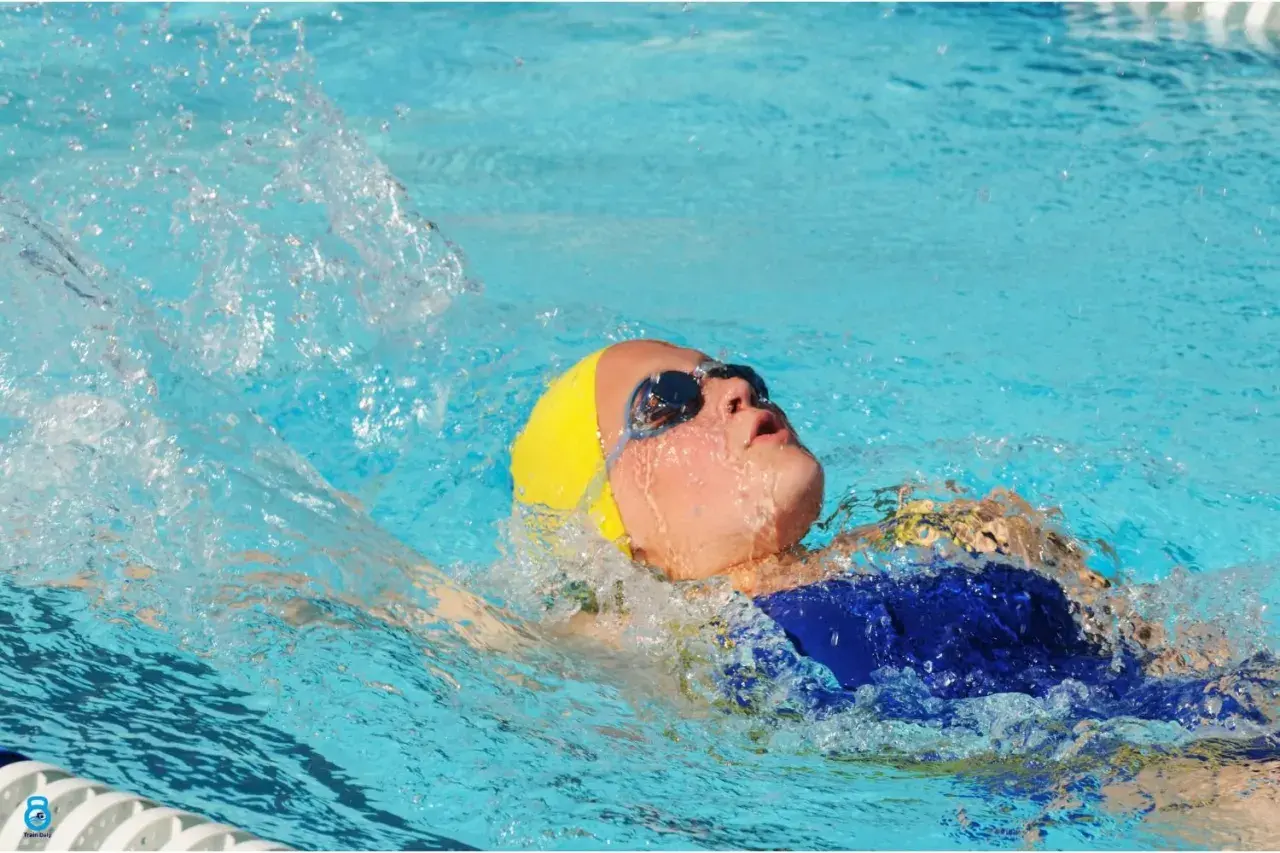
What matters most when you want a cleaner backstroke
- Body position comes first because a low hip line creates drag before your arms even start working.
- The arm action should be alternating and smooth, with propulsion happening underwater and recovery staying relaxed.
- The kick supports the stroke, but it should come from the hips with loose ankles, not from a frantic knee bend.
- Starts and turns can save real time, especially if your breakout stays compact and controlled.
- Short technical repeats are usually better than long, tired swimming when you are trying to improve form.
What backstroke really asks from the swimmer
Backstroke looks simple from the deck, but it asks for a mix of balance, timing, and patience that many swimmers underestimate. You are swimming without the visual reference most people rely on, so your body line has to stay organised while your shoulders and hips rotate just enough to keep the pull effective. The best swimmers make it look calm because they are not wasting energy fighting the water.
That is why I treat it as a stroke of structure, not force. Swim England coaching advice keeps coming back to the same essentials: a flat body line, a still head, and controlled rotation through the torso. Once those are in place, the stroke becomes easier to lengthen without making it sloppy. From there, the next question is simple: how do you stop drag from building in the first place?
The body line that keeps drag under control
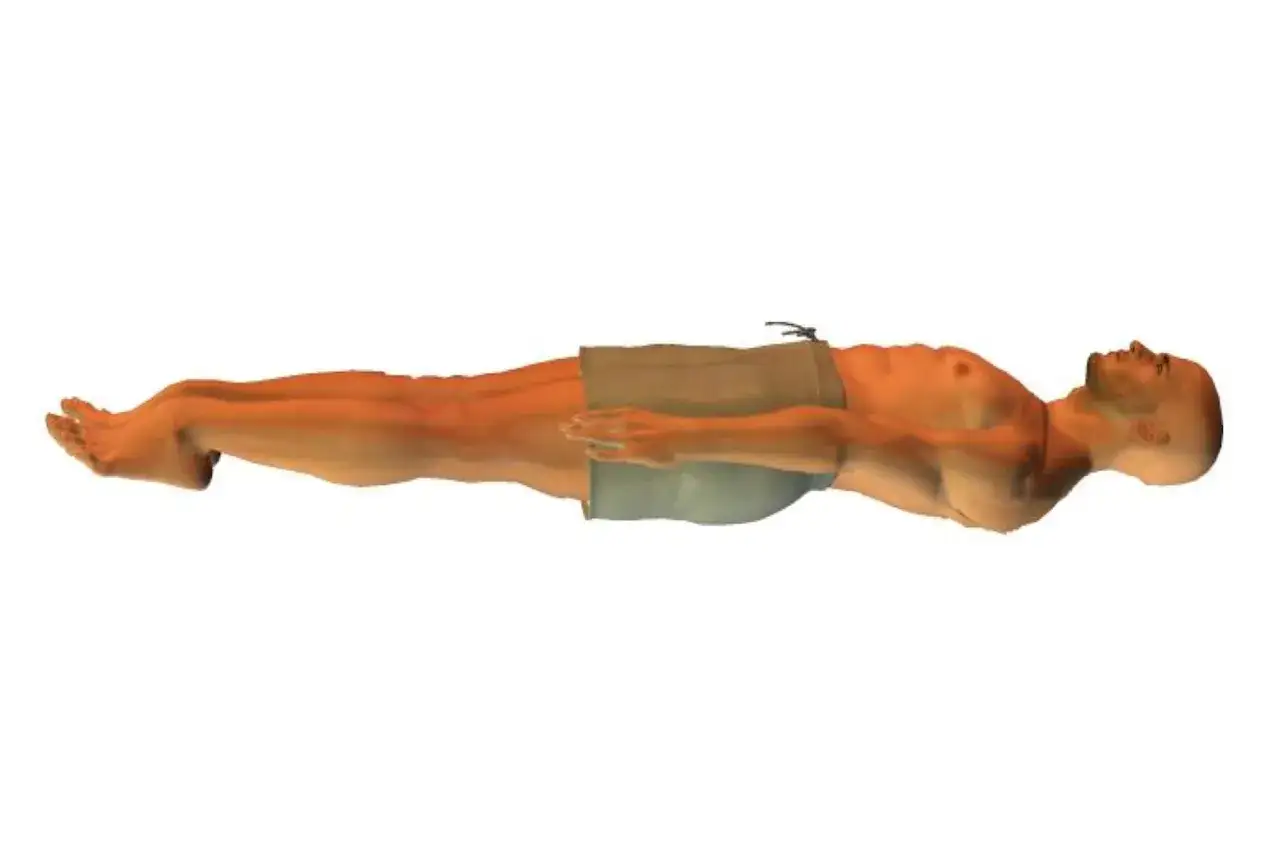
The quickest way to slow backstroke down is to let the body sit too deep in the water. I look for three things immediately: the head stays quiet, the hips stay near the surface, and the chest does not collapse. If the chin lifts or the neck tightens, the hips usually follow, and then the kick starts working against gravity instead of helping the stroke.
A good backstroke body line is not perfectly rigid. It is long and stable, with a slight slope from the shoulders down to the hips so the legs can stay covered and active. The ears should sit in the water, the eyes should look upward rather than toward the feet, and the core should stay lightly engaged so the swimmer can rotate without wobbling. That kind of shape is boring to watch and excellent to swim.
I usually tell swimmers to think about being narrow rather than flat in a stiff sense. The goal is to reduce the amount of water the body pushes against, not to clamp every muscle. When the line is stable, the arm cycle can do real work instead of simply keeping the swimmer afloat.
Arm action and breathing rhythm that actually produce speed
The arms do most of the propulsion in backstroke, so this is where sloppy timing shows up fast. One arm recovers over the water while the other is pulling underneath, and the rotation of the shoulders helps both actions happen smoothly. The recovery should feel relaxed: thumb leads out of the water, the arm swings without tension, and the little finger enters first close to the shoulder line rather than crossing the middle of the body.
Underwater, the hand should not slap straight down. A cleaner path is to set the hand and forearm so they can hold water, then press back toward the hip with a controlled catch. That catch is what gives the stroke shape. If the elbow collapses too early or the hand crosses the centre line, the swimmer usually loses pressure and creates a snake-like path instead of a straight one.
Breathing is one of the hidden advantages of backstroke, but I still see swimmers interrupt the rhythm by lifting the head or holding the breath. In practice, the easiest pattern is to inhale naturally on each cycle and keep the face calm. The stroke should breathe around the swimmer, not force the swimmer to work around the breath. Once the arm path is clean, the kick has a much better chance of supporting it properly.The kick and rotation that connect everything
The kick in backstroke is a flutter kick, not a power contest. It should come from the hips with relaxed ankles and only a small bend at the knee on the downward beat. If the legs are too wide or the knees drive too much, the kick creates splash without much forward benefit. The swimmer ends up spending energy to hold position rather than to move forward.
Rotation matters just as much. The shoulders and hips should roll together enough to help the recovery and catch, but not so much that the swimmer almost turns onto the stomach. Think of it as a controlled rock from side to side, not a full roll. That movement makes the stroke feel smoother and gives the pulling arm a better angle to work against the water.
For sprint backstroke, a stronger kick rate can make a noticeable difference, and six kicks per arm cycle is a useful reference point for some swimmers. Over longer swims, a lighter rhythm is often easier to sustain without losing line. The right answer depends on event length, fitness, and how much speed the swimmer can hold while staying organised. Once the rhythm is set, the start and turn become the next big place to win time.
Starts, turns, and breakouts that save free speed
Race backstroke has a technical edge that casual lap swimmers sometimes miss: the start and turn can give you speed that does not come from the stroke itself. At the start, the swimmer launches from the wall into a tight streamline, then uses a short underwater phase before surfacing. After a turn, the same idea applies: roll cleanly, somersault, plant the feet, push off hard, and keep the body narrow until the breakout is ready.
I would rather see a swimmer use a compact breakout than stay underwater too long and lose momentum. A useful training target is usually a short series of sharp dolphin kicks, then a clean transition into the first arm stroke while the body is still moving fast. That is especially important in a 25m pool, where bad turns quickly add up. If you race, the World Aquatics rule set also means the underwater phase has to stay disciplined, so there is no advantage in making it messy and overly long.
For training, I like a simple habit: use the backstroke flags to judge your stroke count into the wall, then repeat the same approach until it becomes automatic. A predictable turn is worth more than a flashy one that falls apart under pressure. Once the wall work is under control, the biggest remaining losses usually come from basic mistakes in the stroke itself.
The mistakes I see most often and how to fix them
Most backstroke problems are not mysterious. They are usually the same few faults repeating until they become a habit. The good news is that each one has a straightforward correction if you are willing to slow down and notice what the body is actually doing.
| Common mistake | What it does | What I would change |
|---|---|---|
| Chin lifted and neck tense | Hips drop and drag increases | Keep the head still, ears in the water, eyes up |
| Hand crossing the centre line | The body snakes and loses forward pressure | Enter in line with the shoulder, not across the body |
| Pulling straight down too early | The hand slips instead of holding water | Set the forearm first, then press back toward the hip |
| Kicking from the knees | Creates splash but little support | Kick from the hips with loose ankles and narrow legs |
| Over-rotating through the stroke | Breaks balance and slows the turnover | Rotate enough to help the pull, then return to centre |
When swimmers fix only one of these faults, they often feel an immediate improvement in pace because the stroke stops leaking energy. The next step is to reinforce those changes with drills that teach the body the right pattern instead of just hoping it remembers.
Drills and sessions I would actually use
I prefer backstroke drills that isolate one problem at a time. The point is not to make the session look technical; the point is to build a repeatable stroke that still works when the swimmer gets tired. If a drill is so awkward that the swimmer cannot connect it back to full-stroke swimming, I usually simplify it.
- Backstroke body balance - 4 x 25m on a gentle effort, focusing on a still head and high hips.
- Single-arm backstroke - 4 x 25m each arm, with the non-working arm held still so rotation stays obvious.
- Kick on the back in streamline - 4 x 25m, keeping the legs narrow and the ankles loose.
- Build 50s - 4 x 50m with the first 25m controlled, the second 25m faster, resting 20-30 seconds.
- Turn and breakout repeats - 4 to 6 repeats from the flags into the wall and out again, concentrating on a clean push-off and short underwater phase.
If you are training in a 25m pool, short repeats are often enough to expose technique faults without letting fatigue hide them. In a 50m pool, I still keep the technical work compact at first, because quality drops quickly once the stroke gets long and heavy. I care more about repeatability than about distance on days like this. Once the swimmer can hold shape, then I start adding pace.
The three changes I would prioritise first
If I only had a few weeks to improve someone’s backstroke, I would not start by chasing a bigger kick or a faster turnover. I would start with body line, hand entry, and breakout discipline. Those three changes remove the most drag and usually create the biggest visible improvement with the least complexity.
- First - keep the head quiet and the hips high enough that the body feels supported by the surface.
- Second - clean up the arm path so each hand enters in line with the shoulder and finishes near the thigh.
- Third - make the turn and breakout short, powerful, and repeatable rather than long and uncertain.
That is the version of backstroke I trust in real training: simple enough to repeat, technical enough to matter, and efficient enough to hold when the pace rises. If you build from those basics, the stroke stops feeling like a survival exercise and starts feeling fast for the right reasons.