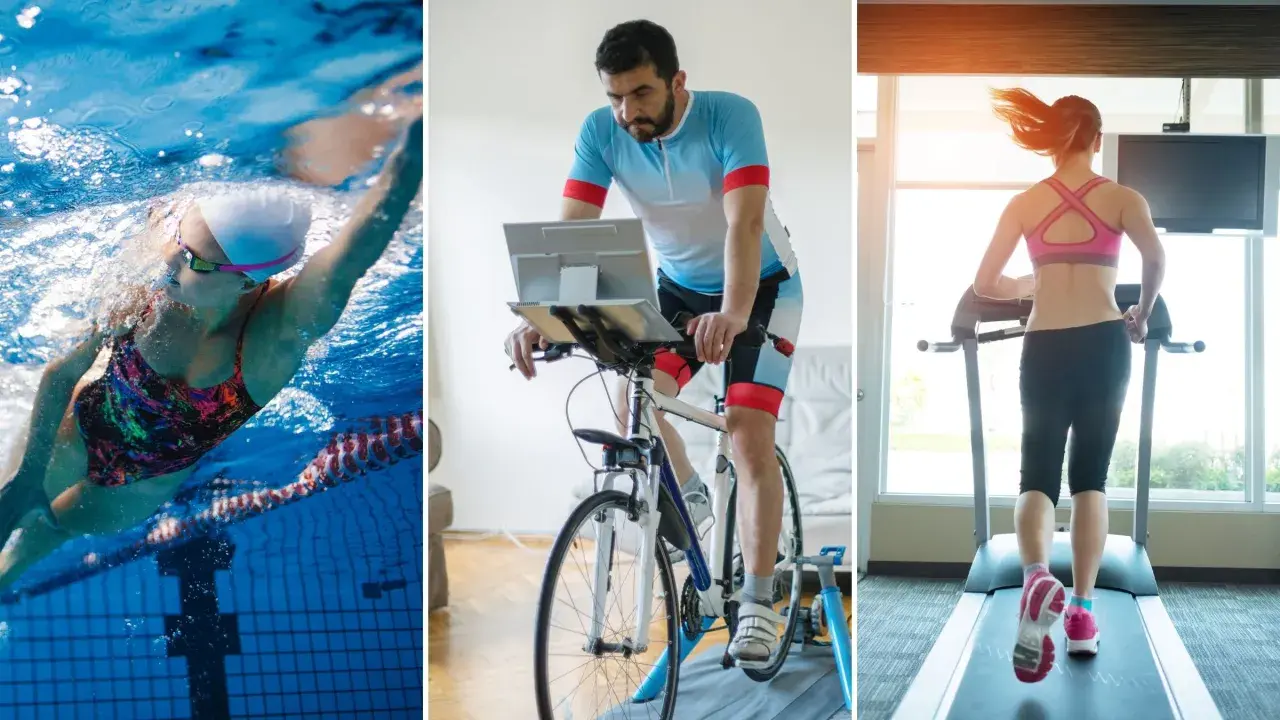
A pool, a bike studio, and a treadmill can tell you a lot about a triathlete without the weather getting involved. An indoor triathlon is a practical way to test swim efficiency, bike control, and run pacing in one compact race, and it is especially useful if you want a race that feels clear, contained, and easy to organise. In the sections below I’ll cover how the format usually works, what to train, which kit matters, and where people most often lose time.
The main things to know before you line up
- Most events use a pool swim, then a spin-bike or stationary-bike leg, then a treadmill run.
- Some races are fixed-distance, while others use timed blocks and rank athletes by total distance.
- Transitions can be quick and simple, but they still matter if the organiser counts them.
- The format works well for beginners, winter training blocks, and athletes who want controlled conditions.
- UK events are often run in local leisure centres or club venues, so logistics stay manageable.

What the format looks like from start to finish
In the UK, British Triathlon event listings often describe this format as a pool swim with the bike and run kept indoors, which is exactly why it is so accessible: one venue, one briefing, fewer moving parts. The details still vary, though, so the race brief matters more than the label on the poster.
Most versions follow the same basic pattern. You start in the pool, move to a bike station, and finish on a treadmill. Some organisers use short distances such as 200 m, 10 km, and 3 km; others use timed blocks and score the race by the total distance you cover in each leg. I like that flexibility because it makes the event usable for both newcomers and experienced triathletes, but it also means you must read the rules carefully instead of assuming the format is standardised.| Element | Typical indoor setup | What matters most | Common mistake |
|---|---|---|---|
| Swim | Pool lane, often with your own lane or a controlled lane format | Turns, breathing rhythm, and staying calm in traffic | Going out too hard and spiking the heart rate early |
| Bike | Spin bike or stationary bike inside the venue | Cadence, smooth resistance changes, and posture | Grinding a heavy gear that ruins the run |
| Run | Treadmill inside the gym or sports hall | Finding a pace you can hold without bouncing | Setting the speed too high in the first minute |
| Transitions | Short movement windows between stations | Simple organisation and a clear setup | Fumbling with shoes, bottle, or settings |
There are really two scoring styles to understand. In a timed race, you race the greatest distance in a fixed window, so efficiency matters more than heroics. In a set-distance race, you complete a specific swim, bike, and run distance, so pacing feels closer to a traditional triathlon. Either way, the lesson is the same: the race rewards rhythm, not panic. Once you understand that, it becomes easier to see why the format fits so well in the UK.
Why this race format works well in the UK
I like this format most as a winter benchmark. It gives you a race that is not at the mercy of cold water, wind, road closures, or a miserable forecast, and that matters in a country where race season does not always line up neatly with the weather.
It also lowers the barrier to entry. A newer athlete can swim in a familiar pool, ride in a controlled space, and run without having to deal with traffic or open-water nerves. That does not make the race easier in every respect, but it does make it less intimidating. The trade-off is obvious: you lose the messiness of outdoor racing, which means you are testing control more than navigation or bike handling.
- Beginners get a friendlier first race because every discipline happens in a predictable environment.
- Strong swimmers can focus on speed and turns instead of open-water sighting.
- Runners can practise treadmill discipline and learn how to hold form indoors.
- Time-strapped athletes often find the local venue easier to fit into a normal weekend.
- Clubs can use the format to build confidence before spring and summer races.
Once you know why the format works, the next question is how to train for the specific sequence instead of treating each discipline as separate.
How to train for the swim-bike-run sequence
I usually tell athletes to stop thinking in three separate sports and start thinking in one continuous effort. In the final 4 to 6 weeks before race day, a realistic target is 2 swims, 2 rides, 2 runs, and 1 brick session each week; if you are newer, keep the sessions short, and if you are experienced, make one session per discipline race-specific.
| Experience level | Weekly focus | Example session pattern | Main aim |
|---|---|---|---|
| Beginner | Comfort and rhythm | 2 swims of 20-30 minutes, 2 rides of 30-40 minutes, 2 runs of 20-25 minutes | Finish fresh enough to learn from the race |
| Intermediate | Race pace and turnover | 2-3 swims, 2 bike interval sessions, 2 runs, 1 brick workout | Hold output without fading across the three legs |
| Experienced | Efficiency and threshold | 3 swims, 2 quality bike sessions, 2 runs, 1 brick workout | Squeeze more distance from the same effort |
For the swim, I would focus on short repeats with tidy turns rather than endless steady laps. Pool racing rewards every clean push-off, so wall work matters more than many athletes expect. For the bike, practise riding at the cadence and resistance you plan to use on race day; indoor bikes punish bad posture and heavy gearing very quickly. For the treadmill, spend time learning how your stride feels when you are already slightly fatigued, because that transition from bike to run is where many athletes lose their shape.
I am a fan of brick sessions for this reason. One controlled bike-to-run workout teaches you more than one very hard solo ride and one very hard solo run. If you can, practise the exact flow of the event: swim, wipe down, change quickly, ride, then step onto the treadmill with a clear pace in mind. That rehearsal is often worth more than another generic endurance session.Good training sets you up, but the right kit removes another layer of friction.
Gear that helps indoors and what you can leave at home
Indoor racing is simpler than outdoor racing, but it still rewards preparation. The most useful kit is usually the boring stuff: goggles that do not fog, shoes that are already broken in, a towel that you can use to organise your space, and a bottle you can reach without thinking.
- Swim kit: goggles, swimsuit or trisuit, and a cap if the organiser provides one.
- Bike kit: indoor cycling shoes or trainers that match the pedal system, plus a towel for sweat.
- Run kit: shoes with enough cushioning for treadmill impact and a sock choice you already trust.
- Race extras: water, a small amount of nutrition if the event is long enough, and a fan if the venue allows one.
- Usually unnecessary: wetsuit, bike lights, and most outdoor-specific accessories.
Some venues provide the bikes and treadmills; others expect you to bring more of your own setup. That is why I would check the briefing early, not the night before. If the event uses your own bike on a trainer, saddle height and bar position matter more than aero choices. If the venue supplies the bike, focus on fast adjustments and a setup you can repeat quickly.
One detail people underestimate is heat. Even indoors, sweat loss can be significant because there is no wind to cool you. A small fan, if allowed, can make a real difference, especially on the bike and treadmill. With that in place, the next big time saver is avoiding the mistakes that make an otherwise simple race messy.The mistakes that cost the most time
The biggest errors are rarely dramatic. They are usually small decisions that add up across three legs. If I were coaching someone for this race, I would spend as much time removing avoidable mistakes as I would adding fitness.
| Mistake | What it does | Better approach |
|---|---|---|
| Starting the swim like a 100 m time trial | Breathing spikes early and the bike feels harder than it should | Settle into a controlled first few minutes and build pressure later |
| Grinding a heavy gear on the bike | Loads the quads and makes the treadmill leg feel brutal | Keep cadence smooth and resist the urge to force power through the pedals |
| Chasing treadmill speed too soon | Form breaks down and the final minutes become a survival exercise | Start slightly under target and lift only when breathing is under control |
| Ignoring indoor heat | Heart rate drifts up and effort rises without a clear reason | Use ventilation if possible and drink early rather than waiting until you feel dry |
| Poor transition organisation | Easy seconds disappear while you search for shoes, bottle, or settings | Lay out everything in the order you will use it and rehearse the flow once |
| Overpacking nutrition | Clutters the setup and distracts from the race | Keep fuel simple unless the event is long enough to justify more |
The interesting part is that none of these mistakes require more fitness to fix. They require calmer decisions. That is why the format is useful even for experienced athletes: it exposes pacing habits and transition habits very quickly. Once you clean those up, the race becomes a useful benchmark rather than just a short novelty event.
Why this is a smart off-season benchmark
This is the point where the format really earns its place. It gives you a clean benchmark for the parts of triathlon that often get hidden outdoors: swim efficiency, bike pacing, and the ability to run well when the legs are already loaded.
I would use it to compare against your own previous result rather than against everyone else in the room. That makes the race more useful. If you want a practical target, pick one metric for each leg: cleaner turns in the pool, steadier cadence on the bike, and a treadmill pace you can hold without bouncing or drifting. Then repeat the event after 8 to 12 weeks and see what changed.
- Use it to check whether your swim fitness is translating into usable speed.
- Use it to test whether your bike effort leaves enough leg for the run.
- Use it to see whether your treadmill pacing is honest or too aggressive.
- Use it as a low-friction race when you need motivation in the darker months.
If you want one simple rule for an indoor triathlon, protect the first third of each leg so you can race the second half harder. That one habit keeps the swim smooth, saves the bike for the run, and makes the whole event feel like a controlled test rather than a scramble.