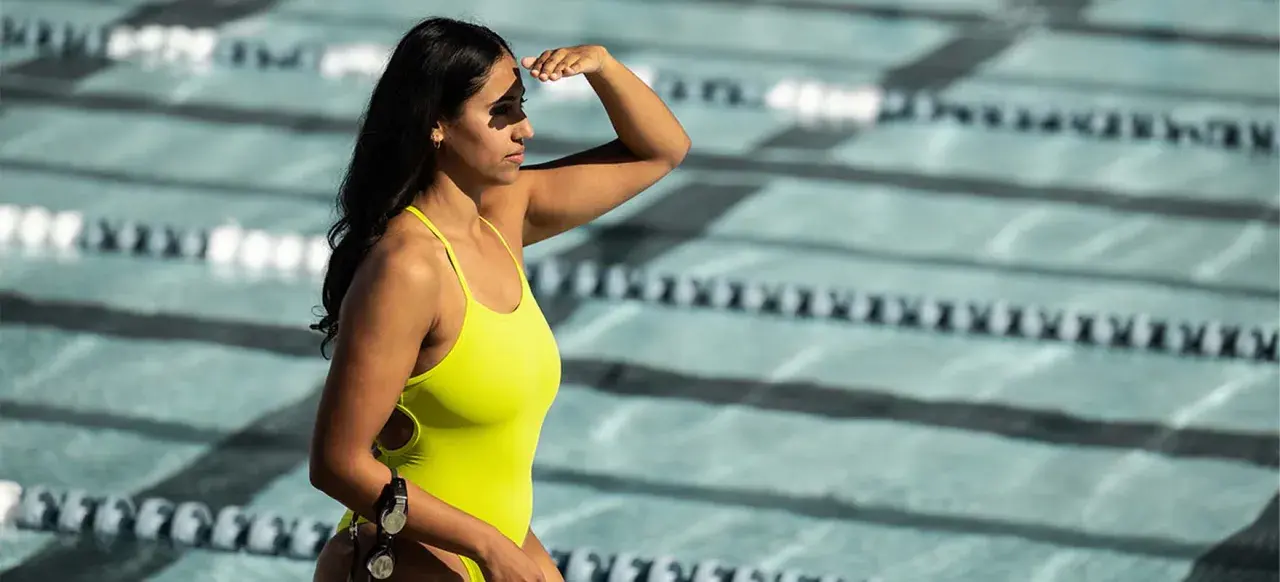
For a lap swimmer, progress usually comes from repeatable sessions, not heroic one-off efforts. The best pool routines build aerobic fitness, sharpen stroke mechanics, and leave enough energy to come back two days later without dreading the water. That is the angle I take here: practical structure, the technique cues that matter most, the gear that actually earns its place in your bag, and the lane habits that keep training civilized in a busy U.S. pool.
The fastest gains come from consistency, clean mechanics, and a simple plan
- Start with 2-3 swims per week and keep the first sessions short enough to finish with good form.
- Build volume slowly so your shoulders, breathing, and pacing adapt together.
- Keep most work moderate and use short repeats when you want harder efforts.
- Focus on body position, breathing, and the catch before chasing fancy gear or big yardage.
- Learn lane etiquette early so your training stays smooth in shared pools.
What steady lap swimming really trains
Lap swimming is one of the few workouts that challenges the heart, lungs, shoulders, hips, and core at the same time. When the stroke is efficient, you get a low-impact aerobic session that can sit anywhere from easy recovery to hard conditioning, which is why it works for beginners, triathletes, and anyone who wants a joint-friendly fitness habit.
USMS notes that ACSM’s general exercise target is 30 minutes of moderate-intensity work five times a week or 20 minutes of vigorous work three times a week. I read that as a useful benchmark, not a quota: if you can speak in short sentences while swimming, you are probably in the moderate range; if you can only manage a few words at a time, you are moving into vigorous territory.
The biggest mistake I see is treating every swim like a test. The pool rewards repeatable quality, not just suffering, so the first real win is learning how to leave enough in the tank for the next session. Once that mindset lands, building the workout becomes much easier.
How I would structure a session
I like sessions that have a clear warm-up, a main set, and a short cool-down. That keeps the workout honest and makes it easier to measure progress without turning every visit into a guessing game.
| Session type | Time in pool | Example main set | Best for |
|---|---|---|---|
| Return-to-pool | 20-25 minutes | 8 x 25 easy, 4 x 25 kick, easy swim home | Rebuilding comfort and breathing control |
| Fitness base | 30-40 minutes | 6 x 50 moderate, 4 x 100 steady, 4 x 25 strong | General conditioning and rhythm |
| Endurance build | 45-60 minutes | 8 x 100 with controlled rest, plus a few pull or kick repeats | Longer sustained effort |
| Technique day | 25-35 minutes | Drill 25, swim 25, repeated, with easy swimming between blocks | Body position, timing, and stroke efficiency |
When I program a workout, I use either rest intervals or send-off times. A rest interval is simply the pause you choose; a send-off time is the fixed clock you leave on. For most adults, the best choice is the one that keeps form intact instead of turning the set into a breathless scramble. I would rather see 12 clean 25s than one ugly 400.
If you are new, choose the shortest session and stop while your stroke still looks like your stroke. The next step is not more suffering. It is better mechanics.
Technique that gives you the fastest return
Technique matters more in swimming than in most land-based workouts because water punishes every small mistake. A few smart cues usually do more for speed and endurance than an extra piece of gear ever will.
Hold a long line
Keep your head neutral, eyes down, and hips high. When the head lifts too much, the hips sink and the body starts pushing a bigger wake. That feels like extra effort because it is extra effort.
Exhale underwater
Rushed breathing makes the stroke choppy. I want swimmers to exhale continuously into the water so the next breath is quick and calm. If you are gasping at the surface, the set is already too hard or your timing needs work.
Feel the catch before you pull
The catch is the moment your hand and forearm anchor against the water before the pull starts. A strong catch gives you something to move against; a weak one just slips water around. This is one of the quickest places to improve efficiency, especially for adults who are fit but still new to swimming mechanics.
Read Also: 1-Hour Swim Workout - Maximize Your Pool Time
Use the wall as free speed
A clean turn and push-off can give you several meters of speed for free. If flip turns feel clumsy, open turns are fine at first. What matters is that you push off streamlined, stay tight for a moment, and do not surface too early. Good wall work can make a mediocre swim feel much better.
Once those basics feel settled, the next question is what gear helps without getting in the way. That is where many swimmers spend money they do not need to spend.
Gear that helps and gear you can skip
Most lap sessions only need a few items. I would prioritize comfort and repeatability over gadgets that make a single workout feel heroic.
| Item | Why it matters | My take |
|---|---|---|
| Goggles | Clear vision and less eye irritation | Pick a seal that does not leak after 20 minutes, and keep a spare pair in your bag. |
| Swim cap | Reduces drag and keeps hair out of the way | Silicone lasts longer, latex feels lighter, and fabric is often the most comfortable option. |
| Suit | Freedom of movement | Snug, not tight. If the straps or waistband pinch, it is not the right fit. |
| Fins | Support body position and ankle mobility | Useful for drills and short repeats, but not a substitute for kick strength. |
| Pull buoy | Lets you isolate the upper body | Helpful for pull sets, but I would not lean on it if your stroke collapses without it. |
| Kickboard | Gives structure to kick work | Good for beginners, though a snorkel can make the drill cleaner if your neck gets tense. |
| Hand paddles | Add resistance | Wait until your catch is stable; they can expose weak shoulders fast. |
If I had to strip the bag down, I would keep goggles, a suit, a cap, and one training aid that matches the day’s goal. Everything else is optional, which is useful because gear should support the workout, not distract from it.

Pool etiquette that keeps your workout moving
Shared lanes are where good intentions either become a smooth session or turn into constant interruptions. The rules are simple, but they matter because the smoother the lane, the better the workout.
- Ask before you enter a lane.
- Match your lane to your pace instead of guessing.
- Two swimmers can usually split a lane; three or more usually circle swim.
- Pass at the wall or when the lane is clearly open.
- Rest at the corner, not in the middle of the wall.
- Keep your equipment and tempo predictable.
I also recommend learning the pool’s local pattern on day one. Rules vary by facility, but being the person who asks once and follows through is always better than guessing and forcing the lane to adapt around you. That small habit saves more energy than people expect.
Once the lane is sorted out, the only thing left is making sure your progress keeps moving without beating up your shoulders. That is where pacing your build matters.
How to progress without overdoing it
I use three levers: frequency, distance, and intensity. Change one at a time. If you add a fourth swim, do not also double the yardage and chase faster repeats in the same week.
USMS recommends increasing total distance by no more than 10% per week. That is conservative enough to protect most shoulders and backs, and aggressive enough to keep the adaptation moving.
- Track effort with RPE, the rate of perceived exertion. On a 1-10 scale, most training should live around 4-6.
- Use a clean stopping point. If your breathing falls apart or your stroke shortens, end the main set there.
- Watch the shoulder line. Front-of-shoulder pain is not the same as normal fatigue, and I would not ignore it.
- Do not hide from rest. Better rest often creates better pace, which is more useful than pretending you are tougher than the set.
When progress stalls, the fix is usually smaller than people want it to be: a shorter repeat, a steadier pace, a better warm-up, or one less hard day each week. That is not glamorous, but it works.
What I would do in the first month
For a lap swimmer, the first month is less about proving toughness and more about making the routine easy to repeat. I would start with a simple three-step pattern: one technique-heavy swim, one moderate aerobic swim, and one session that is just a little longer than the others.
| Week | Frequency | Main goal | Best focus |
|---|---|---|---|
| 1 | 2 swims | Comfort and breathing | Short repeats, long warm-up, easy finishes |
| 2 | 2-3 swims | Consistency | Slightly longer repeats and smoother pacing |
| 3 | 3 swims | Controlled aerobic work | A few 100s at steady effort, no hero pace |
| 4 | 3 swims | Repeatability | One longer main set, same easy technique standards |
By the end of four weeks, you should know whether your limiting factor is breathing, body position, kick, or endurance. That is the point where training gets interesting, because you can stop guessing and start fixing the piece that is actually slowing you down.
Keep the plan boring on purpose: one small target per session, one clear limiter to improve, and enough rest to make the next swim better instead of just harder. That is usually what separates the swimmer who keeps coming back from the one who burns out after a burst of enthusiasm.