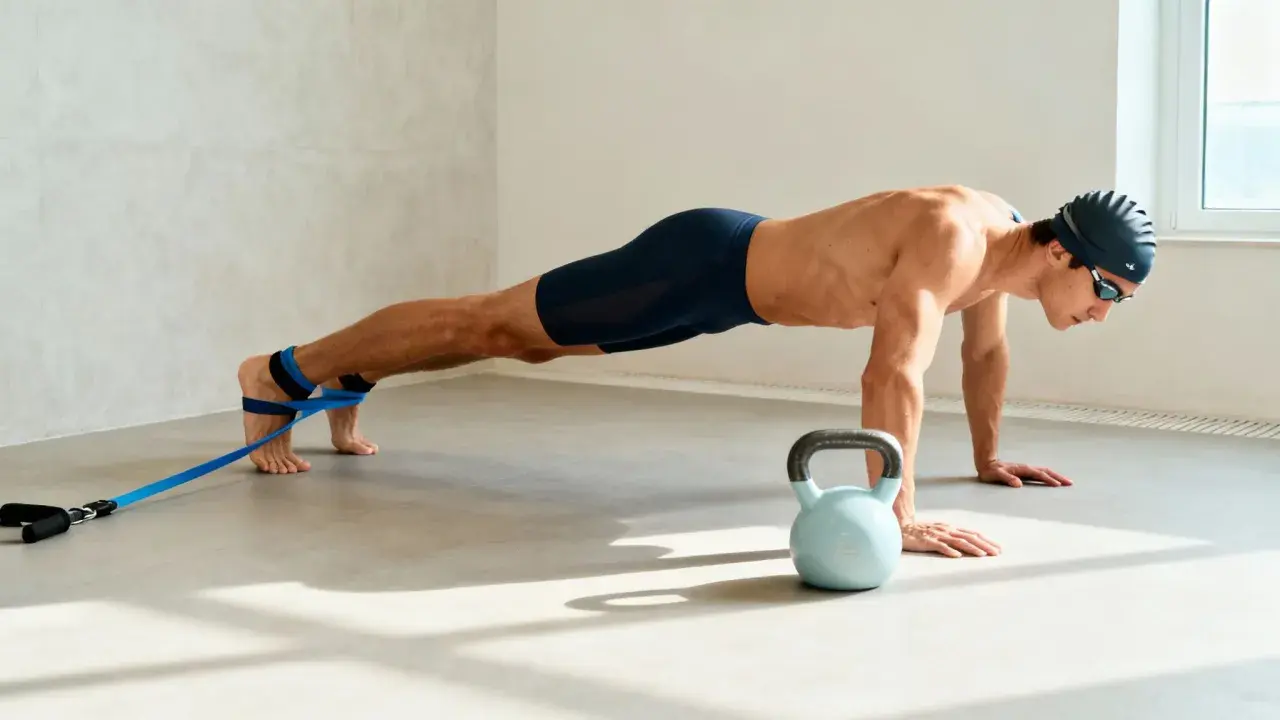
RPE is one of the simplest ways to judge training intensity without getting trapped by pace charts or gadget data. For swimmers, it is especially useful because breathing rhythm, stroke efficiency, rest intervals, and fatigue can all change how hard a set feels, even when the split times look similar. In this article, I break down what RPE means, how the common scales work, and how I use it to make swim workouts more effective and easier to manage.
The practical version swimmers need before the details
- RPE means Rate of Perceived Exertion: a self-rating of how hard a workout feels.
- Most swimmers will use either a 0-10 scale or the classic 6-20 Borg scale.
- In the pool, RPE is valuable because pace, heart rate, and technique do not always tell the full story.
- For many swim sessions, the best range is not “as hard as possible” but a specific effort level you can repeat cleanly.
- Session-RPE multiplies your effort score by session duration, which makes it useful for tracking training load over time.
What RPE measures during a workout
RPE measures the effort you feel while exercising, not just the effort that shows up on a watch or a pace clock. That feeling is built from several signals at once: breathing rate, heart rate, muscle fatigue, sweat, and even mental strain. In practice, I treat it as a snapshot of your internal load, which is why two swimmers can finish the same set with very different scores.
That subjectivity is not a flaw. It is the point. A fast set on paper may feel manageable if you are fresh, but it can feel punishing if your shoulders are already cooked, your breathing is messy, or the session has stacked too much volume too soon. Once you understand that RPE is measuring your internal response, the next step is learning which scale to use and how to read it clearly.

The two scales you will see and how to read them
In exercise settings, you will usually see one of two versions. The classic Borg scale runs from 6 to 20, while the modified Borg CR10 scale runs from 0 to 10. For most swimmers, the 0-10 version is easier to remember on deck, but the 6-20 scale still appears in older coaching material and some performance testing contexts.
| Scale | Range | How it usually feels | Best use in the pool |
|---|---|---|---|
| Modified Borg CR10 | 0-10 | 0 is rest, 3 is light, 5 is moderate, 8-10 is very hard to maximal | Daily swim training, quick post-set checks, and simple coaching cues |
| Borg RPE | 6-20 | 6 is no exertion, 13 is somewhat hard, 15 is hard, 17-20 is very hard to maximal | Endurance testing, older training systems, and structured lab-style work |
How I use RPE in swim sessions
When I build a swim workout, I use RPE to label the intent of the set before I ever worry about the exact distance. That sounds small, but it changes how the session works. A swimmer who knows a set is meant to sit at 4/10 will pace differently, recover differently, and usually finish with better technique than someone chasing the clock blindly.
| Target RPE | What it should feel like | Typical swim use |
|---|---|---|
| 1-3/10 | Easy breathing, relaxed shoulders, you could keep going | Warm-up, drill work, recovery swims, technique focus |
| 4-5/10 | Steady and controlled, effort is present but not forced | Aerobic base work, longer repeats, mixed technical sets |
| 6-7/10 | Hard but repeatable, breathing is noticeably elevated | Threshold work, strong aerobic intervals, controlled fatigue |
| 8-10/10 | Very hard to maximal, technique is under pressure | Race-pace work, short sprints, broken efforts with real recovery |
One detail that matters in swimming is session-RPE, which is simply your effort score multiplied by the session length in minutes. A 45-minute workout at 6/10 gives a load of 270, while a 60-minute session at 4/10 gives 240. That is not perfect science, but it is a very practical way to compare a hard short session with a longer moderate one. Once you start seeing the workload this way, the comparison with pace and heart rate becomes much clearer.
Why RPE works better than pace alone in the pool
Pace is useful, but it does not tell the whole story. A 1:30 repeat can mean very different things depending on whether you are rested, swimming with paddles, fighting poor body position, or coming off a hard kick set. RPE captures those hidden costs. That is why I think of pace as the external result and RPE as the internal cost of producing it.
| Tool | Strength | Blind spot |
|---|---|---|
| Pace | Clear, objective, easy to compare | Can hide fatigue, stress, and technique breakdown |
| Heart rate | Useful for aerobic load and recovery work | Lags on short repeats and can be affected by heat, stress, and hydration |
| RPE | Captures whole-body effort and day-to-day readiness | Subjective, so it improves with practice and honest reporting |
In pool training, the combination is stronger than any single metric. I like RPE because it travels well across yards or meters, across different pool lengths, and across different styles of training. That flexibility matters, but it also means the scale can be misread if you are not careful, which is where the common mistakes show up.
Where RPE can mislead you
RPE is powerful, but it is not magic. New swimmers often rate normal discomfort as “very hard” because they are still learning what steady effort feels like. Experienced swimmers can make the opposite mistake and underrate a set because they are used to discomfort and pushing through fatigue. Both errors can distort training decisions.
- Technique changes effort. A sloppy catch or poor body line can make an easy pace feel much harder.
- Recovery changes effort. Sleep, hydration, stress, heat, illness, and soreness all shift perception.
- Equipment changes effort. Fins, paddles, snorkels, and pull buoy work can load the body in different ways.
- Local fatigue matters. Your lungs may feel fine while your shoulders or legs are the real limiter.
- Health context matters. If you have a heart or lung condition, or you are returning from illness or injury, use RPE with professional guidance rather than chasing a number.
That is the main limitation: RPE is honest, but only if the swimmer is honest and has enough experience to interpret the signal. The good news is that the scale gets more accurate with repetition, and the easiest way to sharpen it is to use it inside a simple weekly structure.
A practical way to build the next week around RPE
If I were helping a swimmer start tomorrow, I would keep the system boring on purpose. Pick one scale, write the target effort next to each main set, and compare the target with the number you actually felt after the rep or after the session. Keep one objective marker beside it, such as pace, stroke count, or rest interval, so the subjective score has something to anchor to.
- Use the same scale every week, ideally the 0-10 version if you want something fast and simple.
- Assign an effort target to the session before you swim it, not after.
- Record the real RPE 10-20 minutes after the main work, when the effort is still fresh but the spikes have settled.
- Compare that score with one external marker, such as average split, stroke efficiency, or how much rest you needed to hold form.
- Adjust the next session if the numbers do not match the goal, because repeated mismatch usually means the load is wrong.
A good swim week usually has a mix of lower-RPE technical work, moderate aerobic volume, and only a few truly hard sessions. If every workout lives at 8/10, nothing is really 8/10 anymore. The cleanest way to use RPE is to let it protect your easy days, sharpen your hard days, and keep the overall load realistic enough that you can repeat it week after week.
