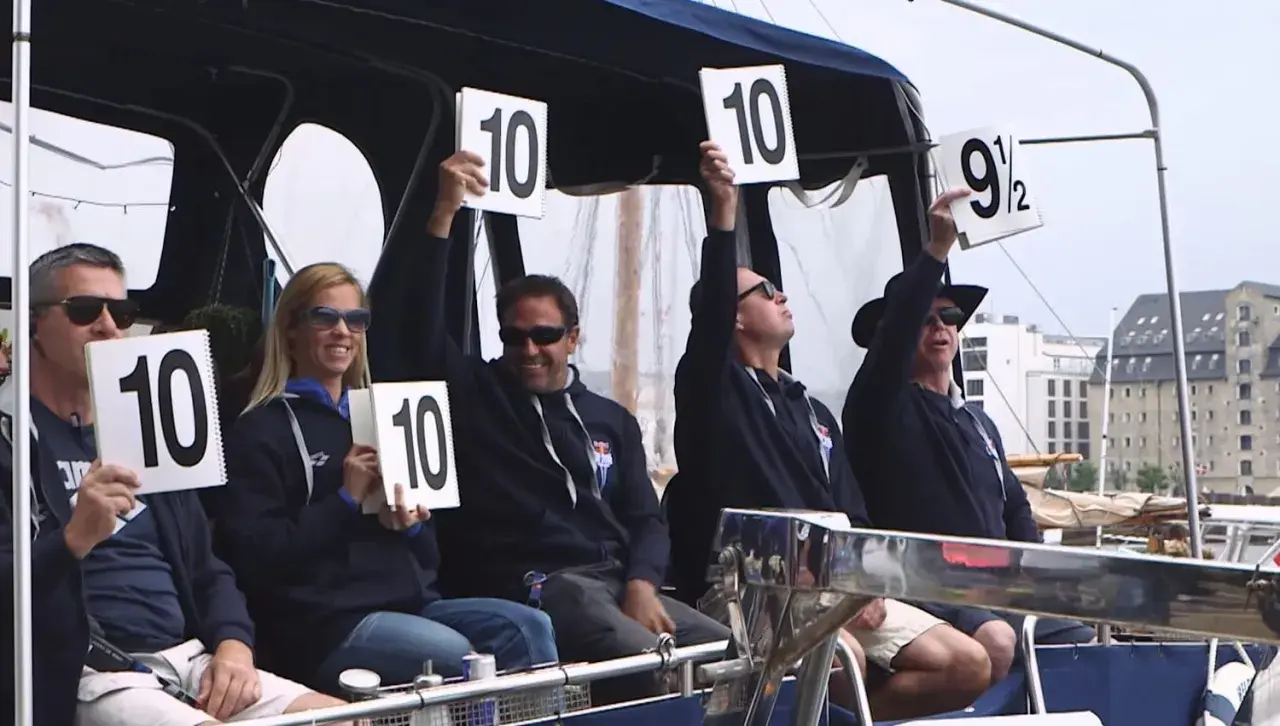
Diving scoring looks simple from the stands, but the panel is really judging balance, timing, body control, and the degree of difficulty in a matter of seconds. This article breaks down how the score is built, what the officials are actually watching, and why synchronized events are handled differently from individual dives. I also separate diving officiating from water polo so the roles stay clear if you follow both sports.
Here is the fast version of how diving scores are decided
- Judges score execution on a 0 to 10 scale in half-point steps, then the result is adjusted by degree of difficulty.
- Major individual events usually use seven judges, and synchronized events use a larger panel.
- Clean takeoff, body line, rotation control, and a vertical entry matter more than splash size alone.
- The judging job is standardized in the U.S. through formal education and rulebook-based training.
- Water polo uses referees and officials, not a scoring panel for dives.
How judges turn a dive into a score
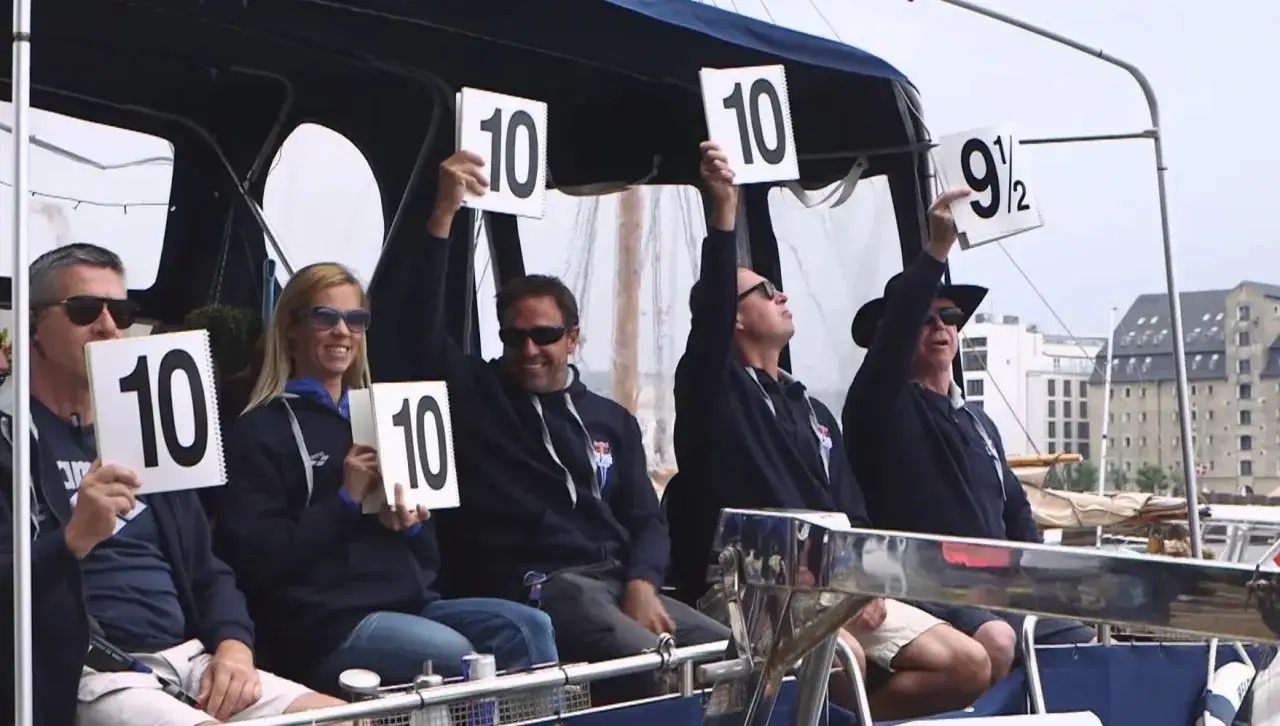
At the core of the system is a simple idea: each official awards a mark from 0 to 10, usually in half-point increments. The middle of the scale is where most competitive dives land, while the extremes are reserved for obvious failures or exceptional execution. In practice, the dive is not judged on one dramatic moment; it is judged as a complete performance.
For major individual events, the standard panel is seven judges. The highest and lowest marks are dropped, the remaining scores are added, and that total is multiplied by the dive’s degree of difficulty. That last step matters a lot, because two dives with the same execution can finish with very different totals if one has a higher difficulty value.
| Step | What happens | Why it matters |
|---|---|---|
| 1. Judges score execution | Each judge gives a mark from 0 to 10 in 0.5-point steps. | The panel is measuring quality, not reputation or crowd reaction. |
| 2. Extreme marks are removed | The highest and lowest marks are discarded. | This reduces the impact of one outlier score. |
| 3. Remaining marks are summed | The middle scores are added together. | This gives the raw execution result. |
| 4. Degree of difficulty is applied | The raw result is multiplied by the DD. | A harder dive can outscore an easier one with the same execution. |
I like this system because it rewards both cleanliness and ambition. A diver cannot win on difficulty alone, but clean mechanics on a harder dive usually beat a safer, lower-DD option. That leads directly to the real question fans and athletes care about: what, exactly, are the officials looking for on the board?
What officials watch from takeoff to entry
The best way to understand judging is to break a dive into visible phases. Officials are supposed to score the technique and execution they can see from the side, not the difficulty, not the athlete’s name, and not what happens below the waterline after the entry. That sounds obvious, but it is where a lot of spectator confusion starts.
| Phase | What good looks like | Common problems |
|---|---|---|
| Starting position | Stable posture, controlled balance, no visible tension. | Rocking, hesitation, or a rushed setup. |
| Approach | Rhythmic, balanced movement that sets up the takeoff. | Stuttering steps, loss of timing, or crowding the board. |
| Takeoff | Strong lift, correct angle, clean control off the board or platform. | Unbalanced push, poor angle, or a weak rise. |
| Flight | Tight body shape, correct position, controlled rotation. | Opening early, bent knees, or a visible break in position. |
| Entry | Vertical line, clean hand position, body aligned with the water. | Over-rotation, twist error, or a loose line on entry. |
One thing I would stress to any swimmer, parent, or coach watching from the deck: splash alone is not the whole story. A smaller splash often comes from good line and control, but the panel still has to judge the complete dive. That is why a dive can look flashy to spectators and still receive a modest mark if the timing or position was off.
Another useful rule of thumb is this: if the diver looks rushed, the dive often loses quality somewhere else. I see that most often in the approach and takeoff. The takeoff is where the athlete either creates the shape needed for the dive or spends the rest of the movement trying to recover from a bad start. That becomes even more important in synchronized events, where two athletes have to do it together.
Synchronized diving asks for two clean dives at once
Synchronized diving changes the job in a big way. At top international meets, the panel is larger because the dive is being judged in two layers: the execution of each diver and the synchronization between them. World-level events typically use 11 judges for synchronized dives, with six focused on execution and five on synchronization.
This is why a pair can look strong individually and still lose ground on the scoreboard. If one diver is a fraction early, one opens too soon, or one entry is cleaner than the other but the timing is off, the synchronization score suffers. At that point, the pair is no longer being judged as two separate athletes only; it is being judged as a single coordinated performance.
| Event type | Main focus | What usually decides the score |
|---|---|---|
| Individual diving | One athlete’s technique, control, and entry. | How well the diver executes the chosen dive. |
| Synchronized diving | Two clean dives plus matching timing and shapes. | Both execution quality and how closely the pair moves as one. |
If I were coaching a young pair, I would treat synchronization like a timing skill first and a cosmetic detail second. It is easy to chase identical splash lines, but the real score often starts earlier: matching the approach rhythm, leaving the board together, and holding the same body position through the middle of the dive. Once that is stable, the panel can actually reward the pair for looking like one unit instead of two separate routines. From there, the natural question is how officials learn to apply that standard consistently.
How judging stays consistent in the U.S.
Judging is not a casual volunteer task if the meet matters. In the U.S., the current technical rulebook for domestic competition is the 2026 version, and the education pathway is built around rule knowledge, scoring practice, and protocol. The point is not just to teach someone how to assign a number; it is to teach a common standard so the same dive is read the same way across meets and regions.
The official learning path includes a judging course that covers criteria, scoring, rules, and protocol, along with resources for officials who need to refresh their knowledge. That matters because consistency is the real currency of judging. Two honest officials can still disagree in the moment, but a shared framework reduces random variation and makes the final result more trustworthy.
- Learn the rulebook before you try to judge quickly.
- Watch video examples and practice scoring them without guessing.
- Start at smaller meets and build consistency before moving up.
- Pay attention to common deductions rather than chasing perfect marks.
- Keep up with rule changes and interpretation updates.
There is also a broader reason this standardization matters. Diving rewards nuance, and nuance gets messy fast if every panel invents its own habits. A good official does not score emotionally, and a good system gives that official a repeatable framework to work from. That same clarity also helps when people confuse diving officiating with what happens in water polo.
Why water polo officiating is a different job entirely
Diving and water polo both belong to the same aquatic family, but the officials do very different work. Diving uses judges who turn a short, technical performance into a numerical score. Water polo uses referees and officials who manage live play, call fouls, control exclusions, and keep the match moving under pressure. That difference changes everything about the role. A diving official has a few seconds to evaluate body line, rotation, and entry after a single attempt. A water polo referee has to read contact, advantage, pace, and tactical fouls in real time while the game is still unfolding. One role is about scoring a performance; the other is about enforcing the rules of continuous play.| Sport | Main official role | What the official decides |
|---|---|---|
| Diving | Judge | How well a dive was executed and, in synchronized events, how well the pair matched. |
| Water polo | Referee or official | Whether play is legal, whether an exclusion or foul is called, and how the match is managed. |
For anyone who follows both sports, this distinction saves a lot of confusion. A diving panel is there to convert technique into points. A water polo crew is there to protect the flow and fairness of the match. They are both essential, but they are solving completely different problems. That leaves one last practical question: how should you read a dive score without overreacting to one mark?
What I pay attention to when the score appears
When I watch a meet, I do not start with the raw total. I start by asking whether the dive looked repeatable, whether the takeoff was balanced, and whether the entry matched the line that came before it. If those pieces are consistent, the score usually makes sense even if one judge was a little higher or lower than the others.
For athletes and coaches, the most useful habit is to separate execution problems from degree-of-difficulty problems. If the same deduction shows up again and again, that is a technique issue, not a scoring problem. If the dive is clean but still cannot move up the rankings, the answer may be that the list is not difficult enough for the field. Those are very different fixes, and mixing them up wastes training time.
- Do not obsess over one high or low mark unless the whole panel is split.
- Look for patterns across multiple dives, not just one attempt.
- For synchronized events, watch timing first and splash second.
- If a diver keeps getting the same deduction, isolate the phase where it begins.
- Use the score as feedback, not as a verdict on the athlete’s potential.
That is the clearest way I can frame it: diving judges are not grading drama, they are grading control. Once you read the panel through that lens, the scoreboard becomes far easier to understand, and the difference between a good dive, a hard dive, and a winning dive is much less mysterious.