A strong swim lesson should do more than keep a child busy in the water. It should build confidence, teach survival habits, and improve technique in a way that still works when the swimmer is tired, nervous, or facing open water for the first time. That is why a Safe-T-Swim-style programme is useful only if the teaching is structured, calm, and safety-led.
In the UK, I judge programmes by the quality of the instructors, the way they handle beginners, and whether safety skills are taught as part of normal progress rather than as an afterthought. This article breaks down what to look for, how lesson formats differ, and which practical signs tell you the teaching is actually working.The safest lessons teach technique and survival together
- Recognised UK qualifications matter, but so does how the teacher handles fear, supervision and rescue readiness.
- A good beginner lesson covers entry, exit, floating, breathing and recovery before speed or distance.
- Private, group, parent-and-child and open-water sessions solve different problems, so the best format depends on the swimmer.
- In England, swimming and water safety sit inside the national curriculum, and the Year 6 benchmark is 25 metres unaided.
- Lessons help a lot, but they do not replace close adult supervision around water.
What a good swim programme should teach from day one
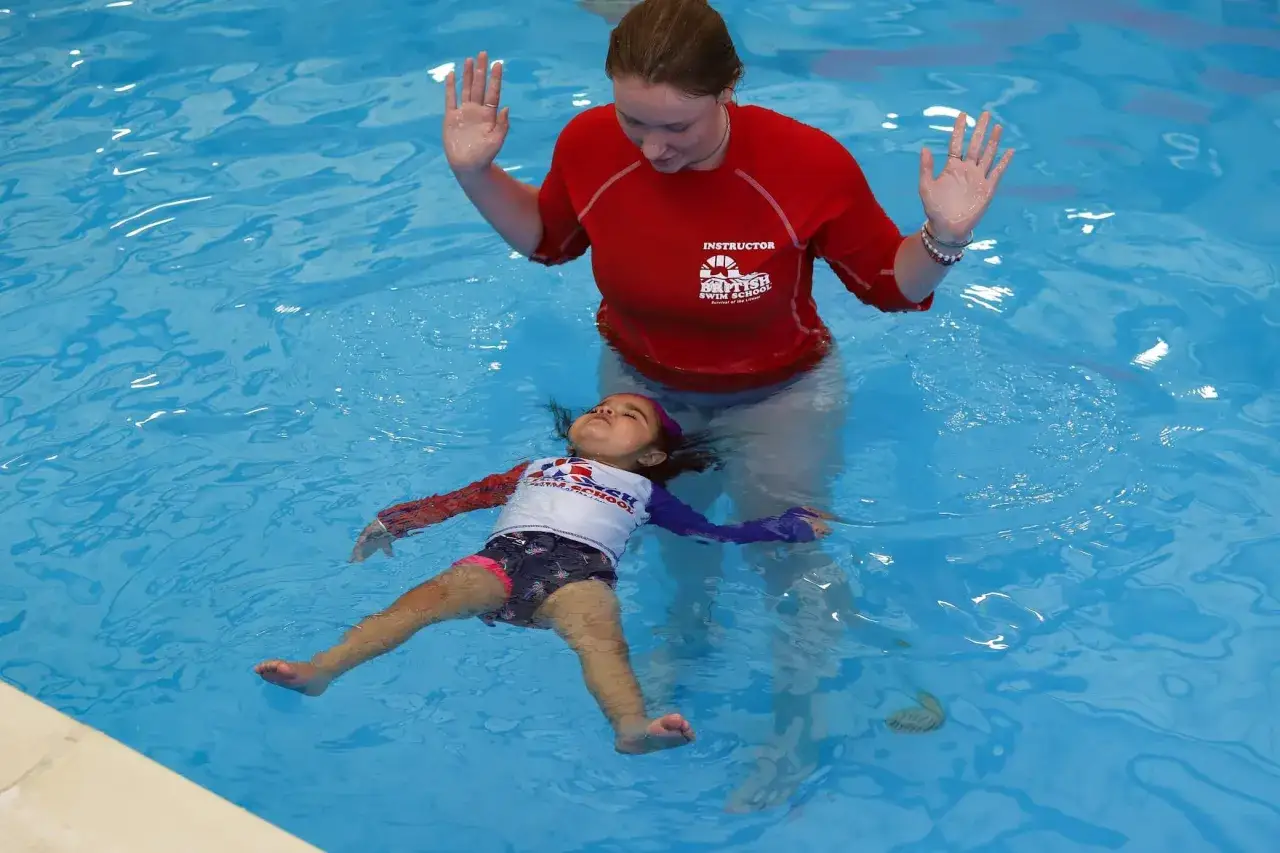
I always start with the same question: does this lesson make the swimmer safer, or just more active? The answer should be safety first. That means the first sessions should teach the swimmer how to get in and out safely, how to blow bubbles and control breathing, how to float on the back, and how to regain the wall if they feel unsettled.Technique matters, but it should be built on control. A child or adult who can kick for a few metres but cannot stay calm, float, or turn back to safety is still missing the foundations. I want to see instructors using simple language, short demonstrations and plenty of repetition, because that is what helps skills stick when confidence drops.
This is also where many programmes overpromise. A lesson that looks busy is not automatically a good lesson. If the swimmer is constantly moving but never looks more relaxed, the teaching is probably too shallow. Once the content is right, the next filter is the instructor themselves.
How I judge a swim instructor before I book
I look first for a recognised UK teaching qualification, ideally on a route such as Swim England or STA Level 2, because that usually means the instructor understands progression, not just pool games. If the class uses in-water support, I also want to know who is responsible for rescue coverage and how the school handles safeguarding, first aid and supervision.
For group lessons, I like the Swim England model of a teacher on the poolside with an assistant in the water when beginners need hands-on help. That is not the only safe setup, but it is a sensible benchmark: the teacher can oversee the class clearly while the assistant gives practical support where needed. If the school cannot explain its supervision model in plain English, I move on.
The other thing I watch for is how the instructor responds to anxiety. A good teacher does not rush a frightened swimmer, shame them, or hide behind the timetable. They break the task down, keep the tone calm, and know when a swimmer needs a smaller step rather than a louder instruction.
- Green flags include clear qualifications, a visible progression plan, and calm correction.
- Red flags include vague staff profiles, oversized classes, and promises of fast results without explanation.
- I also want the school to explain what happens if a swimmer panics, stops responding, or refuses to submerge.
Once the teaching team looks solid, the format matters just as much as the people delivering it.
Which lesson format fits which swimmer
There is no single best format. The right choice depends on age, confidence, budget and the final goal. I would choose differently for a nervous adult beginner, a toddler, and a confident child who needs better technique.
| Format | Best for | What it does well | Main trade-off |
|---|---|---|---|
| Private 1-to-1 | Anxious beginners, adults who feel self-conscious, swimmers who need fast correction | Full attention, flexible pace, strong confidence building | More expensive and less social practice |
| Small group | Children who learn well by watching others and families balancing cost with progress | Repeat practice, motivation through peers, better value | Less individual feedback than private lessons |
| Parent-and-child | Babies and toddlers, or very hesitant young swimmers | Trust, early water familiarity, gentle routines | Not a substitute for formal swim development later on |
| Open-water safety session | Children aged 7 to 14, holiday swimmers, and families who swim in the sea, lakes or rivers | Floating, cold-water awareness, safe decision-making | Usually seasonal and not enough on its own |
For UK families, the most useful add-on is often an open-water module rather than another stroke-only lesson. Swim Safe, run with Swim England and the RNLI, is designed to teach where it is safe to swim, how to float, and what to do if someone gets into trouble. That is especially relevant if your child swims outdoors in summer or your holidays involve the coast.
Next, it helps to understand the safety skills that should be repeated until they become automatic.
The water safety skills that matter beyond the pool
Open water changes the whole game. A confident pool swimmer can still run into trouble in a cold lake or at the beach, because temperature, current and depth change the rules quickly. RLSS UK is right to keep repeating the basics: warm weather does not guarantee warm water, and cold-water shock can arrive fast enough to overwhelm even a strong swimmer.
The skills I want to see taught consistently are simple, practical and memorable. Float on the back. Stay calm and control breathing. Choose lifeguarded areas when possible. Learn how to get out safely rather than pushing further when tired. If someone else is in trouble, call 999 and avoid diving in as a rescuer unless you are trained for it.
- Before entering water, check signs, access points and whether help is nearby.
- In open water, wear bright kit and use a tow float if appropriate.
- For children, teach them to stay within reach and to ask for help early, not late.
These habits are not glamorous, but they are the difference between a swimmer who looks confident in a pool and one who can make sensible decisions outdoors. That also changes how I judge progress over time.
What progress should look like in the first months
Early progress is usually obvious if you know what to watch for. The swimmer stops clinging to the side. They put their face in without drama. They can blow bubbles, float, and recover from a wobble without freezing. Those changes matter more than a badge on a wall.
In England, swimming and water safety are part of the national curriculum, and the standard end-point most people know is 25 metres unaided by the end of Year 6. I treat that as a useful benchmark, not a magic finish line. A child may be able to complete the distance but still need work on treading water, rolling to the back, or judging when they are getting tired.For younger swimmers, I care less about distance and more about control. Can they enter and exit safely? Can they turn back to the wall? Can they relax enough to listen to instructions? For adults, the first real milestone is often emotional rather than athletic: the moment they stop fighting the water and start working with it.
That is why regular attendance matters. A weekly lesson with steady repetition usually beats occasional bursts of enthusiasm, because water confidence fades quickly when gaps get too long.
The practical checks I make before paying for lessons
If I were choosing a lesson today, I would ask five direct questions before committing. First, what qualification does the lead teacher hold? Second, how do you handle nervous swimmers or children who freeze up? Third, how many swimmers does each adult supervise? Fourth, how do you build water safety into the lesson, not just stroke technique? Fifth, how do you track progress and share it with parents or adult learners?
Those questions usually reveal more than a glossy brochure. A good school answers them clearly and without defensiveness. A weak school talks vaguely about fun and confidence but struggles to explain how those things are actually taught. I also pay attention to small details such as whether the class starts on time, whether the pool feels organised, and whether the instructor notices when a swimmer is slipping behind.
- For a nervous child, private lessons or a very small group usually work best at the start.
- For a social, steady learner, a small group can provide the right mix of repetition and motivation.
- For an adult beginner, I would choose the setting that reduces embarrassment and allows honest, slower practice.
- For a child who swims outdoors, I would add open-water safety rather than assuming pool ability is enough.
If I had to reduce the decision to one rule, it would be this: choose the programme that teaches a swimmer to stay calm, recover position and understand the environment, not just to move arms and legs faster. That is the difference between lessons that look busy and lessons that actually make someone safer in the water.