An Olympic-distance triathlon is one of the clearest tests of endurance you can race: 1.5 km in the water, 40 km on the bike, and 10 km on the run, linked by two transitions that can quietly save or waste minutes. I like this distance because it rewards control as much as fitness; if you go out too hard in the swim or overbike the middle, the run exposes it fast. In the sections below, I’ll break down the format, the swim-specific skills that matter, the training pattern that works for real life, and the gear and race-day habits that actually make a difference.
The Olympic distance rewards control, not just fitness
- The standard race is 1.5 km swim, 40 km bike, and 10 km run, or 51.5 km total.
- Most age-group races in the U.S. are non-drafting on the bike, so pacing and spacing matter differently than in elite racing.
- For many recreational athletes, this is the best “serious but manageable” triathlon distance.
- The swim sets the tone: calm sighting, efficient breathing, and a clean exit save energy for the bike and run.
- A simple build of 2-3 swims, 2-3 bikes, 2 runs, and one brick workout a week is enough for many athletes.
What the standard race actually covers
Olympics.com describes the standard race as a 1.5 km swim, 40 km bike, and 10 km run. In miles, that is roughly 0.93, 24.8, and 6.2, for a total of a little over 32 miles. That middle ground is why the distance works so well: it is long enough to expose weak links, but not so long that you need Ironman-level volume to improve.| Format | Swim | Bike | Run | What it demands |
|---|---|---|---|---|
| Sprint | 750 m / 0.47 mi | 20 km / 12.4 mi | 5 km / 3.1 mi | Speed, sharp transitions, and less margin for pacing errors |
| Olympic | 1.5 km / 0.93 mi | 40 km / 24.8 mi | 10 km / 6.2 mi | Balanced endurance, pacing discipline, and durable technique |
| 70.3 | 1.9 km / 1.2 mi | 90 km / 56 mi | 21.1 km / 13.1 mi | More fuel planning, more fatigue resistance, more patience |
| Ironman | 3.8 km / 2.4 mi | 180 km / 112 mi | 42.2 km / 26.2 mi | Big endurance, long fueling windows, and careful energy control |
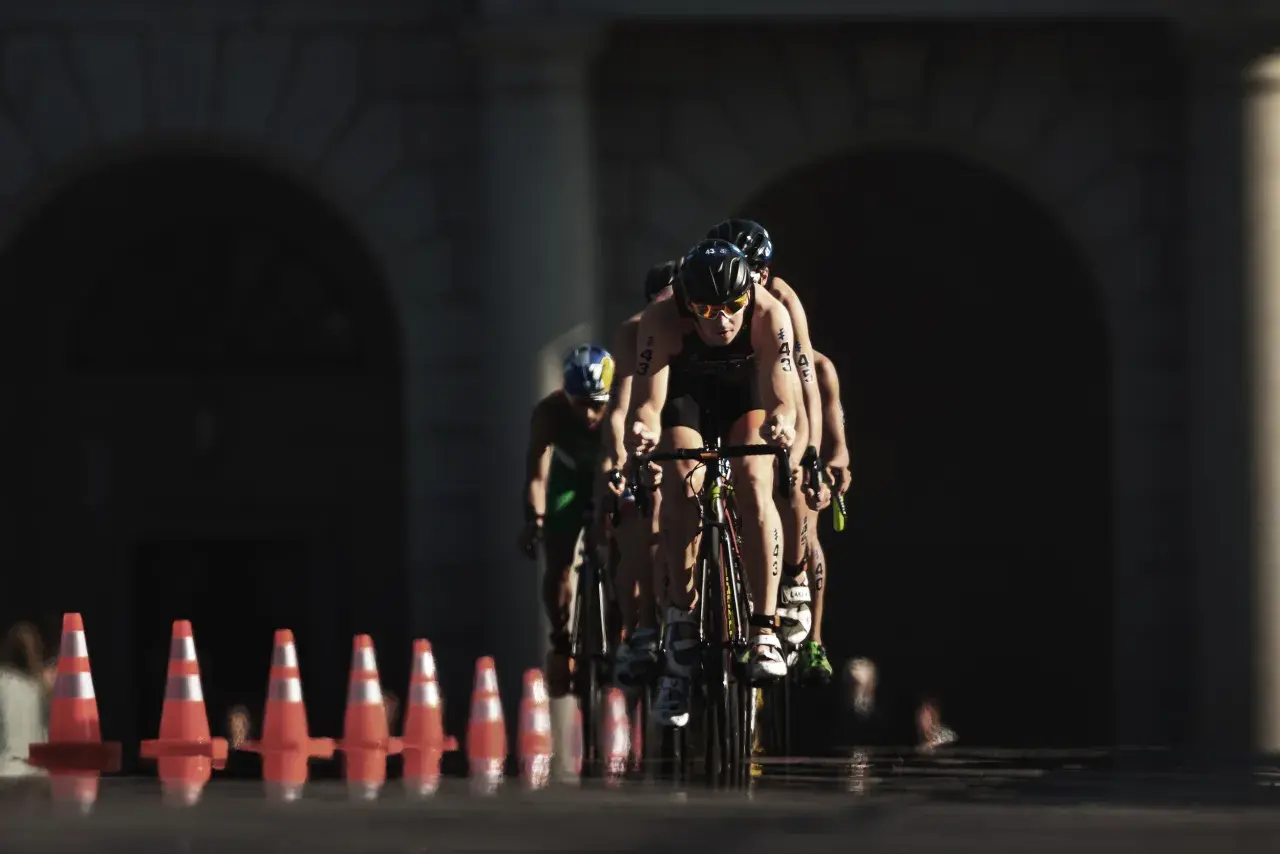
In elite racing, the bike can be draft-legal, which changes tactics a lot. In most U.S. age-group races, it is not, so you are racing your own pacing plan more than the group around you. That is why this distance is so useful for age-group athletes: it teaches you how to stay calm, stay efficient, and still run well at the end. Once the distance is clear, the next thing that matters is how the swim shapes the rest of the day.
How the swim changes the rest of the race
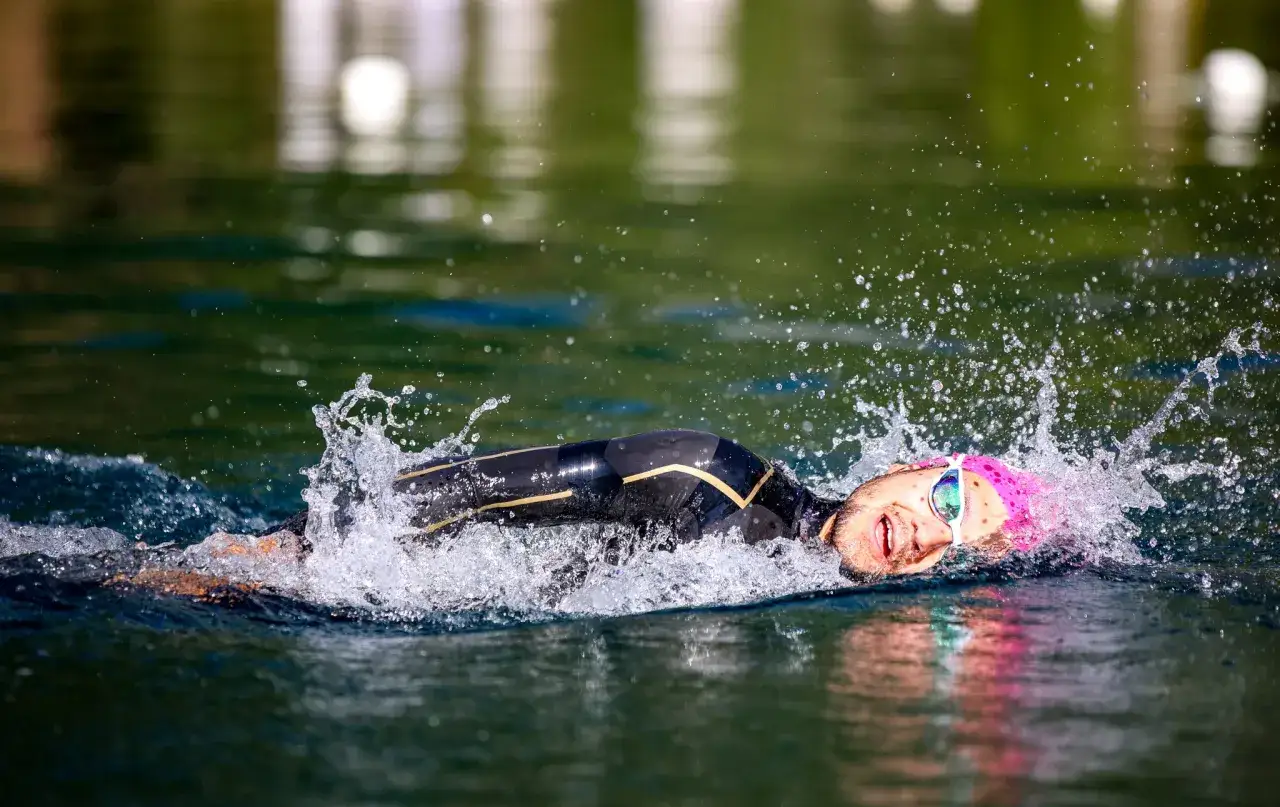
For triathletes, the swim is not just the first leg. It is the part that decides whether you start the bike calm or scattered, and that difference carries into the run. Open-water starts are crowded, visibility is limited, and even a strong pool swimmer can waste energy if the first few minutes are chaotic.- Sighting matters. Lift your eyes every few strokes so you stay on line, but do it smoothly. Excessive head lifting costs more than a slightly imperfect line.
- Breathing control matters. I want swimmers exhaling fully underwater so the first 200 meters do not turn into panic breathing.
- Open-water starts matter. Practice the first fast minute, then settle. The race usually feels easiest when you resist the urge to sprint the whole way out.
- Drafting matters in the swim. Sitting behind or beside another athlete can save energy, but only if you can hold a straight line and keep your rhythm.
- Wetsuit fit matters. If the event allows one, the suit should feel snug without locking up your shoulders. A wetsuit that feels powerful in the water but restrictive in the arms is the wrong trade.
I treat the swim as a positioning problem as much as an aerobic one. A good swim does not have to be the fastest swim in the field; it has to be efficient enough that your legs and nervous system are still usable when you reach the bike. That is why the training week has to look different from a generic endurance plan.
How I would train for it without overcomplicating the season
If an athlete already has a basic fitness base, I usually think in 8 to 12 weeks of focused work for an Olympic-distance build. If the swim is a weak point or open water makes you anxious, I would stretch that out and add more frequency before I add more volume. For this race, consistency beats heroic single sessions.
| Session type | Weekly target | Why it matters |
|---|---|---|
| Swim | 2-3 sessions | One technique session, one harder interval set, and one open-water or continuous swim |
| Bike | 2-3 rides | One longer ride, one race-pace workout, and one easy spin or recovery ride |
| Run | 2 sessions | One easy aerobic run and one brick run off the bike |
| Strength and mobility | 1-2 short sessions | Posture, injury control, and better power transfer on the bike and run |
I especially like three swim sessions for athletes who want the water to feel under control. One session should be pure technique, where you focus on bodyline, the catch, and relaxed breathing. The catch is the part of the stroke where your forearm and hand start holding water, and it is one of the easiest places to leave speed on the table. A second session should be faster, with short repeats that teach you how to stay composed at race effort. A third session should be open water or a continuous swim close to race distance.
A brick is a bike-to-run workout, and it is worth more than most athletes expect. Even a 20-minute run off the bike teaches your legs how to switch gears, which is exactly what happens after T2. If you can hold form there, you are usually training the right thing. Once the sessions are in place, the next question is gear and fuel, because a smart setup protects the work you already did.
Gear and fuel that actually make a difference
I would rather see an athlete with a good fit, tested nutrition, and boring reliable equipment than someone carrying expensive gear they barely understand. For this distance, the biggest wins usually come from comfort, repeatability, and fast transitions. Fit first, flash second.
ACSM suggests endurance athletes take in roughly 30 to 60 g of carbohydrate per hour during exercise, which is a very practical target for the bike leg. For many athletes, the swim is too short to need fuel, the bike is where calories matter most, and the run is where you keep intake simple unless the day is hot or your pace is high.
| Item | Why it matters | What I would prioritize |
|---|---|---|
| Goggles | Visibility and confidence in open water | Two tested pairs, one clear and one tinted if conditions change |
| Swimsuit or trisuit | Comfort in the water and speed in transition | A snug fit that does not chafe after the bike |
| Wetsuit | Warmth, buoyancy, and easier body position if allowed | Shoulders that move freely and a fit you can get out of quickly |
| Bike | Most of the race is spent here | Proper fit and stable handling before aero upgrades |
| Running shoes | The final 10 km depends on them | A broken-in pair you trust on tired legs |
| Nutrition | Energy for the back half of the race | Simple carbs you have already tested in training |
For a lot of age-group athletes, the smartest move is not buying more gear. It is rehearsing how the kit works together on race morning, especially if you are wearing a wetsuit, using a trisuit, and carrying a bottle or two on the bike. If the setup is smooth, the race starts to feel smaller. If it is messy, even a fit athlete can burn time and attention they do not have. That is why the small mistakes matter so much.
The mistakes that cost the most minutes
The same errors show up every season, and most of them are not fitness problems. They are pacing, preparation, and judgment problems. Fix those, and the race gets easier almost immediately.
- Going too hard in the swim. The first 200 to 400 meters feel exciting, but they should not feel like a standalone sprint. A controlled start leaves more usable energy for the bike.
- Overbiking. Forty kilometers can trick people into pushing harder than they should. If your bike effort is selfish, your run pays for it.
- Ignoring transitions. T1 and T2 are short, but they reward routine. A practiced helmet, shoes, and rack setup can save more time than a fancy frame upgrade.
- Trying new fuel on race day. If your stomach has not tested it in training, race day is the wrong place to experiment.
- Running the 10 km like a standalone road race. The first half should feel controlled. If the legs are still there at 6 km, then you can press.
- Underestimating heat and humidity. In many U.S. races, the weather is part of the course. Hydration and cooling matter more than athletes expect.
If I had to choose one mistake to fix first, it would be bike pacing. A well-managed bike leg changes everything that follows, and it often creates the biggest performance gain without adding more training volume. That brings us to the simplest way I would approach race day if the goal is a strong, confident finish.
The race plan I would trust for a strong finish
My ideal plan for this distance is simple: start the swim controlled, ride the bike like the run still matters, and treat the opening kilometers of the run as part of the plan rather than proof of fitness. That is the difference between racing the course and fighting it.
- Swim: Start below panic pace, find rhythm quickly, and sight enough to stay on line without lifting the head every stroke.
- Bike: Hold an effort you can repeat for the full 40 km, not one that feels heroic for the first 10.
- Run: Keep the first 2 km under control, then build if the breathing and cadence stay smooth.
- Transitions: Rehearse them enough that the motions are automatic when your heart rate is high.
If I had to simplify the whole distance, I would say this: earn a calm swim, ride within yourself, and keep enough in reserve to run the final 5 km with shape instead of survival mode. That is what makes an Olympic-distance triathlon feel rewarding rather than chaotic, and it is usually the difference between a good finish and a frustrating one.