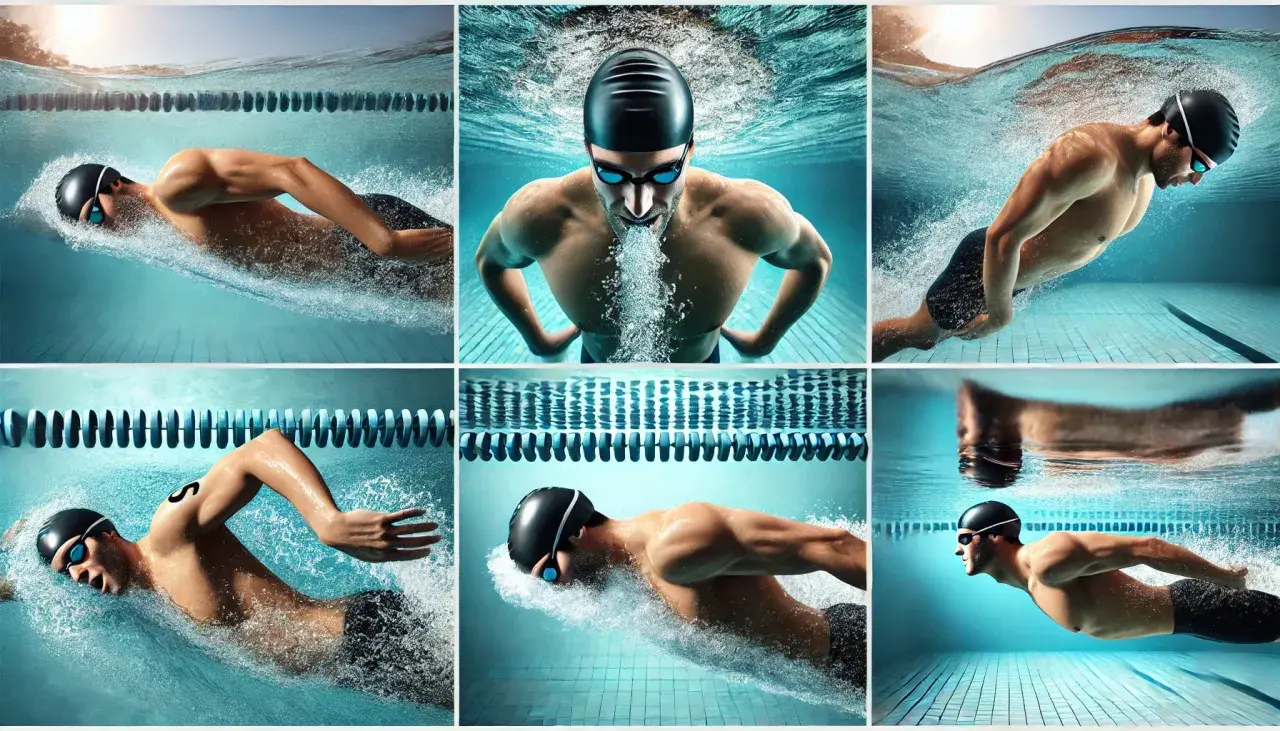
The fastest gains come from combining technique, race pace and open-water skills
- Most age-group triathletes progress fastest with 2 to 4 swims a week.
- Every week should include at least one technique-focused session and one race-pace session.
- Pool work matters, but open-water skills such as sighting, starts and calm breathing decide race day.
- For sprint and Olympic races, 1,200 to 2,500m sessions are often enough; half and full-distance athletes usually need more volume.
- The biggest mistake is swimming hard all the time and never rehearsing pacing.
What the swim leg demands from triathletes
The swim is short compared with the bike and run, but it is where poor body position and rushed breathing show up fastest. I want athletes to leave the water with a controlled heart rate, a workable rhythm and enough energy to ride rather than “win” the swim.
That is why I treat the swim as a technical and tactical problem, not just a fitness test. The distance may look simple on paper, but the first minute of a race can include contact, nerves, cold water and bad direction. If your training never rehearses those things, race day will.
| Race distance | What changes in the water | What I prioritise |
|---|---|---|
| Sprint triathlon, 750m | Fast start, limited time to recover from mistakes | Acceleration, breathing control and a clean first 100m |
| Olympic distance, 1.5km | More time to settle into a rhythm, but still enough intensity to punish poor pacing | Steady tempo, efficient turns and controlled race-pace repeats |
| Half-Ironman, 1.9km | Long enough for fatigue to matter, short enough that a strong start still helps | Threshold work, sighting, and holding form under load |
| Ironman, 3.8km | Patience matters more than bravado | Economy, durable pacing and a body position that survives fatigue |
The important shift is this: race success in the water usually comes from efficiency and pacing, not heroic effort. Once you accept that, the rest of the plan becomes much easier to build. From there, the next question is how much pool time actually earns results.
How much swimming you actually need each week
I rarely start with volume alone. I start with the athlete’s background, then I choose enough frequency to let technique stick without turning the week into a recovery problem. For many age-group athletes, two swims is the floor, three is the sweet spot, and four is only worth it if the extra session stays light and purposeful.
| Swimmer level | Swims per week | Typical session length | Main focus |
|---|---|---|---|
| Beginner or returning athlete | 2 | 1,000 to 1,800m | Comfort in the water, breathing, body position |
| Intermediate age-group triathlete | 3 | 1,500 to 2,500m | Rhythm, pacing and repeatable technique |
| Long-course athlete or strong swimmer | 3 to 4 | 2,000 to 3,500m | Threshold work, race pace and open-water specificity |
Distances are only a guide. A strong swimmer may cover more metres with less fatigue; a weaker swimmer may need shorter sets and more rest to keep form clean. If the stroke falls apart, the session is too long or too hard for that day, even if the watch says the total looks impressive. That is why the structure of each session matters more than the raw number.
The session types I rotate through
Most of the improvement comes from repeating a small set of session types rather than inventing a new challenge every time. I usually rotate through technique, aerobic endurance, threshold work and race-specific speed, with the mix changing slightly by distance and race calendar.
| Session type | Why it matters | Example main set | Common trap |
|---|---|---|---|
| Technique | Improves body position, catch and breathing rhythm | 8 x 50m drill/swim, then 4 x 100m smooth | Drilling forever without returning to full stroke |
| Aerobic endurance | Builds the ability to stay relaxed for longer swims | 3 x 400m steady or 2 x 600m even-paced | Going too hard and turning it into threshold work |
| Threshold work | Teaches you to hold race-like pace without blowing up | 10 x 100m or 5 x 200m at controlled hard effort | Chasing pace numbers that are too fast to repeat |
| Race-specific speed | Prepares you for the start, surges and final push | 12 x 50m with alternating smooth and fast efforts | Never practising pace changes, so race speed feels foreign |
Technique sessions
These are for body position, catch and breathing rhythm. I keep them honest: drill work should feed into normal swimming, not replace it. My favourite tools are fins, a snorkel and, later in the cycle, a pull buoy or paddles. Fins help with balance; the snorkel lets you watch the catch; paddles should only appear once the stroke can handle them.
I am careful with gear because it can hide problems if you use it badly. Fins are useful for a better feel of the water, but they should not become a permanent crutch. Paddles can sharpen the catch, yet they also punish weak shoulders and sloppy hand entry. The rule is simple: if the tool improves the stroke, keep it. If it lets you ignore the stroke, drop it.
Aerobic endurance
These sessions build the ability to stay relaxed for longer without getting sloppy. A simple example is 3 x 400m steady with 20 to 30 seconds rest, or 2 x 600m if the athlete holds form better with fewer repeats. The goal is even pacing and a low-cost breathing pattern, not draining yourself.
This is where many triathletes learn that they can swim longer than they thought, provided they stay technically boring in a good way. If you finish an aerobic set feeling like you could easily do another one, that is usually a better sign than finishing wrecked.
Threshold work
This is where pace becomes specific. Critical swim speed, or CSS, is the fastest pace you can repeat sustainably for a race-like effort without blowing up. In practice I like 10 x 100m on a short rest, or 5 x 200m at controlled hard pace. If you cannot hold the pace within a narrow band, you are swimming too hard.
Threshold swimming matters because it sits right between easy mileage and a full red-line effort. That middle ground is where most triathletes gain the most, because it teaches them to work without losing shape. The swim leg gets faster, but the bigger win is that the effort starts to feel controlled.
Race-specific speed
These are the short reps that prepare you for the messy parts of a triathlon start. I use 12 x 50m with alternating smooth and fast efforts, or 6 x 75m where the first third is hard, the middle settles and the last third finishes strong. The point is to rehearse surges and recovery, because race swimming rarely stays perfectly even.
Once the session types are clear, the next step is making them concrete enough that you can drop them into a week without overthinking.
Three swim sessions I use again and again
These are written for 25m or 50m pools, and they scale well if you keep the rest intervals honest. If you are under pressure for time, I would rather you do one of these properly than improvise a random 30-minute thrash.
A confidence session for a beginner
- Warm-up: 200m easy swim.
- Skill set: 4 x 50m drill/swim on 15 seconds rest.
- Main set: 6 x 100m steady on 20 seconds rest.
- Finish: 4 x 25m fast with full recovery.
- Cool-down: 200m easy.
This is the session I use when an athlete needs more comfort in the water, not more suffering. The small burst of speed at the end gives the brain a reminder that faster does not always mean panicked.
An Olympic-distance session
- Warm-up: 400m easy with a long exhale.
- Prep set: 6 x 50m drill/swim on 15 seconds rest.
- Main set: 5 x 200m at controlled race effort on 20 seconds rest.
- Finish: 8 x 50m alternating smooth and fast on 15 seconds rest.
- Cool-down: 100m easy.
This one teaches pace judgment. If the first 200m feels too easy, the athlete usually has not found the right intensity yet. If the last two reps collapse, the pace was too ambitious and needs to come down.
Read Also: MTB Triathlon Guide - Master Off-Road Racing & UK Courses
A half-ironman or Ironman session
- Warm-up: 500m easy.
- Skill set: 8 x 50m technique on 15 seconds rest.
- Main set: 3 x 400m steady-hard on 30 seconds rest.
- Secondary set: 6 x 100m at race rhythm on 15 seconds rest.
- Cool-down: 100m easy.
This is where I want long-course athletes to learn patience. The swim may feel controlled, but it still needs a touch of pressure so race pace does not feel foreign on the day. If 400s are too aggressive, split them into 8 x 200m and protect form first.
The pool gives you the engine; open water decides whether you can use it under stress.
Open-water skills that matter in UK races
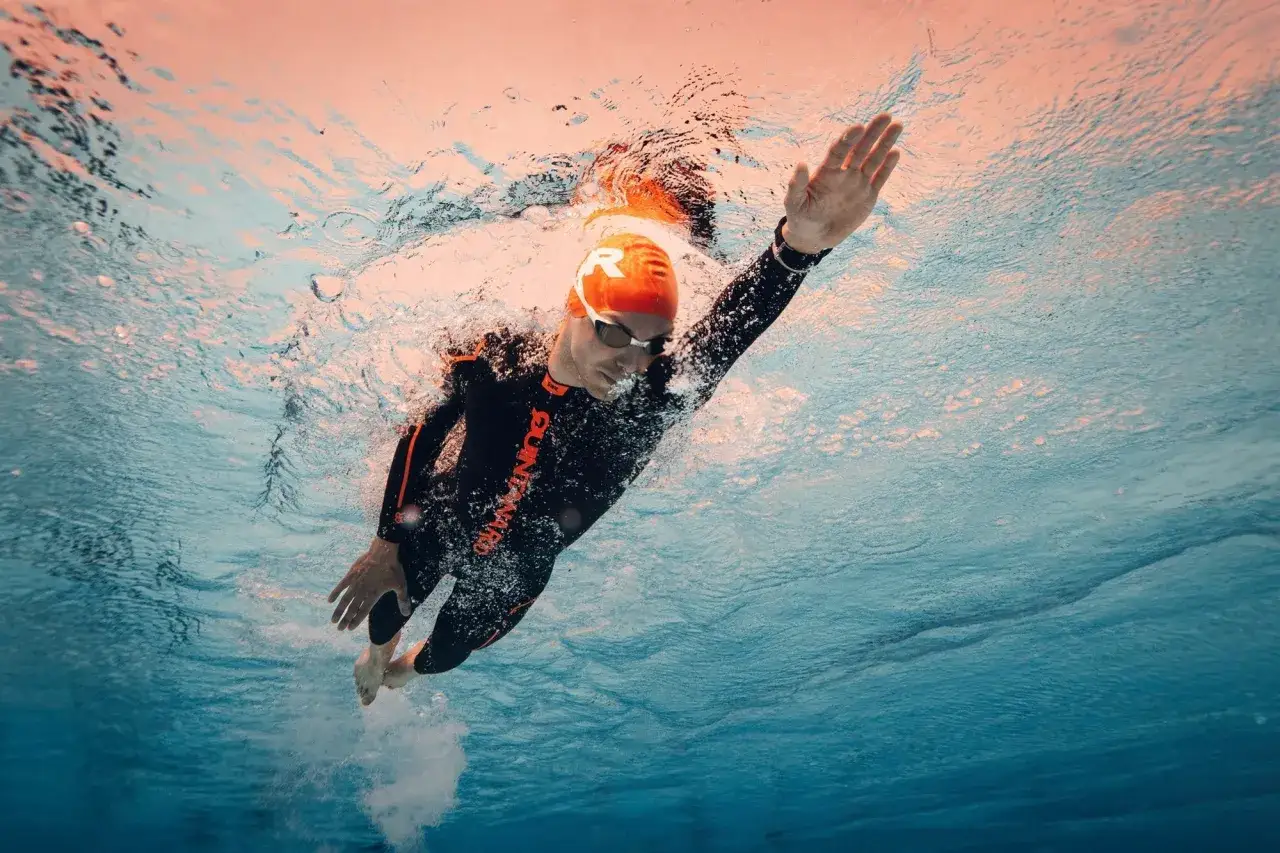
In UK racing, I plan for cold water, limited visibility and a start that is rarely tidy. A wetsuit can help body position, but it does not solve pacing, sighting or pack anxiety. If the race allows it, I still treat the wetsuit as a tool, not a shortcut.
| Pool drill | Why I use it | Race payoff |
|---|---|---|
| Sighting every 6 to 10 strokes | Teaches you to lift without breaking rhythm | Less zig-zagging between buoys |
| 25m fast then 25m smooth | Simulates surge and settle | Better control after the start |
| Head-up freestyle for short reps | Builds body tension for choppy water | More stability in waves |
| Fast first 100m | Rehearses crowded starts | Less panic off the gun |
| Exit practice | Turns skill into a habit | Cleaner transitions |
In the pool, I sometimes create a bit of chaos on purpose: 25m hard into 25m smooth, or a push-off followed by a fast first 15 seconds, then settle. Those small disruptions teach the body not to panic when the race begins in a crowd. They also expose whether the athlete can breathe calmly after a spike in effort.
- Sighting: keep the stroke line intact and avoid lifting the whole head.
- Pack tolerance: train close-body swimming when it is safe and supervised.
- Starts and turns: rehearse the first 100m and buoy approach.
- Cold water: add brief acclimation, never bravado.
- Safety: use approved venues, a buddy system and a tow float where appropriate.
If you only practise pool swimming, the first open-water race can feel like a different sport. That is why I try to turn at least part of the swim week into race simulation rather than pure laps.
The mistakes that waste a lot of pool time
Most swim sessions fail for the same five reasons. None of them are dramatic, which is exactly why they hang around so long.
- Only swimming easy laps. Good for recovery, not enough to teach pace.
- Turning every swim into a test. That creates fatigue and makes the next bike or run worse.
- Using gear to hide technique issues. Fins and paddles should support the stroke, not rescue it.
- Ignoring breathing under stress. If exhalation is rushed, the rest of the stroke usually follows.
- Never practising the first 200m. The start is where race nerves show up, so train it deliberately.
What I usually see is this: once an athlete stops chasing all-out effort and starts chasing repeatable form, the whole swim leg improves. That leads naturally into how I would organise a week when time is limited.
A simple weekly template that still moves the swim forward
If the swim is your weakest discipline, I would keep the week simple. One session should build technique, one should build pace or threshold, and any extra session should be easy enough to help rather than compete with the bike and run.
| Available time | Weekly structure | Best for |
|---|---|---|
| 2 swims | 1 technique and aerobic session, 1 threshold or race-pace session | Busy athletes who need progress without overload |
| 3 swims | 1 technique session, 1 threshold session, 1 endurance or open-water session | Most age-group triathletes |
| 4 swims | 1 technique session, 1 aerobic session, 1 threshold session, 1 recovery or skills swim | Stronger swimmers and long-course athletes who can recover well |
For sprint racing, I lean slightly more toward pace and speed. For half and full-distance racing, I keep one longer aerobic session in the mix so the athlete can settle early and stay efficient late. The structure changes, but the rule does not: every swim has a job.
The small details I would prioritise before race day
Three things usually matter more than fancy sessions in the final build: a smooth first 200m, a breathing pattern that stays calm under pressure, and at least one weekly reminder of race pace. If those are in place, the swim stops feeling like an unknown and starts feeling like a controlled part of the day.
- Keep the warm-up long enough to settle the breathing.
- Do not add new gear or new drills in the last week unless they are already familiar.
- Arrive at the start with one simple cue, not ten technical thoughts.